
Water parameters
Temperature15–30°C
pH6–8
General hardness (GH)4–20 dGH
Recommended range
Overview
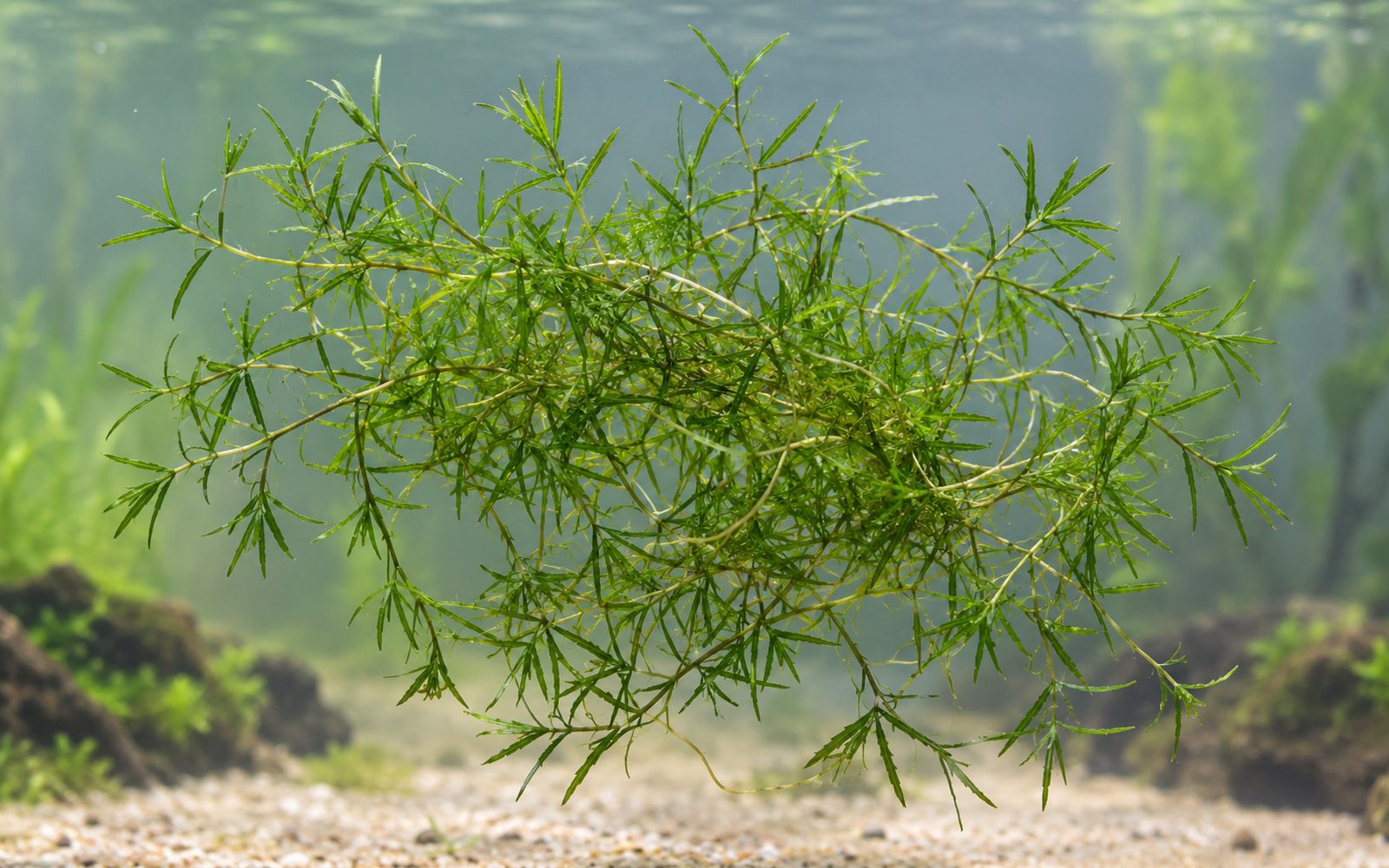
Najas guadalupensis, known among aquarists as "guppy grass", is a heavily branching aquatic plant with thin, narrow leaves. It grows fast, quickly absorbs excess nutrients from the water and competes strongly with algae. Its dense, tangled structure provides an excellent hiding place for guppy, Endler and shrimp fry, which makes it a staple of fry and breeding tanks. Its stems are brittle; broken pieces soon grow into new plants.
Do not release into the wild: It is a fast-spreading plant; excess material must not be thrown into natural waters.
Planting and Placement
- It can be left floating freely; used this way it forms a dense mass.
- If desired, the stems can be planted by burying them 3–4 cm in the substrate or wedging them between rocks.
Care and Fertilization
- Light: Moderate; it also survives in low light.
- CO₂: Not required.
- Fertilizer: Usually not needed; it takes its nutrients from the water.
- Trimming: Because it grows fast it needs frequent thinning; remove the excess from the aquarium and take care that brittle fragments do not get sucked into the filter.
Propagation
This section has not been written yet. How is it propagated?
Be the first to write it
Common Problems
This section has not been written yet. Problems such as melting, yellowing and algae, and how to fix them.
Be the first to write it
Hobbyist notes
Things you won't find in books, learned by trial and error. The most helpful ones are on top.
No notes yet. If you have experience with this species, leave the first note.
Was this page helpful?
Change history and contributors
- Page created · October 16, 2026