
Water parameters
Overview
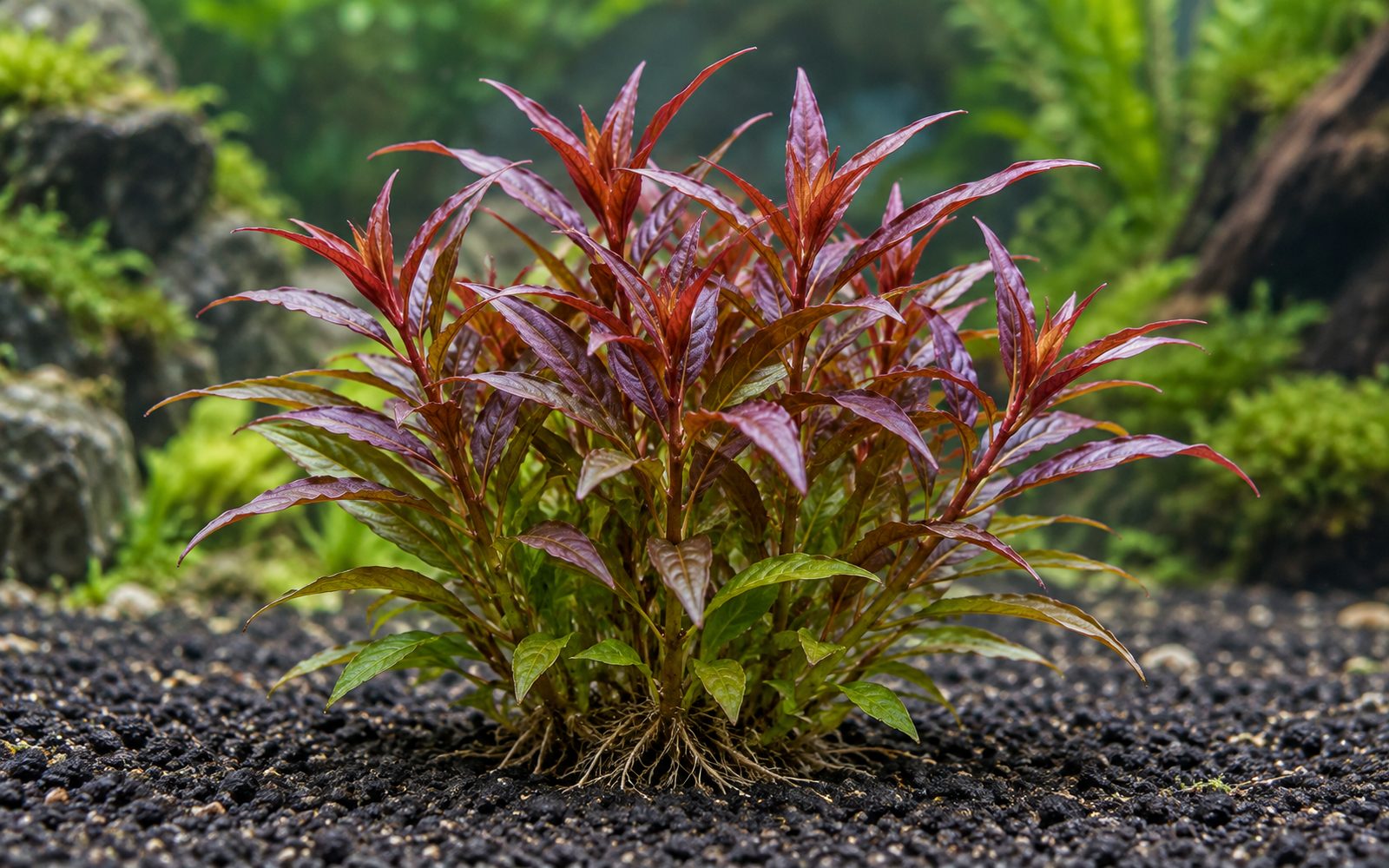
Hygrophila 'Araguaia' is a small, compact stem plant that looks very different from its large-leaved relatives. It entered the trade under the name of the Araguaia River in Brazil; however, there are strong indications that the plant is actually Hygrophila lancea, known from around Japan and Hong Kong. For this reason it is now mostly sold as Hygrophila lancea 'Araguaia'.
The internodes are short, and narrow, lance-shaped leaves densely clothe the stem. The plant stays at 10–20 cm and branches easily. In low light it is green to olive; with good light, CO₂ and enough nutrients the leaves turn reddish brown and even purple. It is used for a color accent in the midground or in the foreground-to-midground transition of large aquariums.
Planting and Placement
- Stems are planted 2–3 cm apart, singly or in small bunches of 2–3.
- Plants that come in tissue culture cups are rinsed free of gel, divided into small pieces and planted with tweezers.
- Because it stays low, it can be placed at the front of the midground, between stones.
Care and Fertilization
- Light: Medium to high. As light decreases, the color turns green and the internodes lengthen.
- CO₂: Not required, but it gives a clear benefit for color and dense growth.
- Fertilizer: Liquid fertilizer should be dosed regularly; iron and trace elements support the red tone.
- Trimming: Shorten the tops regularly; every cut stem produces side shoots and the clump becomes bushier.
Propagation
It is propagated by top cuttings: tops 4–6 cm long are replanted with their lower leaves removed. Shoots branching near the substrate and side shoots that form here and there can also be separated from the mother plant.
Common Problems
- Color staying green: Light or CO₂ is insufficient.
- Stretched stems and sparse leaves: Light is weak or taller plants are shading it.
- Shrinking, curling tip leaves: Usually a trace element or calcium deficiency; review your fertilization.
Hobbyist notes
Things you won't find in books, learned by trial and error. The most helpful ones are on top.
Change history and contributors
- Page created · October 16, 2026