
Water parameters
Overview
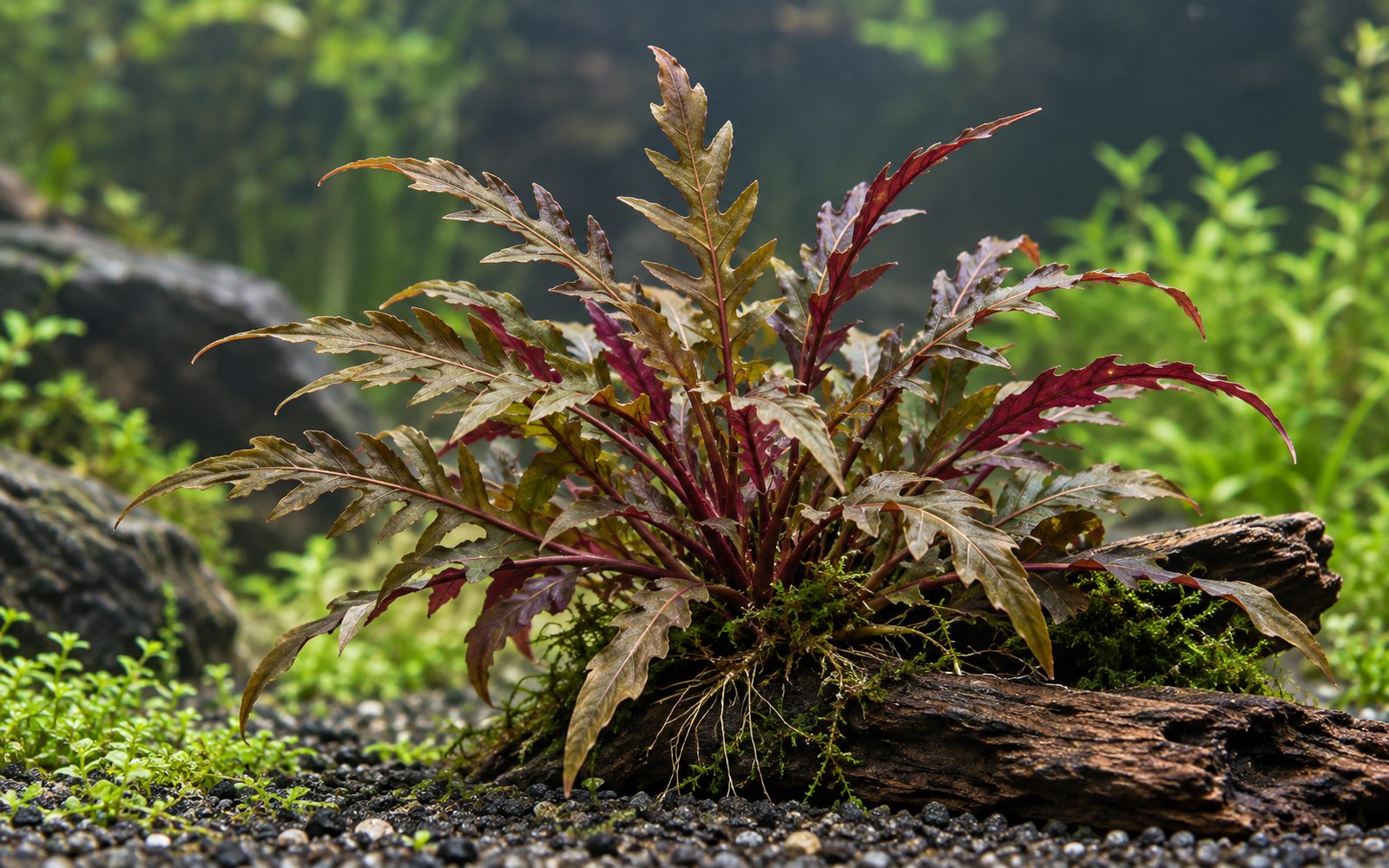
Hygrophila pinnatifida is a species found naturally only in the streams of India's Western Ghats region, and it is much loved by aquarists for its leaf shape. The leaves are deeply lobed like a bird's feather; the upper side ranges in color from olive green to copper-brown, and the underside to purple-red. As the light gets stronger, the colors deepen.
Unlike other hygrophilas, instead of growing upright it spreads by sending out horizontal runners close to the substrate or decor. Because its roots can attach to stones and wood, it can also be grown tied to decor like epiphytic plants. This trait makes it valuable in the midground and in stone and wood arrangements.
Planting and Placement
- It can be planted buried 2–3 cm deep in the substrate; in that case it spreads across the substrate with horizontal runners.
- Alternatively, the stem is attached to a piece of wood or a stone with thin fishing line or plant glue; within a few weeks the roots cling to the surface.
- It reaches its best color in the midground, in a spot that gets good light.
Care and Fertilization
- Light: Medium; in strong light the leaves become shorter, denser and darker.
- CO₂: Not required, but beneficial; in an aquarium with CO₂, growth and color improve noticeably.
- Fertilizer: If it is tied to decor, liquid fertilizer is important because it takes its nutrients from the water; if it is in the substrate, root tabs also help.
- Trimming: Stems growing upright are cut from the top so that the plant stays low and dense. Excess horizontal runners are separated to keep it tidy.
Propagation
New plants form at the tips and nodes of the horizontal runners; once they have rooted, they are cut off and planted or tied elsewhere. Top cuttings also root.
Common Problems
- Runners that stay green with long internodes: Light is insufficient.
- Browning at the leaf edges: Nutrient deficiency or algae building up on the leaf surface.
- Slow start: It may stay dormant for a few weeks after planting; growth speeds up once the roots are established.
Hobbyist notes
Things you won't find in books, learned by trial and error. The most helpful ones are on top.
Change history and contributors
- Page created · October 16, 2026