
Water parameters
Overview
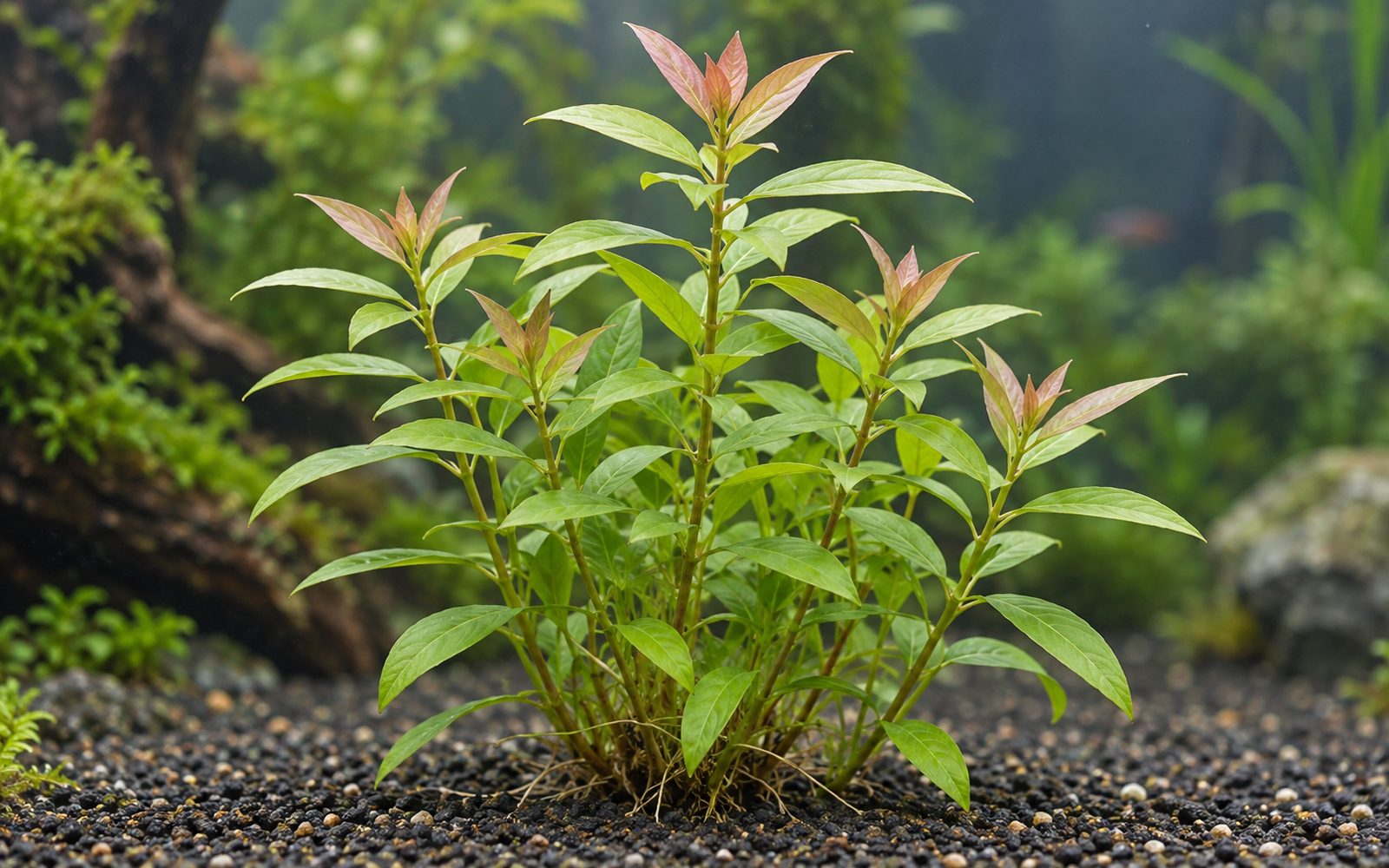
Hygrophila polysperma is one of the most effortless stem plants in the hobby. Its light green, elongated oval leaves are arranged in opposite pairs; in strong light a faint pinkish-bronze color appears on the top leaves. It grows across a wide range, from soft to hard water and between 20 and 30 °C; it needs no CO₂ or special fertilizer.
Because it grows very fast, it uses up excess nutrients in the water and helps keep algae at bay. This makes it especially useful in newly set-up aquariums. The pink-veined 'Rosanervig' form is also common.
Do not release it into the wild: In the United States this species is on the list of prohibited noxious weeds as an invasive, and in warm-climate regions it can choke natural waters. Trimmings should go in the trash.
Planting and Placement
- The stems are separated one by one, the lower leaves are removed and they are buried 3–4 cm deep.
- Leave about 3 cm between stems; plant in clusters in the background and corners.
- Because it grows fast, it is placed not directly behind the slow plants in the foreground but in back areas that are easy to trim.
Care and Fertilization
- Light: Medium; it also survives in low light, but the internodes become longer.
- CO₂: Not required.
- Fertilizer: Occasional liquid fertilizer is enough; during periods of very fast growth, a lack of nutrients can turn the leaves yellow.
- Trimming: Cut from the top once a week or every two weeks. If not cut, it spreads across the surface and shades the plants below.
Propagation
It propagates very easily from top cuttings. Even small broken-off stem pieces can root and become new plants, so do not leave trimmings floating in the aquarium.
Common Problems
- Overrunning the aquarium: If its fast growth is not controlled, it smothers other plants; regular trimming is needed.
- Holes in the leaves: Usually potassium deficiency.
- Yellowing lower leaves: Lack of nutrients or light.
- Plant-eating fish: Silver dollars and some large cichlids eat its soft leaves.
Hobbyist notes
Things you won't find in books, learned by trial and error. The most helpful ones are on top.
Change history and contributors
- Page created · October 16, 2026