
Water parameters
Overview
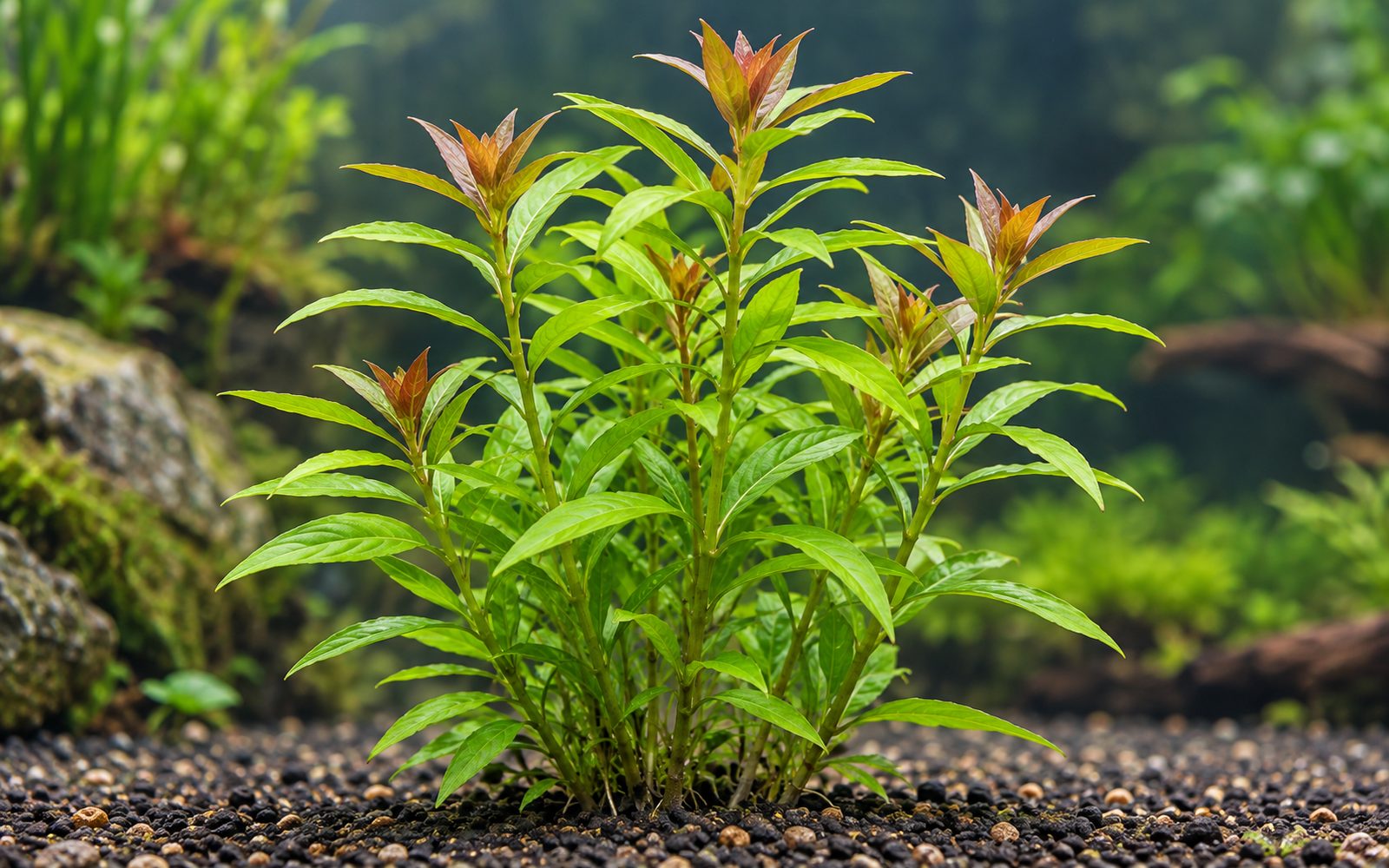
Hygrophila 'Siamensis 53B' is a form of the large-leaved Hygrophila corymbosa that is sold in the trade as a separate plant. The "53B" in its name comes from its number in a grower's catalog. Compared with the regular 'Siamensis' form, its leaves are narrower and its color is a brighter, lighter green. As the light gets stronger, the top leaves take on a reddish-brown tone; on the same plant, the shaded lower leaves stay green while the tops color up, creating a pleasing gradient.
The plant reaches 15–40 cm, branches easily and soon takes on a bushy, shrub-like look. It adapts to a wide range of water parameters and does not need CO₂ or strong light. This is why it also serves as a "starter plant" in newly set-up aquariums, growing fast, using up excess nutrients and competing with algae.
Planting and Placement
- Stems are planted one by one, leaving 3–4 cm between them.
- The leaves on the part to be buried are removed; the stem is set 3–4 cm deep.
- It looks best in the background or in the midground of large aquariums, in groups of 5 or more stems.
- With potted plants, the rock wool is carefully picked off and the stems are separated before planting.
Care and Fertilization
- Light: Medium is enough; it also survives in low light, but stays green and becomes sparse.
- CO₂: Not required; if added, growth and coloration increase.
- Fertilizer: Its nutrient demand is high. If liquid fertilizer and root tabs are used together, the leaves do not yellow.
- Trimming: Cut regularly from the top; two side shoots grow from each cut and the clump becomes denser. If not trimmed, the stems reach the surface, spread horizontally and shade the plants below.
Propagation
It propagates easily from top cuttings. Tops 8–10 cm long are cleaned of their lower leaves and planted directly in the substrate; they root within a few days. Stems growing horizontally at the surface produce roots and side shoots from their nodes; these can also be separated and planted.
Common Problems
- Lower leaves dropping: The clump has become too dense and the lower part gets no light. Thin it out, and cut the stretched stems and replant their tops.
- Pale or holey new leaves: Nitrogen, potassium or iron deficiency; increase fertilization.
- Small blisters on the leaves: Harmless spots may appear on leaves grown emersed; they disappear on new leaves that open underwater.
Hobbyist notes
Things you won't find in books, learned by trial and error. The most helpful ones are on top.
Change history and contributors
- Page created · October 16, 2026