
Water parameters
Overview
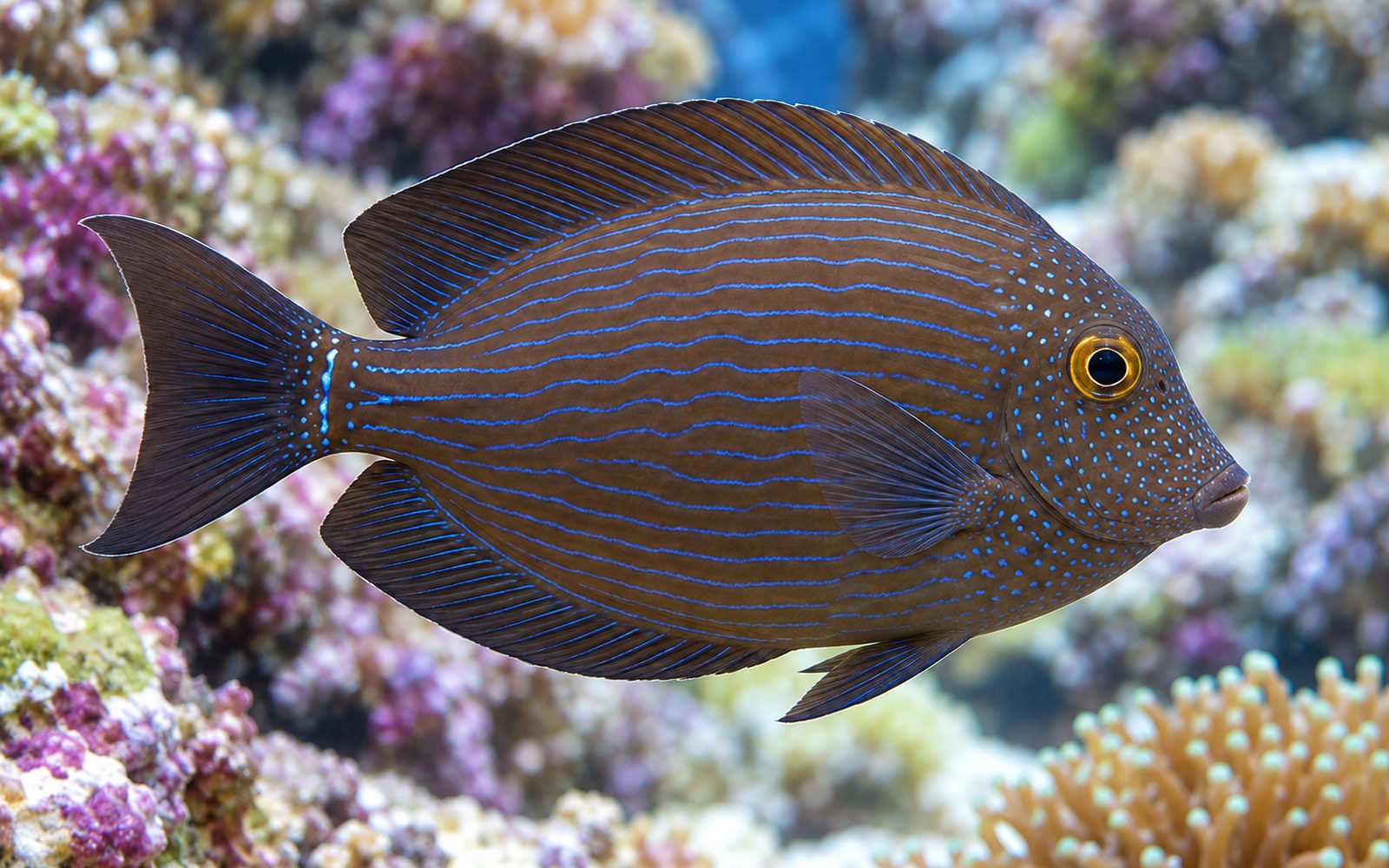
The kole tang belongs to the genus Ctenochaetus, known as the "bristletooth tangs." With its flexible, brush-like teeth it scrapes the fine film of algae and organic debris from the surface of rocks, glass and sand. For this reason it is considered one of the aquarium's natural cleaners. Its body is brown, with fine wavy blue lines and a golden-yellow ring around the eye. There is a small but sharp scalpel spine on the caudal peduncle.
The true C. strigosus lives only in Hawaii and Johnston Atoll. Because collection in Hawaii has been restricted, similar Ctenochaetus species from the Indian Ocean (e.g. C. truncatus) are also sold under the same name; their care is the same.
Natural Habitat
It lives on the shallow reefs and rocky shores of Hawaii, grazing rock surfaces all day. It is found over a wide depth range, from shallow surge-swept reef flats to deeper slopes.
Tank Setup
- Volume: at least 300 liters and 120 cm in length.
- Water: salinity 1.023–1.026 specific gravity, pH 8.1–8.4, temperature 24–27°C; strong flow and high oxygen.
- Maturity: an aquarium at least a few months old, with live rock covered by a film of algae. In a very clean, newly set-up aquarium it cannot find enough natural food.
- Reef compatibility: reef safe; it leaves corals and invertebrates alone.
Diet
Herbivore and detritivore. It finds surface algae on its own, but that is not enough: feed dried seaweed (nori) and spirulina flakes and granules every day. It also eagerly takes frozen mysis and brine shrimp. Its bristle teeth are not suited to tearing off coarse, tough filamentous algae.
Behavior and Compatibility
One of the most docile tangs. All day long it grazes rock and glass surfaces by pressing its mouth against them; its calm, steady movement makes it a pleasure to watch. In a large aquarium it generally gets along with tangs of other genera, but it is grumpy toward its own species and similar brown Ctenochaetus species.
Good companions: clownfish, gobies, blennies, cardinalfish, anthias, dwarf angelfish; in a large aquarium a yellow or blue tang.
Avoid: a second kole or another Ctenochaetus, large triggerfish and predators.
Group and Colony Structure
Kept as a single individual in the aquarium. If it will be kept with other tangs, the kole can be added first; since it is relatively peaceful, it usually accepts those that come later.
Breeding
It is a pelagic spawner. It does not breed in home aquariums.
Health and Common Problems
- Marine white spot and velvet: although it is somewhat more resistant than other tangs, quarantine is essential.
- Weight loss: in fish that do not find enough surface algae and supplemental green food, the belly becomes sunken; this indicates that the aquarium is not mature.
- HLLE: linked to insufficient green food.
Sexing
The sexes cannot be told apart externally.
Tank mates
This list is calculated automatically from the species profile and grows as new species are added to the catalog. Try it in the planner for a definite answer.
Should not be kept together

Hobbyist notes
Things you won't find in books, learned by trial and error. The most helpful ones are on top.
Change history and contributors
- Page created · October 16, 2026