
Water parameters
Overview
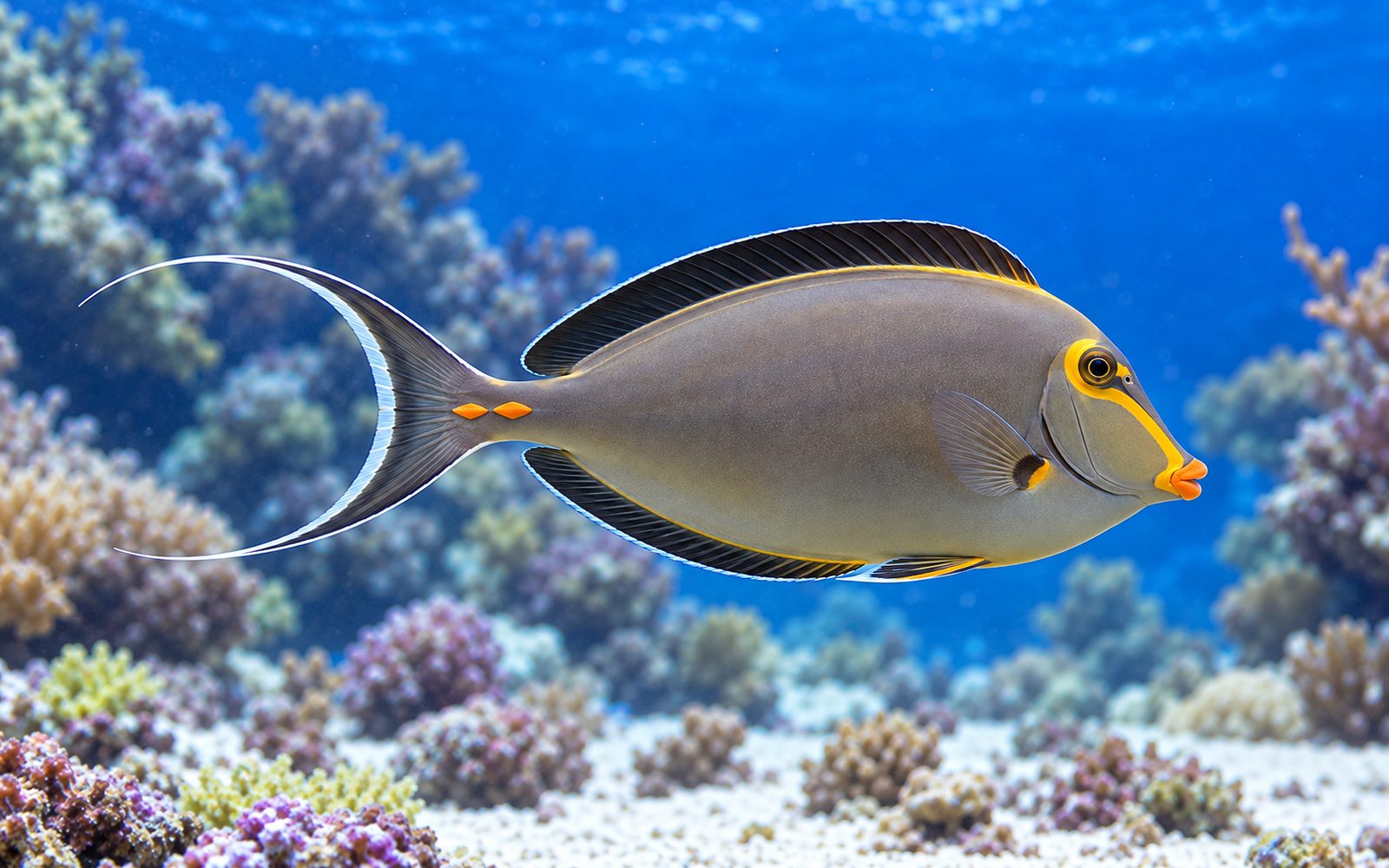
The Naso tang belongs to the genus Naso, known as the "unicornfish", but this species has no forehead horn. On each side of the tail base, instead of the folding scalpel of other tangs, it carries two fixed, bright orange bony plates. In adult males the tips of the tail extend into long filaments. Its very similar relative from the Indian Ocean, Naso elegans, is sold under the same name; its dorsal fin is yellowish white. All specimens are wild-collected and reach 45 cm as adults.
Tank Setup
- At least 1000 liters and 200 cm in length for an adult; it is a very fast and active swimmer.
- Salinity specific gravity 1.023–1.026, pH 8.1–8.4, temperature 24–27°C; strong flow and high oxygen.
- Reef-safe; it leaves corals alone, but eats the macroalgae in the aquarium.
- It is prone to marine white spot; quarantine is essential.
Diet
Herbivorous; in the wild it feeds especially on brown seaweeds. Offer dried brown and green seaweed, spirulina foods and frozen mysis a few times a week. 2–3 times a day.
Behavior and Compatibility
A generally peaceful but skittish tang; it can panic at sudden movements and crash into the glass. It is cantankerous towards its own kind and other Nasos.
Good companions: In a very large aquarium, tangs from other genera, large angelfish, Heniochus, foxface, large wrasses.
Avoid: A second Naso, large aggressive triggerfish, small aquariums.
A short profile for this species
The Naso Tang page has the basics, but the sections below have not been written yet. If you keep this species, write a section from your own experience; it will be published under your name after editor approval.
Tank mates
This list is calculated automatically from the species profile and grows as new species are added to the catalog. Try it in the planner for a definite answer.
Hobbyist notes
Things you won't find in books, learned by trial and error. The most helpful ones are on top.
Change history and contributors
- Page created · October 16, 2026