
Water parameters
Overview
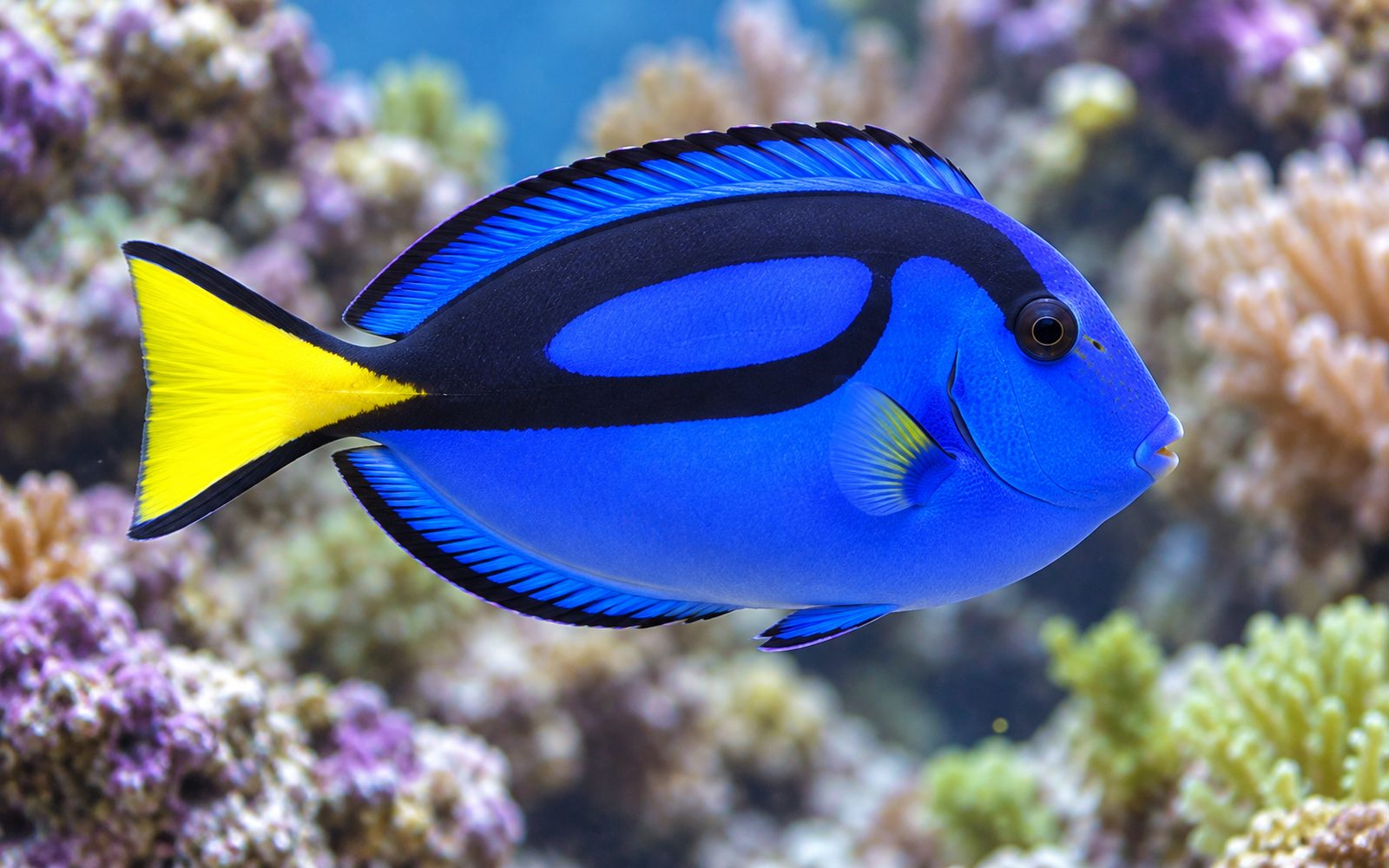
The blue tang is one of the best-known marine fish thanks to the character Dory in the Finding Nemo films. On each side of the caudal peduncle it carries a sharp, folding spine like a scalpel, which gives surgeonfish their name; it can cause serious cuts when the fish is handled or netted. Stores sell juveniles of 3–5 cm, but adults reach 25–30 cm; it is not a fish to buy "for now" for a small aquarium.
Almost all individuals on the market are collected from the wild. Captive breeding was achieved at research facilities in 2016; captive-bred fish are still scarce, but choose them if you can find them. It is a saltwater fish and cannot live in freshwater.
Natural Habitat
It lives on open, current-swept reef slopes of the Indo-Pacific. Juveniles and small groups shelter among branching corals (especially Pocillopora) and wedge themselves into the coral when in danger. In the wild it feeds largely on zooplankton, and on algae as well.
Tank Setup
- Volume: at least 600 liters and 180 cm in length for an adult; plenty of open swimming space is essential.
- Water: salinity 1.023–1.026 specific gravity, pH 8.1–8.4, temperature 24–27°C. Nitrate should be low and oxygen high; use strong flow and a good protein skimmer.
- Decor: leave narrow rock crevices for it to shelter in at night and when frightened.
- Reef compatibility: reef safe; it leaves corals, shrimp and snails alone.
- Quarantine: it should be observed in a separate quarantine tank for 4–6 weeks before entering the display aquarium.
Diet
Omnivorous. In the aquarium, frozen mysis and brine shrimp, marine fish granules, spirulina foods and dried seaweed (nori) on a clip should be offered together. Feed small amounts 2–3 times a day. A lack of green food sets the stage for head and lateral line erosion.
Behavior and Compatibility
A diurnal fish that swims constantly. It is grumpy toward its own species and similarly shaped tangs, but generally gets along with other fish. When frightened, it is normal for it to lie on its side and wedge itself between rocks, and people who see this for the first time may think the fish is dead.
Good companions: clownfish, cardinalfish, anthias, fairy wrasses, dwarf angelfish; in a large enough aquarium a single tang of a different genus (e.g. yellow tang).
Avoid: a second blue tang, several tangs not added at the same time, large triggerfish and predators such as lionfish.
Group and Colony Structure
Kept as a single individual in a home aquarium. In the wild it forms loose groups; in the aquarium a group can only be tried in systems over 1500 liters, with all individuals added on the same day. If different tang species will be kept together, the most docile species is added first and the most dominant last.
Breeding
It is an open-water (pelagic) spawner; groups spawn in the water column in the late afternoon. Because the larvae live in the plankton for weeks, it is not bred in home aquariums; breeding can only be done at specialized facilities.
Health and Common Problems
- Marine white spot (Cryptocaryon irritans): the blue tang is one of the species most prone to this disease. White dots like grains of salt on the body, rapid breathing and rubbing against rocks are seen. Treatment is done in a quarantine tank with copper or low salinity (hyposalinity); copper must not be used in an aquarium with invertebrates.
- Velvet (Amyloodinium): progresses faster and can quickly become fatal.
- Head and lateral line erosion (HLLE): erosion on the head and along the lateral line; linked to poor nutrition and bad water quality.
Sexing
Females and males cannot be reliably told apart externally.
Tank mates
This list is calculated automatically from the species profile and grows as new species are added to the catalog. Try it in the planner for a definite answer.
Hobbyist notes
Things you won't find in books, learned by trial and error. The most helpful ones are on top.
Change history and contributors
- Page created · October 16, 2026