
Water parameters
Overview
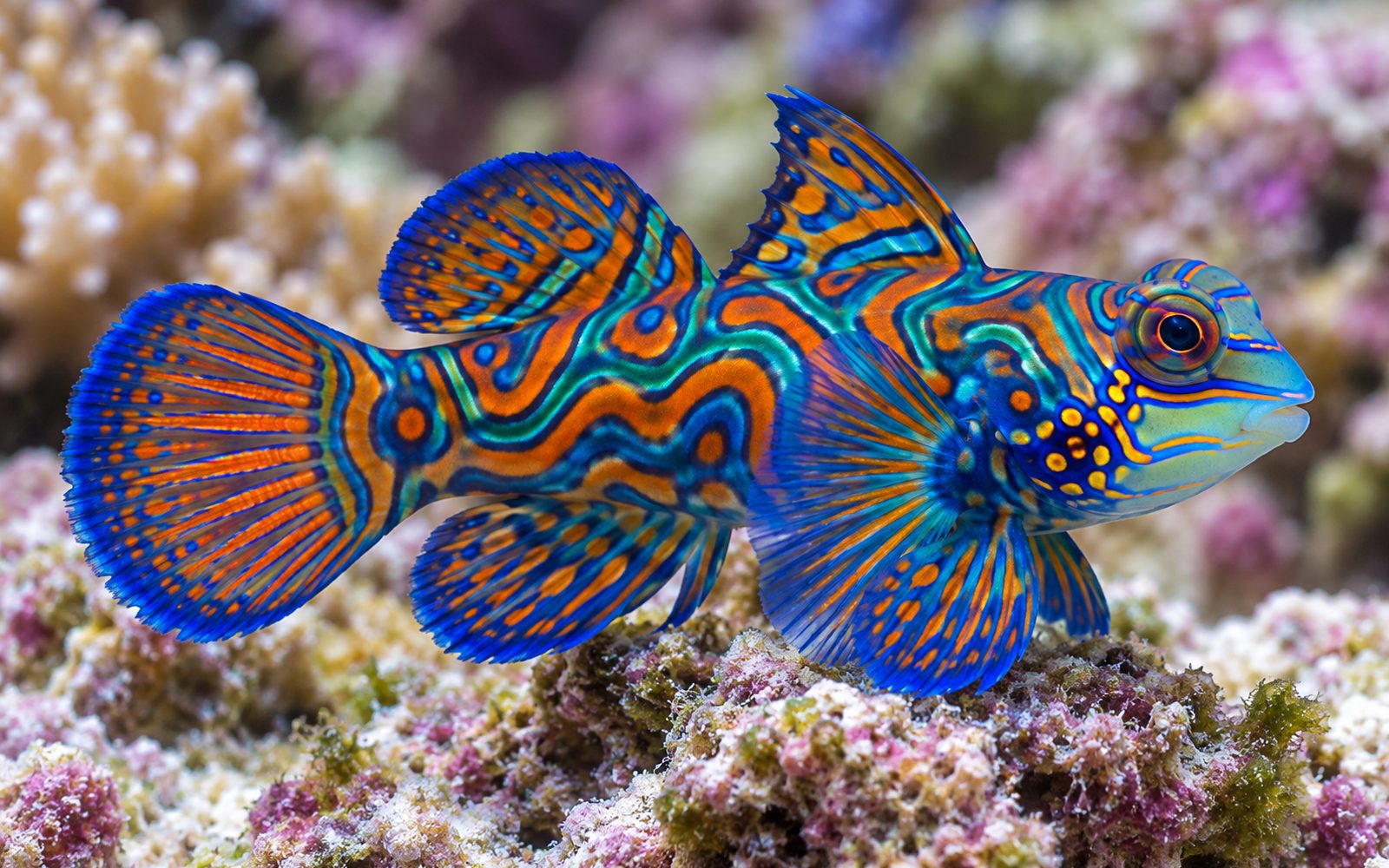
With wavy patterns edged in orange and green on a blue background, the mandarin dragonet is one of the most colorful fish in the sea. It moves over rocks and sand by "hopping" on its fins and picks small creatures from surfaces all day long. It is scaleless; its skin is covered with a thick, foul-smelling mucus, which makes it distasteful to predators.
Its care is difficult: most of the fish sold are wild-caught and eat almost nothing but live copepods and amphipods. In a new, small aquarium it soon starves to death. For this reason it should only go into a mature, spacious reef aquarium. In recent years captive-bred fish already trained to prepared food have also been sold; choose these if possible.
Natural Habitat
It lives in sheltered lagoons and on shallow reefs of the western Pacific, among coral rubble and branching corals. During the day it is shy; it becomes more visible at dusk and picks small crustaceans from among the rubble.
Tank Setup
- Volume: at least 300 liters, with plenty of live rock.
- Maturity: an aquarium at least 6 months old, with a visible copepod and amphipod population in its rocks and sand.
- Copepod source: a refugium with macroalgae (e.g. Chaetomorpha) keeps copepod production going. The population can be supplemented with purchased live copepod cultures.
- Water: salinity 1.023–1.026 specific gravity, pH 8.1–8.4, temperature 24–27°C.
- Reef compatibility: reef safe; it leaves corals, shrimp and snails alone.
Diet
Carnivorous; it feeds all day by picking up small creatures. Its main food is copepods and amphipods. Some individuals, especially captive-bred ones, eventually accept live and frozen brine shrimp, mysis and small granules; to try this, placing the food in a feeding station (a glass jar or dish) helps. A sunken belly is a sure sign of starvation.
Behavior and Compatibility
Extremely peaceful and slow. The problem is competition for food: other copepod-eating fish (other mandarins and dragonets, some wrasses) quickly use up the food supply.
Good companions: clownfish, cardinalfish, firefish, chromis, royal gramma, cleaner shrimp.
Avoid: other mandarins and dragonets (except in a very large aquarium), aggressive damsels, dottybacks, fast and greedy bottom dwellers.
Group and Colony Structure
Keep a single fish or a pair of one male and one female. Two males attack each other. If a pair is kept, the copepod supply must be doubled.
Breeding
It is a pelagic spawner: every evening at dusk the pair rises together and releases eggs and sperm into the water. The eggs drift in the water. Spawning is often seen in the aquarium; raising the fry, however, is expert work that requires live plankton cultures.
Health and Common Problems
- Starvation: the most common cause of death.
- Thanks to its thick mucus it is said to be relatively resistant to marine white spot, but it is not immune.
- It is sensitive to medications containing copper and to sudden changes.
Sexing
The male is larger, and its first dorsal fin is distinctly long and erect, like a sail. The female's dorsal fin is short.
Tank mates
This list is calculated automatically from the species profile and grows as new species are added to the catalog. Try it in the planner for a definite answer.
Should not be kept together



Hobbyist notes
Things you won't find in books, learned by trial and error. The most helpful ones are on top.
Change history and contributors
- Page created · October 16, 2026