
Water parameters
Overview
Despite its plain gray-beige body, caudopunctatus catches the eye with the bright yellow-orange edge of its dorsal fin and its tail decorated with fine spots (caudopunctatus: spotted tail). It stays around 7 cm and is one of the more compatible members of the genus Neolamprologus. It spawns in small hollows, under stones or in empty shells on bottoms where sand and rubble mix. When there is enough floor space, several pairs build nests side by side and form a loose colony.
Tank Setup
- 80 liters for a pair; 150 liters and a wide footprint for a colony of several pairs.
- Fine sand, small piles of stones, a few snail shells and small caves.
- pH 8–9, hard water; a 25% water change every week.
- It keeps its digging limited to the area around its nest and rarely harms plants.
Diet
Its diet is mostly carnivorous. Make small-grained cichlid granules the staple and vary it with frozen cyclops, mysis and brine shrimp.
Behavior and Compatibility
It defends a territory around its nest but is usually restrained toward other species. It becomes more protective when it has fry.
Good companions: Cyprichromis, Paracyprichromis, Julidochromis species and, in a large tank, shell dwellers.
Avoid: large carnivorous Tanganyika cichlids, quarrelsome Tropheus and mbuna, shrimp.
A short profile for this species
The Neolamprologus caudopunctatus page has the basics, but the sections below have not been written yet. If you keep this species, write a section from your own experience; it will be published under your name after editor approval.
Tank mates
This list is calculated automatically from the species profile and grows as new species are added to the catalog. Try it in the planner for a definite answer.
Usually compatible
 Yellow Regal Peacock
 Egyptian Mouthbrooder
 Yellow Tail Acei
Amazon Molly
Yellow Tail Acei
Amazon Molly
 Butterfly Goodeid
Anatolian Killifish
Eastern Happy
Red Shoulder Peacock
Butterfly Goodeid
Anatolian Killifish
Eastern Happy
Red Shoulder Peacock
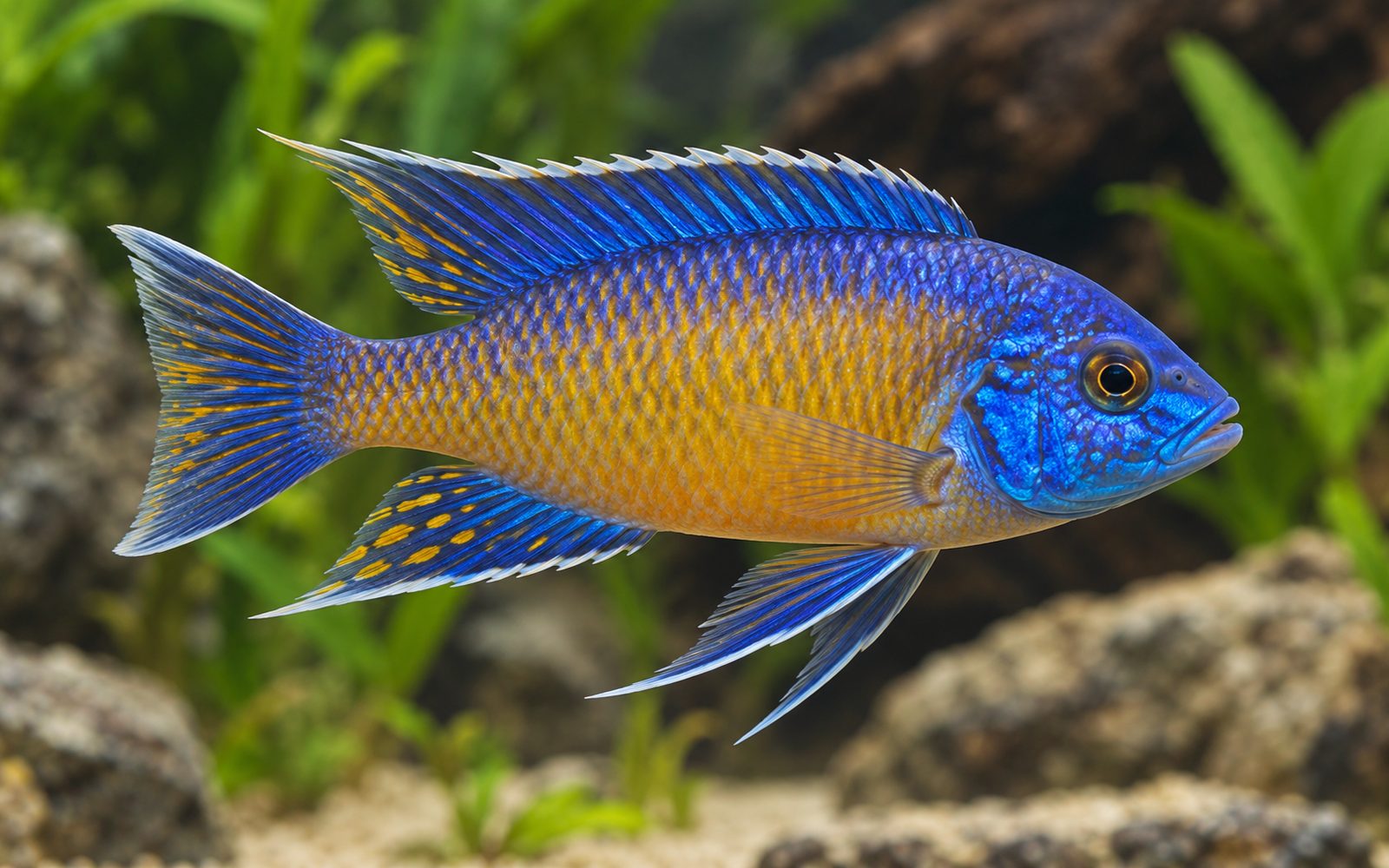 Fairy Cichlid
Blue Orchid Peacock
Fairy Cichlid
Blue Orchid Peacock
Should not be kept together






Hobbyist notes
Things you won't find in books, learned by trial and error. The most helpful ones are on top.
Change history and contributors
- Page created · October 16, 2026