
Water parameters
Overview
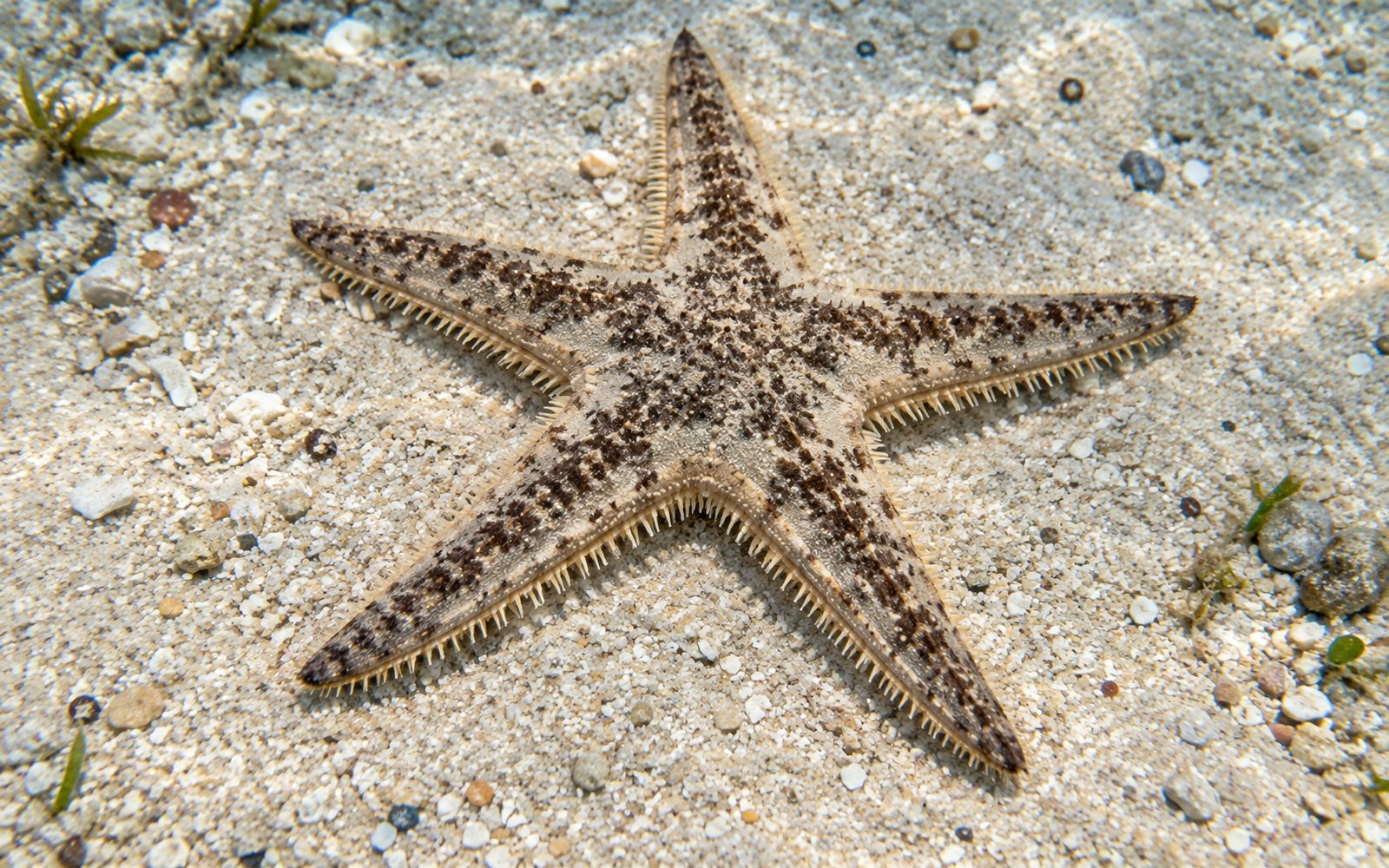
The sand sifting starfish is a five-armed, flat sea star mottled beige-gray and brown. It spends most of the day buried in the sand, feeding by digesting organic debris, biofilm and tiny organisms in the sand. In the process it turns over the sand bed.
It is often sold in stores as a "sand cleaner," but this reputation is misleading: it also consumes the beneficial micro-organisms in the sand (worms, copepods) and in small aquariums exhausts its food source within a few months and slowly starves to death. In addition, Astropecten species, which hunt snails and small animals, may also be sold as "sand stars"; ask for the scientific name when buying. Specimens in the trade are wild-collected.
Natural Habitat
It is found in large numbers in the shallow, calm sandy lagoons of the Indo-West Pacific, around mangroves and in seagrass beds. It lives just below the sand surface and moves around with the tides.
Tank Setup
- Volume: at least 200 liters and an aquarium mature for at least 6 months; a large sand surface.
- Sand: a live sand bed of fine to medium-grained sand at least 5 cm deep.
- Water: salinity 1.023–1.026 specific gravity, pH 8.1–8.4, temperature 24–27°C. Echinoderms are very sensitive to salinity swings.
- Reef compatibility: Reef-safe; it leaves corals, fish and snails alone.
- Acclimation and medication: It should be acclimated by the drip method for at least 2 hours and not exposed to air. Copper-based medications are lethal.
Diet
Omnivorous; it feeds on detritus, biofilm and micro-organisms in the sand. If there is not enough food in the sand bed, offer sinking granules, a small mysis or a piece of mussel pushed into the sand 2–3 times a week. Arms that gradually thin and a sunken center are signs of starvation.
Behavior and Compatibility
Peaceful; during the day it is mostly inside the sand, at night it is seen more often on the surface. It lives without problems with its own kind; during mating the male climbs on top of the female and the two may stay stacked for days.
Good companions: clownfish, gobies, cardinalfish; shrimp, snails, hermit crabs.
Avoid: harlequin shrimp (they eat sea stars), triggerfish and pufferfish; other sand sifting starfish and sea cucumbers that would share the sand bed (competition for food).
Group and Colony Structure
It has no social needs. The general rule is one sand sifting starfish per 200 liters of mature sand bed. More than one individual can find enough food only in aquariums with a very large sand surface.
Breeding
The sexes are separate. The male climbs on top of the female to synchronize spawning; eggs and sperm are released into the water. The larvae develop in the plankton and do not survive in home aquariums.
Health and Common Problems
- Starvation: the most common cause of death; thinning arms, a sunken central disc.
- Tissue melting: white lesions and arms falling off are usually linked to sudden salinity changes or poor water quality and progress quickly.
- Sudden deaths: copper, rapid acclimation. A dead sea star fouls the water and must be removed immediately.
Sexing
Cannot be told apart externally. During mating, the individual on top is the male.
Tank mates
This list is calculated automatically from the species profile and grows as new species are added to the catalog. Try it in the planner for a definite answer.
Hobbyist notes
Things you won't find in books, learned by trial and error. The most helpful ones are on top.
Change history and contributors
- Page created · October 16, 2026