
Water parameters
Overview
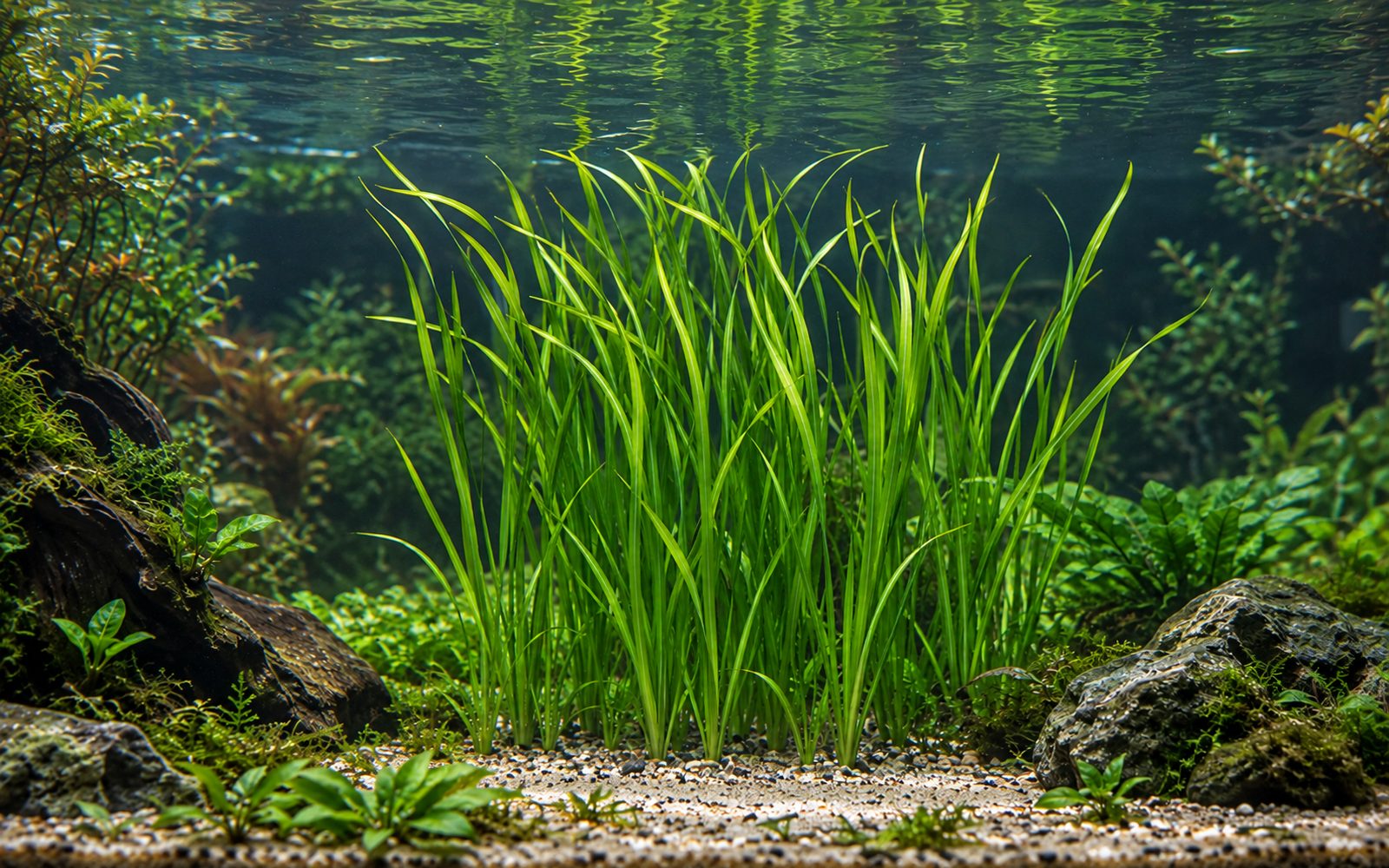
Vallisneria nana is a narrow-leaved eelgrass from the waters of northern Australia. Its leaves are only 2–5 mm wide, bright green and grass-like, and range from 20 to 50 cm in length. Although its name means "dwarf," it can grow to half a meter in the aquarium; its real distinguishing feature is its narrow leaves.
Its thin leaves, waving in the current, give the aquarium a lively, natural look. Because it looks more delicate than V. spiralis and giant vallisneria, it is a good choice for the background of 60–100 liter aquariums, where larger plants would look overpowering. It adapts to hard water and setups without CO₂.
Planting and Placement
- Bury the roots, but keep the light-colored crown, where the leaves emerge, at the substrate surface; a buried crown rots.
- Plant in rows in the background or along the sides, leaving 4–5 cm between plants.
- A root tab speeds up the first months.
Care and Fertilization
- Light: Medium.
- CO₂: Not required.
- Fertilizer: Root tabs and liquid fertilizer; with iron deficiency, new leaves come in pale.
- Trimming: Cut overly long leaves lying on the surface at the base.
- Caution: Like other Vallisneria species, it can be sensitive to liquid carbon products (glutaraldehyde).
Propagation
It regularly produces daughter plants at the tips of runners that travel under the substrate. Once the daughters have a few leaves, they can be cut from the mother plant and planted where you want them. Left to itself, it forms a dense curtain within a few months.
Common Problems
- Leaves melting: Seen after replanting or when liquid carbon is used; if the roots are healthy, it grows back.
- Rotting crown: Planted too deep; expose the crown.
- Spreading into unwanted spots: Regularly pull out excess runners and daughter plants.
Hobbyist notes
Things you won't find in books, learned by trial and error. The most helpful ones are on top.
Change history and contributors
- Page created · October 16, 2026