
Water parameters
Overview
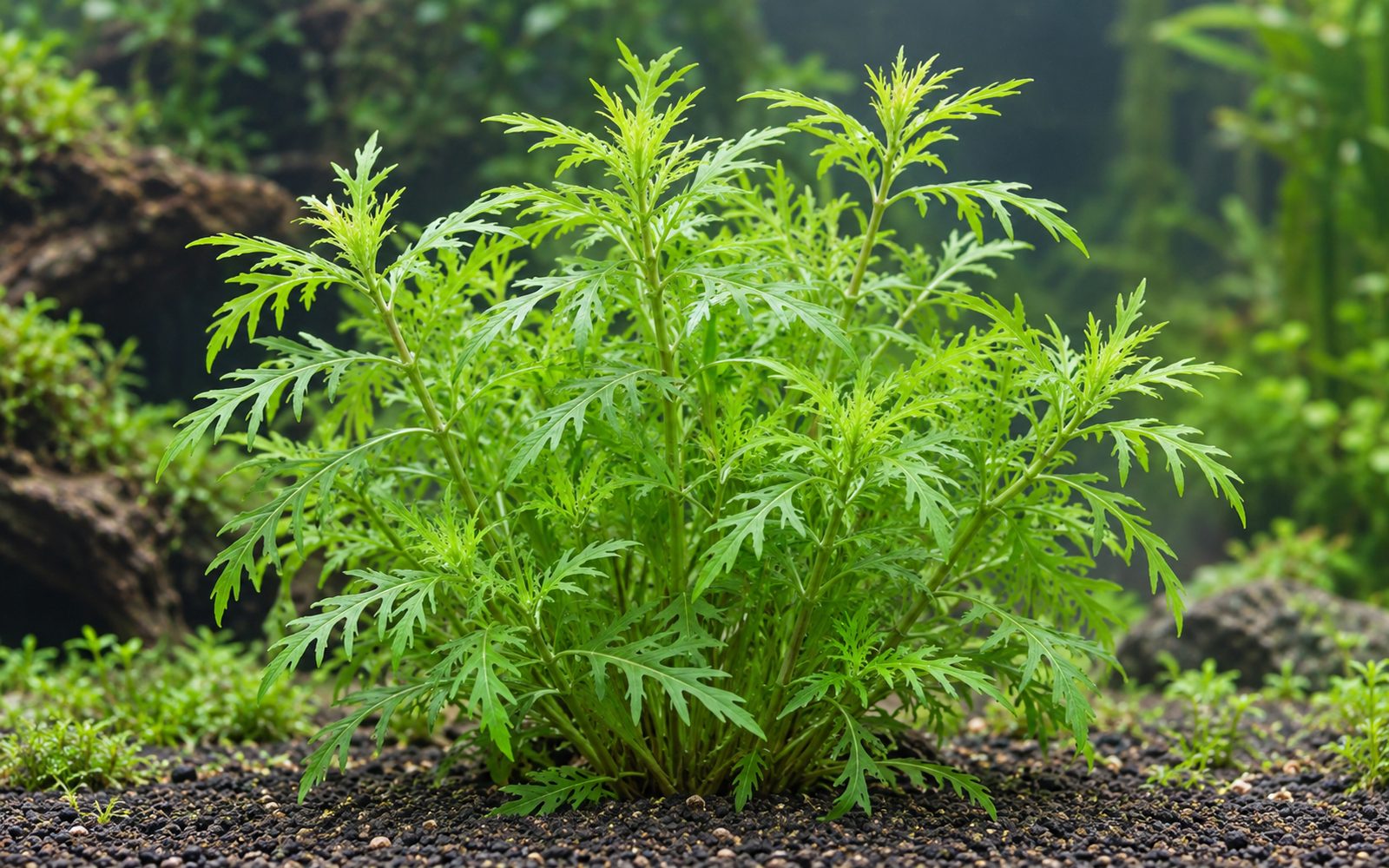
Water wisteria, with its lacy, divided leaves, is one of beginners' favorite stem plants. Underwater the leaves are deeply lobed and broad, while the emersed leaves from the nursery are oval with toothed edges. When light decreases or the temperature gets too high, less divided leaves may also appear underwater.
It grows without CO₂ or special fertilizer and adapts to a wide range of water parameters. Its bushy structure is a good refuge for fry and shrimp. Because it grows fast, it is also useful in the competition with algae for nutrients.
Planting and Placement
- Stems are planted singly or in twos or threes, with 4–5 cm between them; the broad leaves should not be crowded side by side.
- The lower leaves are removed and the stem is buried 3–4 cm deep.
- Even on its own it forms a full clump in the background or in a corner.
- If the stems are laid on the substrate and lightly anchored, upright shoots grow from the nodes; this method can also produce a low, spreading cover.
Care and Fertilization
- Light: Medium; in low light the leaves are less divided and paler.
- CO₂: Not required; if added, growth speeds up.
- Fertilizer: Regular liquid fertilizer and root tabs keep the leaves dark green.
- Trimming: Stems that reach the surface are cut from the top; regular trimming keeps the clump dense.
Propagation
It propagates easily from top cuttings. In addition, side shoots growing from nodes near the substrate can be separated and planted elsewhere.
Common Problems
- Yellowing old leaves: Usually nitrogen or general nutrient deficiency; add liquid fertilizer.
- Holes in the leaves: Potassium deficiency.
- Undivided, oval leaves: Light is weak or the water is too warm.
- Plant-eating fish: Silver dollars and large cichlids may nibble the leaves.
Hobbyist notes
Things you won't find in books, learned by trial and error. The most helpful ones are on top.
Change history and contributors
- Page created · October 16, 2026