
Water parameters
Overview
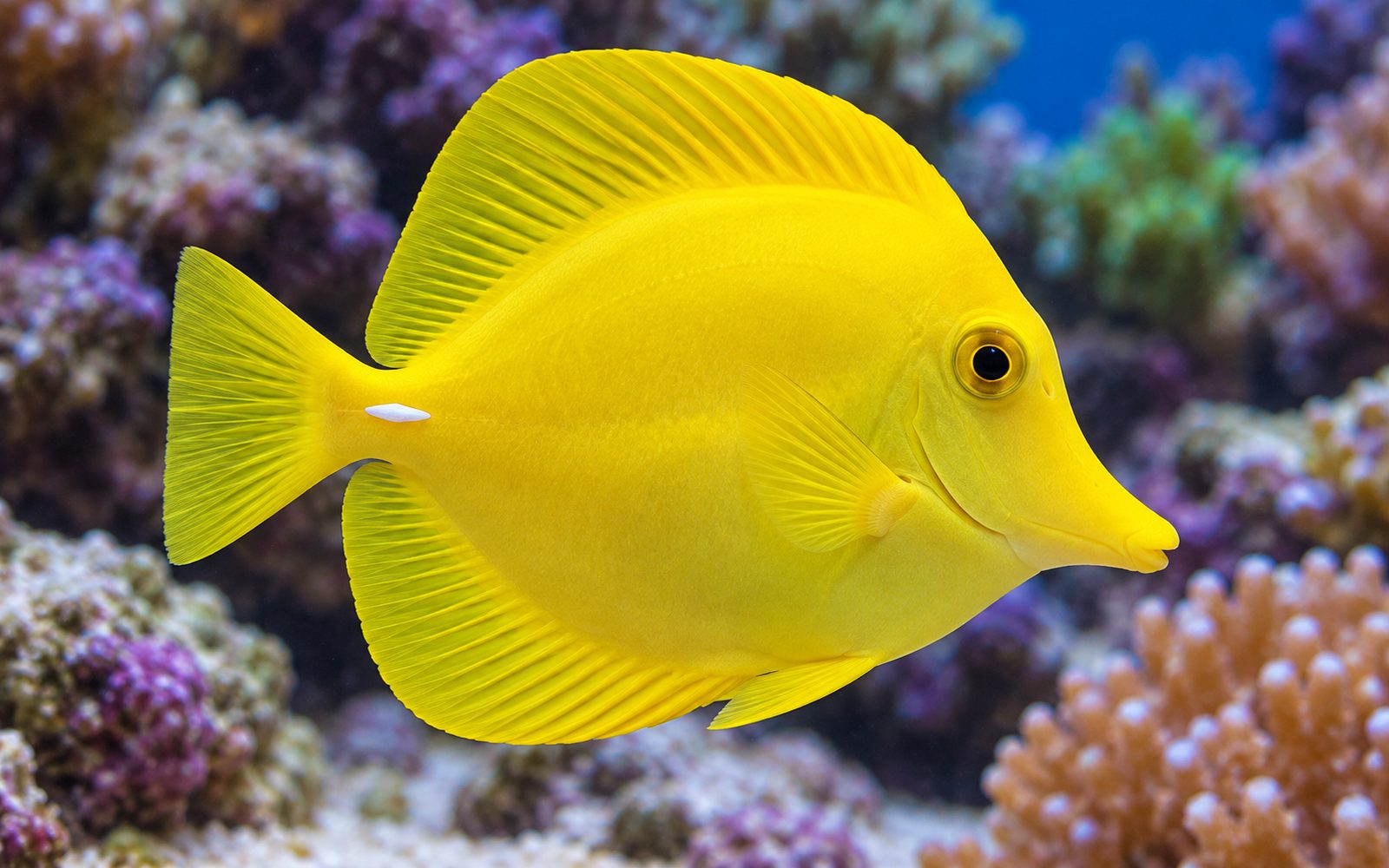
With its bright yellow color and flat, tall body, the yellow tang is one of the most familiar fish in the marine aquarium. It carries a white, scalpel-sharp spine on the tail base; it can cut with this spine when angered or while being handled. At night its color fades and a whitish horizontal band and brown patches appear on the body; this clears up with the morning light and should not be mistaken for disease.
For many years most specimens in the trade were collected from Hawaii. After collection for aquariums was restricted in Hawaii, its price rose and farm-bred specimens also began to be sold. If you can find a captive-bred specimen, prefer it; it is better prepared for dry food and aquarium conditions.
Natural Habitat
It lives on shallow reef flats and slopes of the Pacific, juveniles among corals and adults in small groups on the open reef. It grazes the fine algae on rocks throughout the day.
Tank Setup
- Volume: At least 400 liters and 150 cm in length for an adult; it needs a long, open swimming area.
- Water: Salinity specific gravity 1.023–1.026, pH 8.1–8.4, temperature 24–27°C, high oxygen and strong flow.
- Decor: Mature live rock and crevices to hide in at night. Algae on the rock provides a natural grazing ground.
- Reef compatibility: Reef-safe; it leaves corals and invertebrates alone and helps reduce unwanted algae.
Diet
Herbivorous. Its staple food is dried seaweed (nori) on a clip and foods containing spirulina or seaweed; these should be offered every day. Add protein a few times a week with frozen mysis and brine shrimp. With a lack of algae, head and lateral line erosion and color fading are seen.
Behavior and Compatibility
When kept alone it is a calm member of a community aquarium. It is cantankerous towards fish that resemble it, especially other Zebrasoma species and tangs added later; it chases them while swinging its tail spine.
Good companions: Clownfish, anthias, fairy wrasses, cardinalfish, gobies, cleaner shrimp; in a large aquarium, a tang from a different genus (e.g. blue tang).
Avoid: Another Zebrasoma such as the purple tang (except in a very large aquarium), large and aggressive triggerfish, lionfish.
Group and Colony Structure
In a normal home aquarium it is kept as a single specimen. Two yellow tangs usually do not leave each other alone. In aquariums over 1000 liters, if three or more individuals are added on the same day, aggression is spread out and a showy group can form; an individual added later, however, is attacked.
Breeding
A pelagic spawner; pairs or groups release eggs and sperm into the water column. It is not bred in the home aquarium. Breeding was achieved at research facilities, and commercial production followed.
Health and Common Problems
- Marine white spot and velvet: Like all tangs it is prone to them; quarantine a new specimen for 4–6 weeks. Copper treatment is used only in the quarantine tank.
- Head and lateral line erosion (HLLE): Associated with insufficient green food and poor water quality.
- Fin and skin wounds: Seen as a result of fights with other tangs.
Sexing
Cannot be distinguished externally. Although mature males are reported to be slightly larger, this is not a reliable criterion.
Tank mates
This list is calculated automatically from the species profile and grows as new species are added to the catalog. Try it in the planner for a definite answer.
Hobbyist notes
Things you won't find in books, learned by trial and error. The most helpful ones are on top.
Change history and contributors
- Page created · October 16, 2026