
Water parameters
Overview
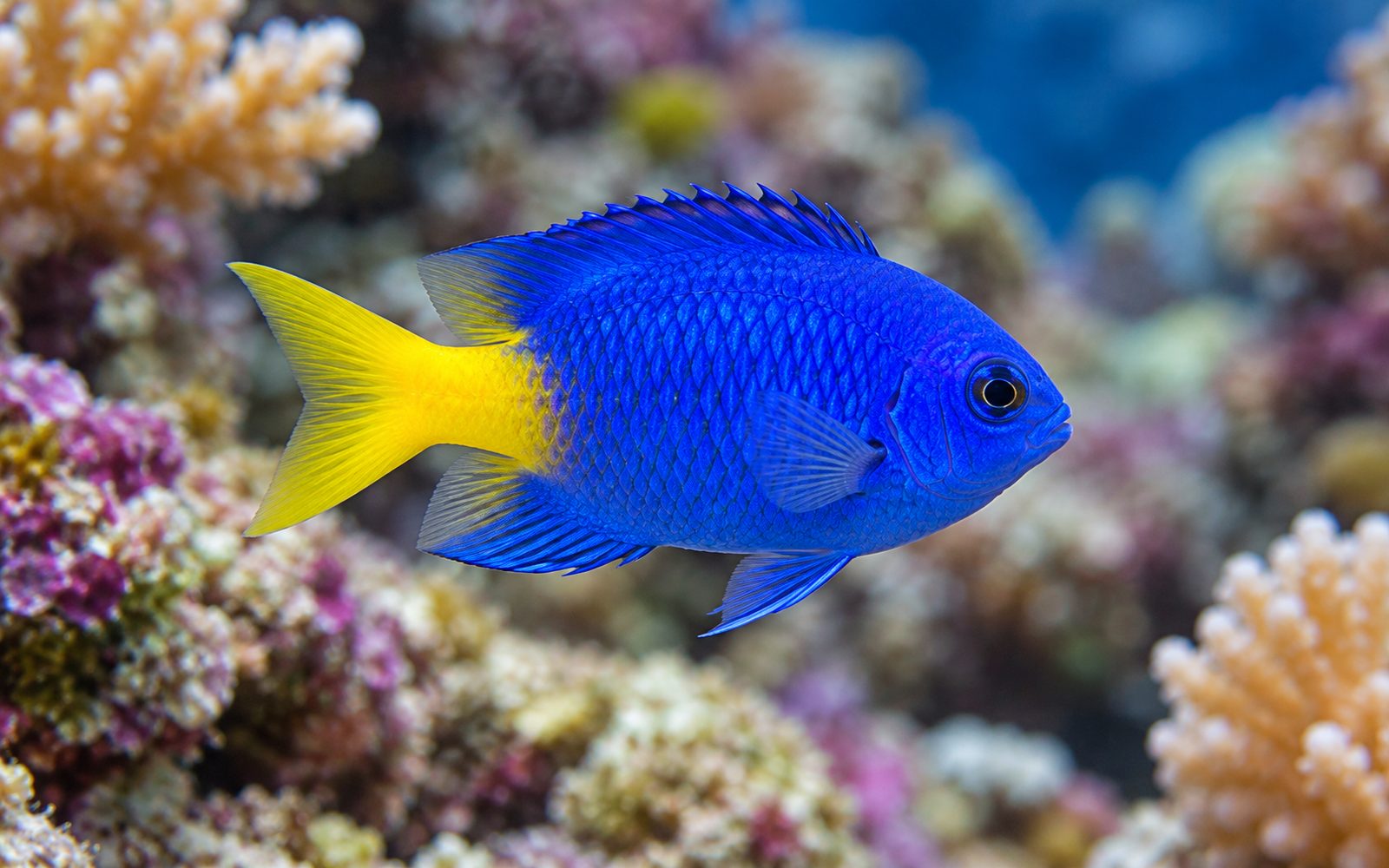
The yellowtail blue damsel is a small reef fish with an electric blue body and a bright yellow tail. It is considered one of the calmest damselfish; still, one should not forget that it is a damsel, and it claims the corner it lives in as it ages. It is hardy, inexpensive and suits small reef aquariums.
In the similar-looking azure damsel (Chrysiptera hemicyanea), the yellow color also extends along the belly. In males of the blue damsel (Chrysiptera cyanea), on the other hand, the tail has an orange tint, and that species is noticeably more aggressive; be careful not to confuse them when buying.
Natural Habitat
It lives in small groups among branching corals in the sheltered lagoons of the Western Pacific. When in danger it retreats among the coral branches, and it picks plankton from the water just above the coral.
Tank Setup
- Volume: At least 60 liters for a single specimen; 200 liters or more for a small group.
- Water: Salinity specific gravity 1.023–1.026, pH 8.1–8.4, temperature 24–27°C; zero ammonia and nitrite, low nitrate.
- Reef compatibility: Reef-safe; it leaves corals and invertebrates alone.
- Layout: A rock structure full of holes and branching corals; each individual should have a corner to retreat to.
- Order of addition: Like other damselfish, adding it as one of the last members of the community reduces fighting.
Diet
Omnivorous. Offer marine flakes and small granules, frozen mysis, brine shrimp and copepods, and foods containing algae. Feed small amounts twice a day; its color is best maintained with a varied diet.
Behavior and Compatibility
Calmer than most damselfish and compatible with medium-sized peaceful fish. Still, it may chase small fish that approach the rocky corner it has chosen; it is harsher towards its own kind and similarly colored damsels.
Good companions: Clownfish, gobies, blennies, cardinalfish, royal gramma, cleaner shrimp.
Avoid: Aggressive damselfish (blue damsel, Dascyllus species), dottybacks, predatory fish; very shy species in a small aquarium.
Group and Colony Structure
In a small aquarium a single specimen is the most trouble-free option. In an aquarium of 200 liters or more with plenty of hiding places, a group of 3–5 can be kept; the whole group should be added at the same time and should be an odd number. Two individuals together usually squabble constantly.
Breeding
It can spawn in the aquarium. The male cleans a surface at the base of a rock or coral; the female sticks the eggs there and the male guards them. The fry are planktonic and very difficult to raise in a home aquarium.
Health and Common Problems
- A hardy species; it rarely gets sick in suitable water.
- Marine white spot and velvet: Keep new fish in quarantine.
- An individual that is bullied within the group hides and loses condition; separate it in that case.
Sexing
There is no reliable external difference. During spawning the female's belly becomes noticeably fuller.
Tank mates
This list is calculated automatically from the species profile and grows as new species are added to the catalog. Try it in the planner for a definite answer.
Should not be kept together



Hobbyist notes
Things you won't find in books, learned by trial and error. The most helpful ones are on top.
Change history and contributors
- Page created · October 16, 2026