
Water parameters
Overview
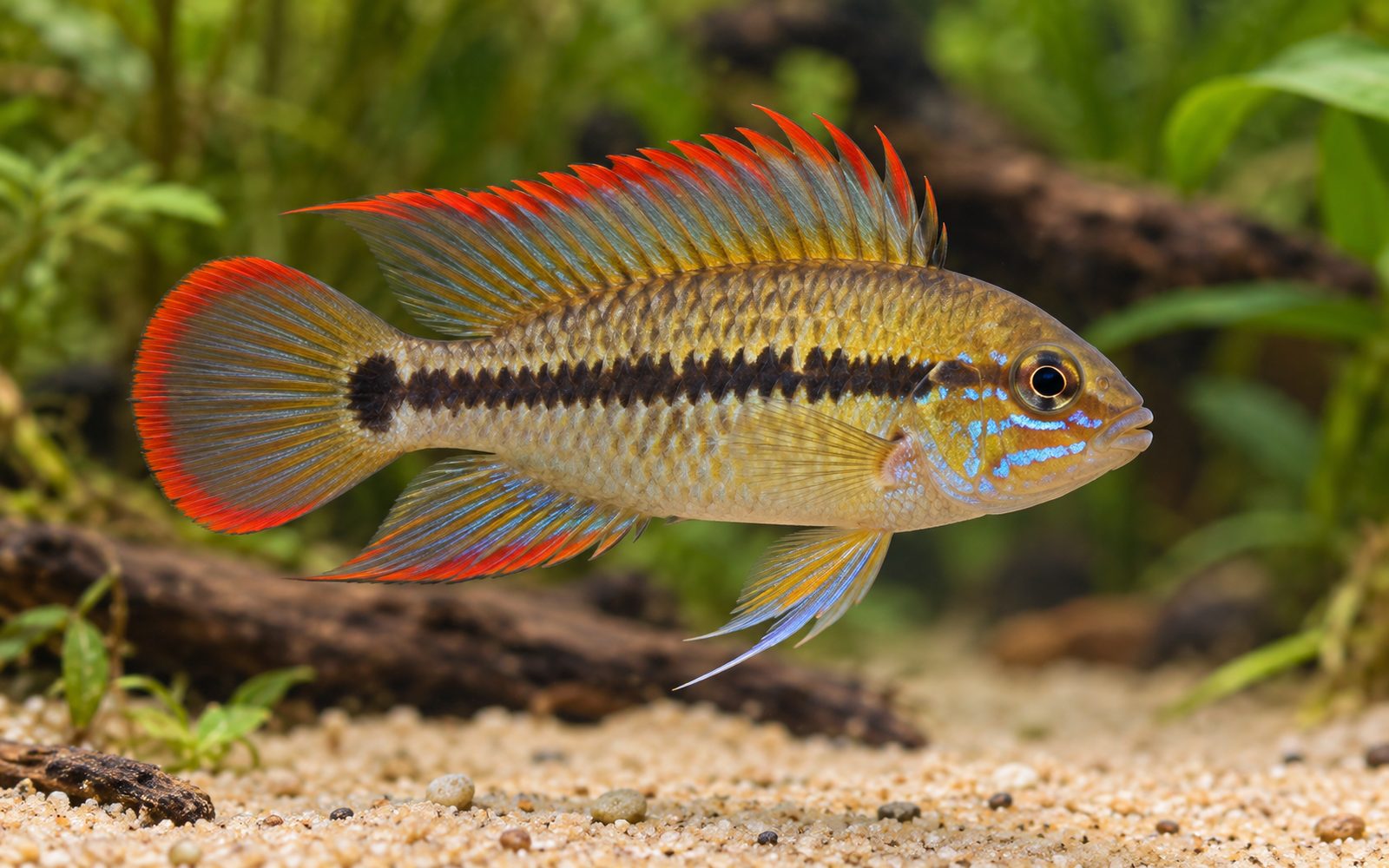
Apistogramma macmasteri is an Apistogramma with a relatively deep, sturdy body, coming from streams near the foothills of the Colombian plains. The male's tail and dorsal fin are edged in bright red; there are fine blue lines on its cheeks and a dark, "D"-shaped spot at the base of the tail.
In the trade it is often sold under the name Apistogramma viejita. The two species are close relatives, but the upper edge of the viejita male's dorsal fin is dark and the spot at its tail base is angular. Most of the fish sold are farm-bred, and their red tones have been intensified through selection.
Color and Fin Varieties
- Red / Red Tail (red form): a farm form in which the red on the tail and fins has been expanded through selection.
- Villavicencio: a wild form sold under the name of its collection region, with plainer coloring.
Natural Habitat
It lives in the Guaytiquía and Metica tributaries of the upper Meta River. It prefers small, slow-flowing streams covered with leaf litter and shallow pools along the banks. Its natural water is very soft and slightly acidic.
Tank Setup
- Volume: at least 60 liters for one male and two females; a length of 80 cm is better.
- Caves: one cave for each female; a bottom divided up by roots and stones.
- Substrate and decor: fine sand, dried leaves, plenty of plants, dim light.
- Water: 25–27°C. Farm-bred fish adapt to up to pH 7; breeding requires soft, slightly acidic water. A 25–30% water change every week.
Diet
Carnivorous. Frozen bloodworms, brine shrimp, cyclops and daphnia are the best foods; it also takes quality small granules. Live food markedly increases the brightness of the red tones.
Behavior and Compatibility
It sets up a territory on the bottom and shows no interest in midwater fish. Males are harsh toward each other; females can also be very aggressive throughout the fry period. It hunts shrimplets and adult dwarf shrimp.
Good companions: small to medium tetras (cardinal, rummy-nose, ember), pencilfish, hatchetfish, otocinclus.
Avoid: other Apistogramma males (in a small aquarium), large cichlids, shrimp, large groups of bottom dwellers that constantly roam the bottom.
Group and Colony Structure
A harem is the most suitable arrangement: 1 male and 2 females. There should be enough distance between the females; each female has her own cave and small territory. If a single pair is kept, places where the male can hide should be provided.
Breeding
The female lays her eggs on the ceiling or wall of the cave and takes on their care. The eggs hatch in 2–3 days, and the fry become free-swimming a few days later. A female guarding fry turns yellow and the front edges of her pelvic fins turn black. In a small aquarium the female can behave very aggressively toward the male; if necessary, the male is removed. The fry are fed newly hatched brine shrimp.
Health and Common Problems
It is sensitive to nitrate buildup and dirty substrate. Avoid sudden water changes; values should be kept stable. Wild fish may carry internal parasites.
Sexing
Males reach about 7 cm and females about 5 cm. Males' fins are longer and edged in red. Females have no red edging; their pelvic fins have black front edges and their body turns bright yellow during the fry period.
Tank mates
This list is calculated automatically from the species profile and grows as new species are added to the catalog. Try it in the planner for a definite answer.
Usually compatible
 Emerald Betta
 Emerald Cory
 Porthole Catfish
 Keyhole Cichlid
 Firemouth Cichlid
 Cupid Cichlid
 Buffalohead Cichlid
 Festivum
 Geophagus altifrons
Should not be kept together






Hobbyist notes
Things you won't find in books, learned by trial and error. The most helpful ones are on top.
Change history and contributors
- Page created · October 16, 2026