
Water parameters
Overview
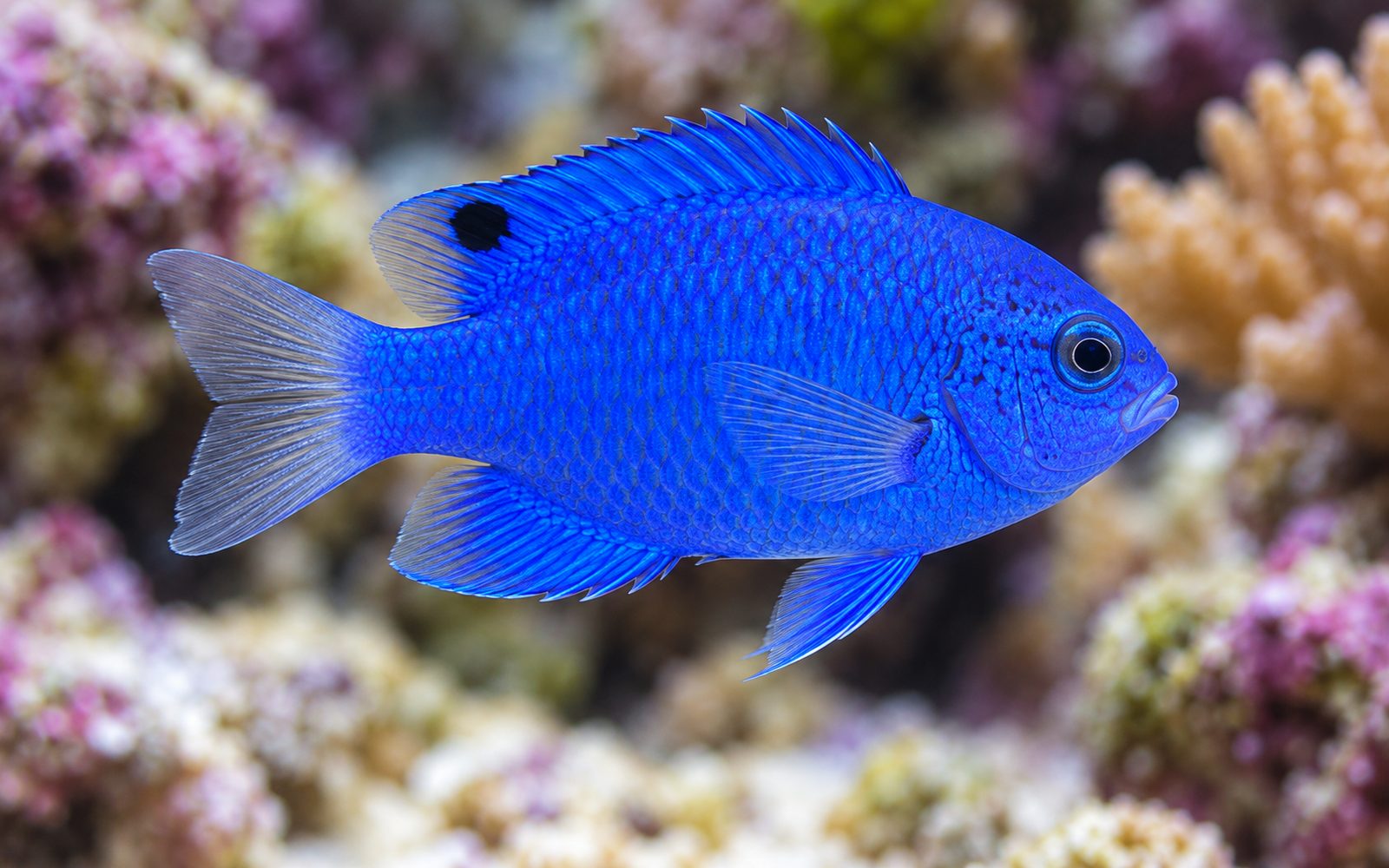
With its bright electric blue color, the blue devil damsel is one of the fish marine aquarists come across most often, and one of the cheapest. Females and juveniles are entirely blue, with transparent tails and a small black spot at the rear base of the dorsal fin. In males the tail and sometimes the snout turn orange-yellow; this color varies by region, and in some populations the males stay blue as well.
The price of its hardiness is aggression: for a small fish it is surprisingly territorial. It used to be used to start the cycle in a new aquarium; today this method is not recommended, and fishless cycling is preferred. It is very hard to remove from the aquarium later, so think carefully before buying one.
Natural Habitat
It lives in shallow lagoons and on reef flats of the Indo-West Pacific, among coral rubble and rock crevices. The male defends a territory centered on a rock crevice and lives there with several females.
Tank Setup
- Volume: at least 80 liters for a single fish; 200 liters or more for a group, with many hiding places.
- Water: salinity 1.023–1.026 specific gravity, pH 8.1–8.4, temperature 24–27°C. It tolerates a wide range of values, but stable water is always better.
- Reef compatibility: reef safe; it leaves corals and invertebrates alone.
- Order of introduction: it should be added last. The first damsel added claims the whole aquarium and attacks fish that come later.
- Layout: a rock structure full of holes; each fish should have its own escape spot.
Diet
Omnivorous and not fussy at all. Offer marine fish flakes and granules, frozen mysis and brine shrimp, and foods containing algae. Twice a day, as much as is eaten within a few minutes, is enough.
Behavior and Compatibility
It defends its territory even against fish larger than itself. Slow and timid species become constant targets; newly added fish come under heavy pressure in the first days. It is harshest toward its own species and similarly colored blue damsels.
Good companions: larger, faster species that can defend themselves: tangs, clownfish (in enough volume), large wrasses, cleaner shrimp.
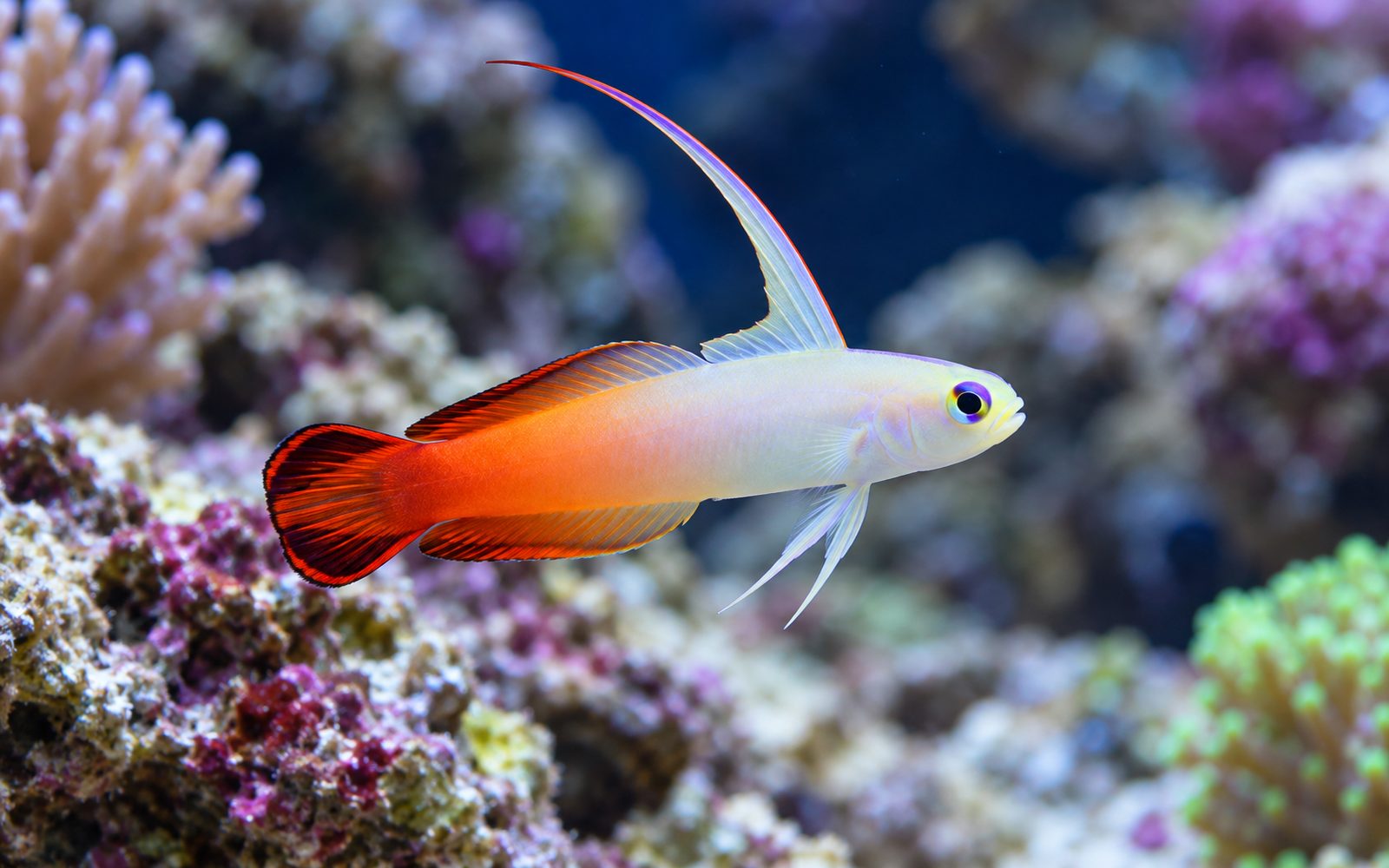
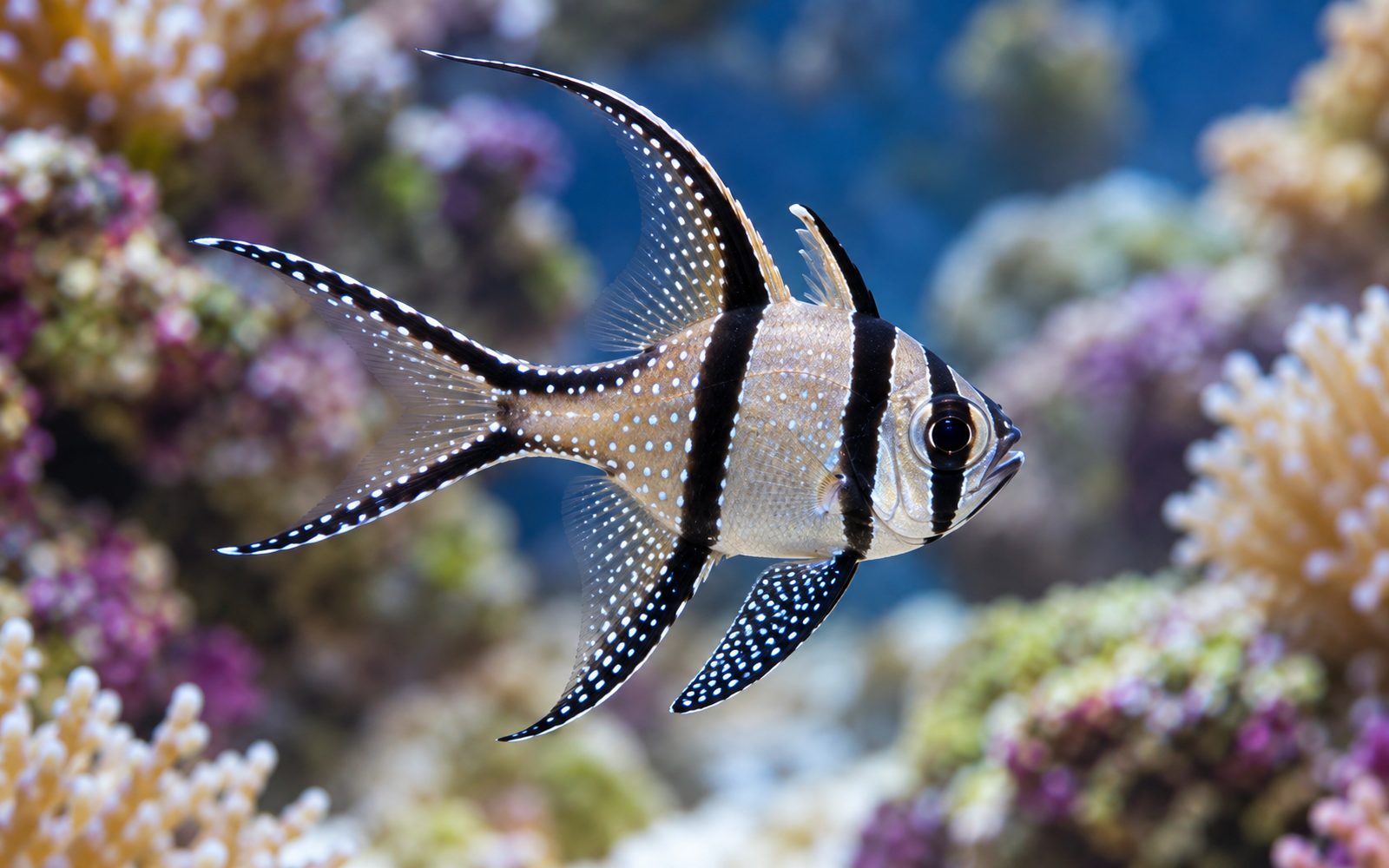
Avoid: peaceful, timid species such as firefish, mandarin, neon goby and cardinalfish; other blue damsels in a small aquarium.
Group and Colony Structure
In a small aquarium it is kept as a single individual. In an aquarium of 200 liters or more with plenty of hiding places, a small group of one male and several females can be tried; the whole group should be added at the same time. Two males together fight constantly; the weaker one usually dies.
Breeding
Spawning in the aquarium is not rare. The male cleans a rock surface and lures the female there; the eggs stick to the rock and are guarded by the male. The larvae go through a long planktonic stage; raising them in a home aquarium is very difficult.
Health and Common Problems
- Damsels are among the hardiest marine fish; disease is rare.
- Marine white spot and velvet: keep newly arrived fish in quarantine.
- Torn fins from fighting and individuals that hide constantly and lose weight: if there is bullying, separate the fish.
Sexing
In most populations the male's tail is orange-yellow, and the black spot seen in females is absent in males. Females and juveniles are entirely blue.
Tank mates
This list is calculated automatically from the species profile and grows as new species are added to the catalog. Try it in the planner for a definite answer.
Should not be kept together


Hobbyist notes
Things you won't find in books, learned by trial and error. The most helpful ones are on top.
Change history and contributors
- Page created · October 16, 2026