
Water parameters
Overview
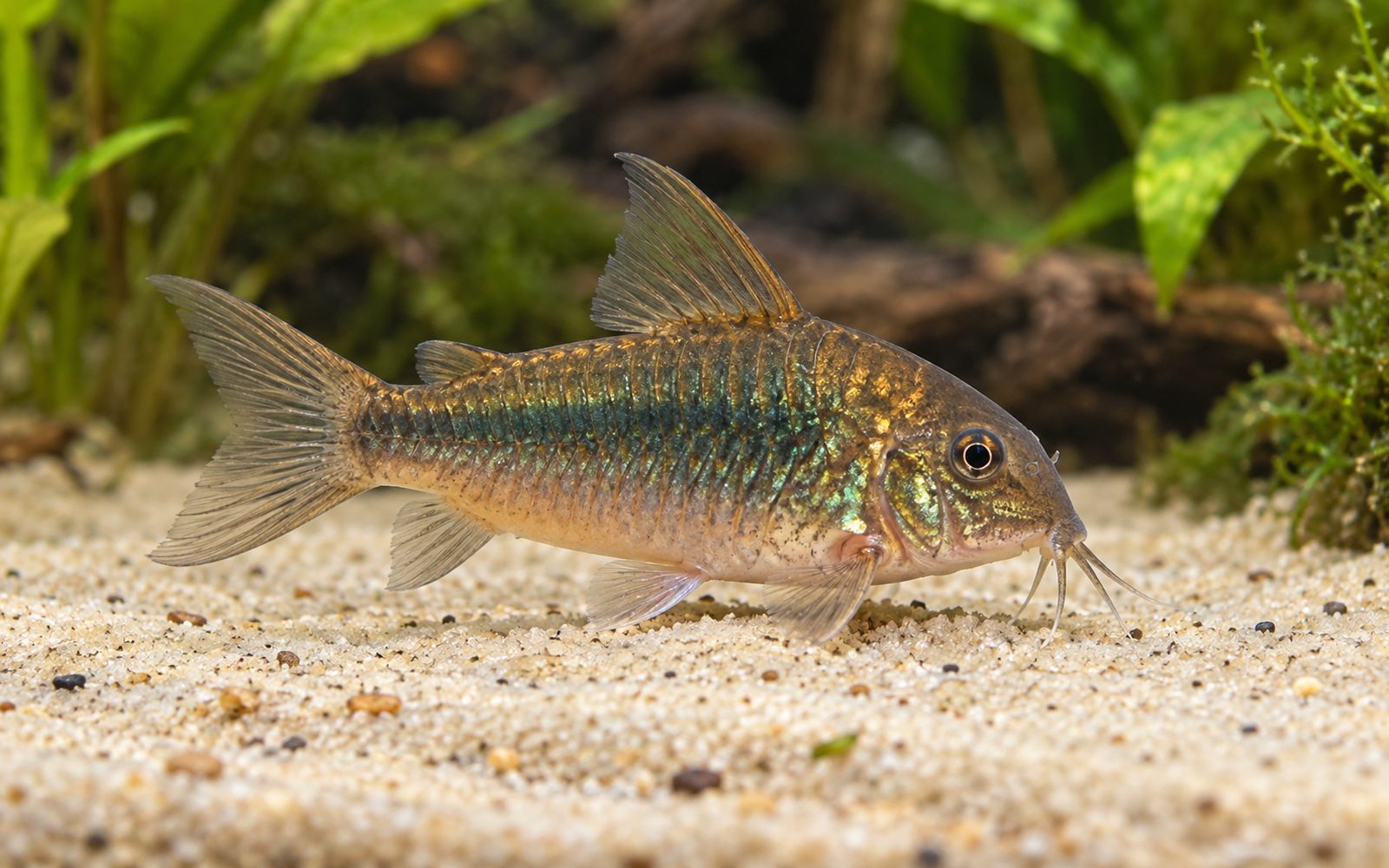
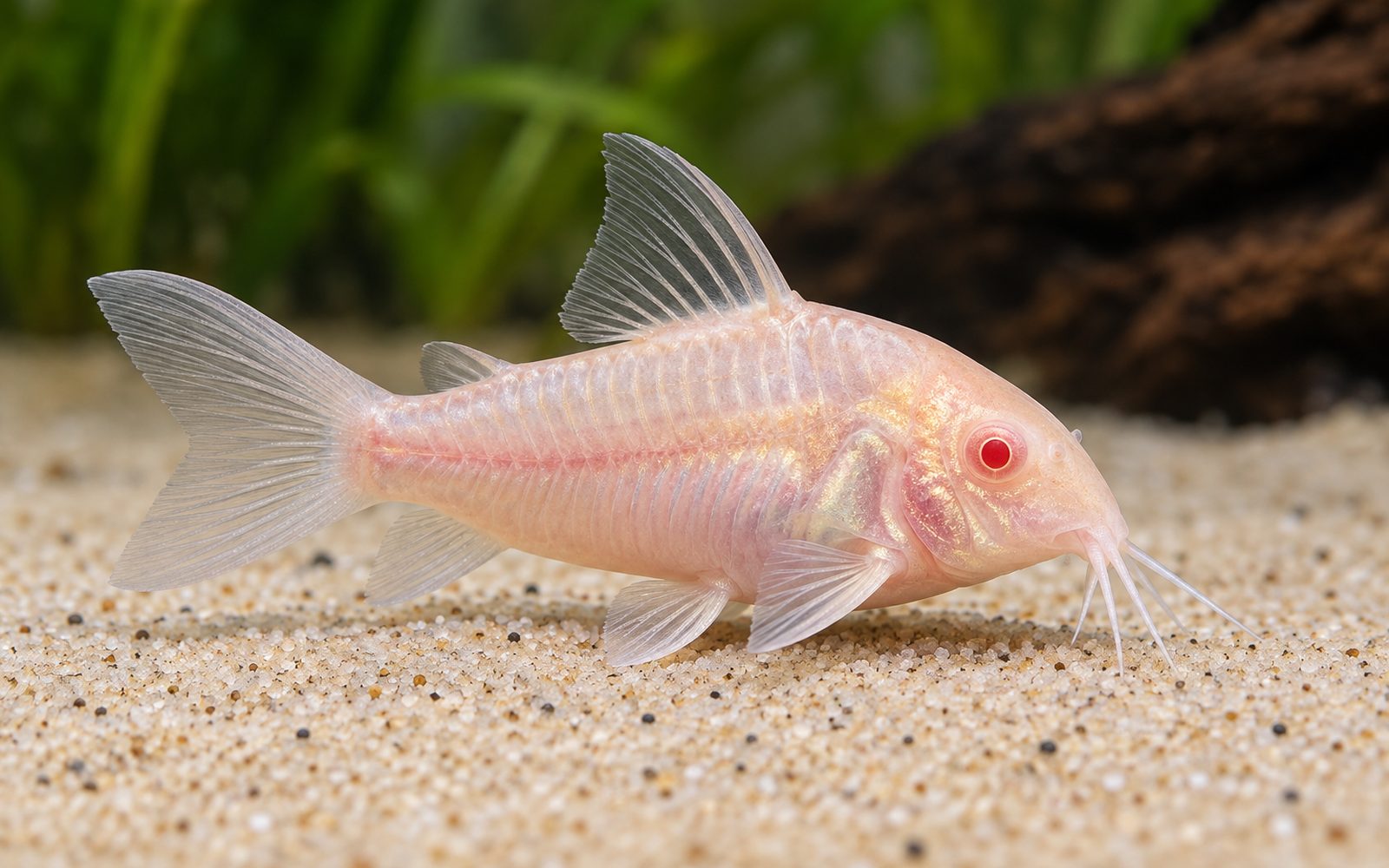
The bronze cory is one of the hardiest and most common species in the genus Corydoras. It has an iridescent bronze-green sheen; an albino form is also common. It searches for food by probing the substrate with the barbels around its mouth, and now and then darts to the surface to gulp air; this behavior is normal.
It is sold as a "cleaner fish", but eating leftover food is only a side effect: corydoras are fish that need to be fed separately and adequately.
Color and Fin Varieties
The varieties have not been described yet. Be the first to write it.
Natural Habitat
Across a wide range it lives in large groups in shallow, slow-flowing streams and ponds with sandy or muddy bottoms. This wide distribution explains its tolerance of varied water parameters.
Tank Setup
- Volume: at least 60 liters for a group of 6; footprint matters.
- Substrate: always fine, rounded sand. Sharp gravel wears down the barbels and leads to infection.
- Water: 22–26°C is ideal; it adapts to a wide pH range. It is sensitive to nitrate buildup; regular water changes are essential.
- Decor: roots, the undersides of leaves and shaded areas where it can rest. An open sand area at the front makes it easier to watch the fish forage.
Diet
It should be fed sinking foods: sinking tablets, granules and frozen bloodworms. A tablet given after the lights go out reduces competition with fast midwater fish. Corydoras fed only on leftovers become weak.
Behavior and Compatibility
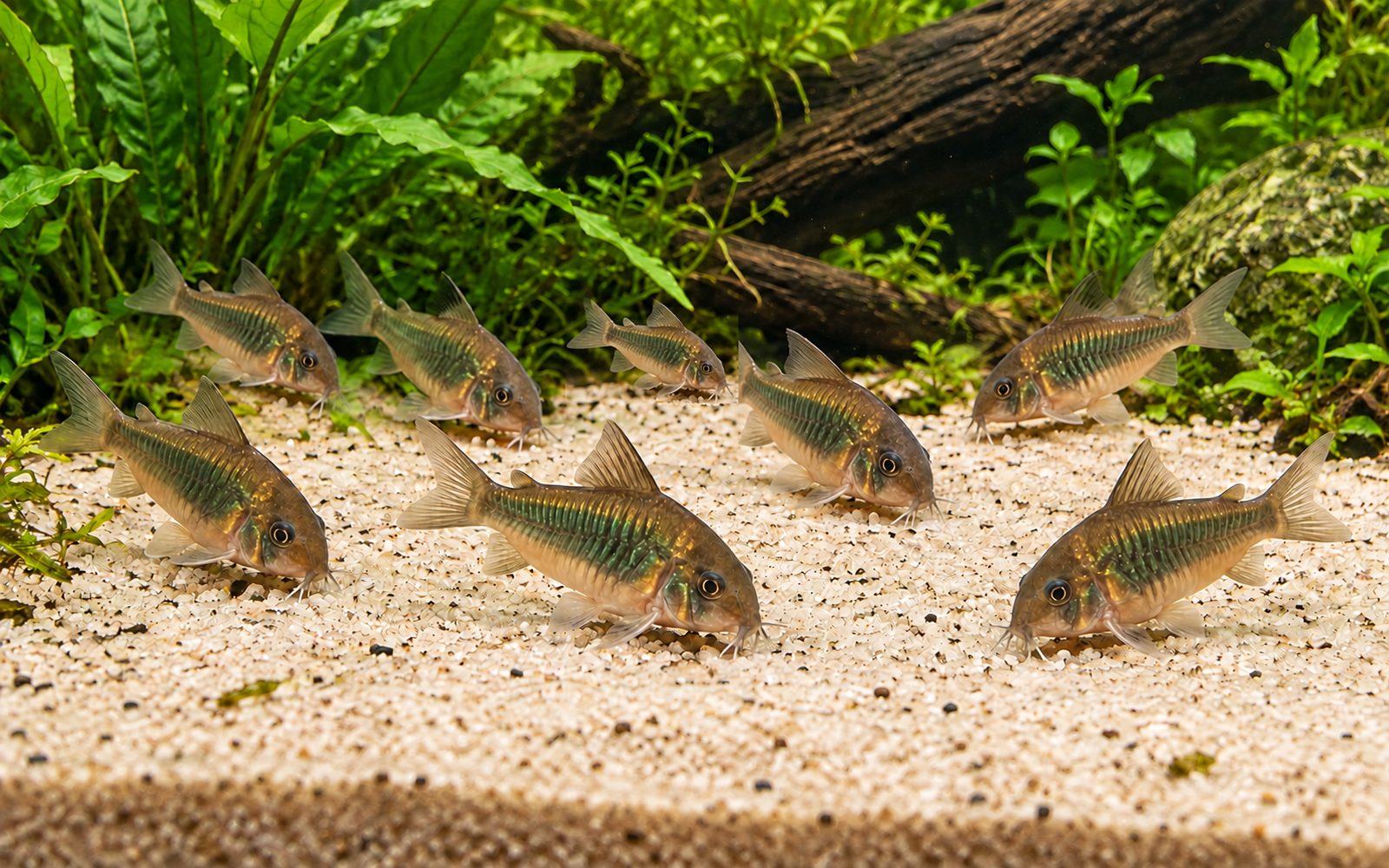
Extremely peaceful; it does not bother any fish or shrimp. Because it likes company, it should be kept in a group of at least 6, preferably 8–10; different corydoras species may mix and school together.
Good companions: almost all peaceful community fish: tetras, rasboras, guppies, platies, gouramis, angelfish, shrimp.
Avoid: aggressive cichlids that claim the bottom, large fish that can fit it in their mouths (oscars), species that need very warm water (C. sterbai is a better choice for discus).
Group and Colony Structure
In the wild, corydoras live in schools of hundreds. In the aquarium at least 6, ideally 10 or more individuals are recommended; in a large group they forage together along the bottom and are much more active.
Building a group of the same species is important. Although different corydoras species may join each other, each behaves more comfortably next to its own kind. The albino form of the bronze cory is the same species and joins the same group. For those who want to breed them, a ratio of 2 males to each female improves spawning success.
Breeding
It breeds easily in the aquarium. A large, rather cool water change (imitating the rainy season) often triggers spawning. The female takes the male's sperm onto the eggs she holds between her fins and sticks them to the glass or leaves (the "T position"). The eggs hatch in 4–6 days; since adults may eat the eggs, they can be moved to a separate container.
Health and Common Problems
- Barbel erosion: dirty substrate or sharp gravel. Replacing the substrate and improving water quality is enough.
- Red gills / rapid breathing: may be a sign of nitrite or ammonia poisoning.
- Most corydoras are sensitive to salt and to some medications (copper, malachite green); halve the dose when treating.
Sexing
Viewed from above, females are clearly broader and plumper, especially when carrying eggs. Males are smaller and slimmer; their pelvic fins are slightly more pointed.
Tank mates
This list is calculated automatically from the species profile and grows as new species are added to the catalog. Try it in the planner for a definite answer.
Usually compatible
 Flame Tetra
 Blackfin Corydoras
 Polystictus Corydoras
 Emerald Betta
 Emerald Cory
 Emerald Dwarf Rasbora
 Porthole Catfish
 Keyhole Cichlid
 Cupid Cichlid
 Geophagus altifrons
Should not be kept together






Hobbyist notes
Things you won't find in books, learned by trial and error. The most helpful ones are on top.
Change history and contributors
- Page created · October 16, 2026