

Water parameters
Overview
The auratus is one of the first Malawi cichlids to enter the hobby and is still one of the mbuna most often seen in stores today. Most of the fish sold are juveniles or females with black and white horizontal stripes on a golden yellow background. Males change color as they mature: the yellow disappears, the body turns dark brown to black and the stripes become pale yellow or cream.
The price of this beauty is its temperament. The male auratus is very aggressive for its size; in a small aquarium it can chase females and other fish to death. It is one of the species beginners buy most often but have the most trouble with.
Natural Habitat
It lives on the rocky shores of Lake Malawi, among and on top of rock piles. It feeds on the algae layer on the rocks and on the insect larvae and small crustaceans within it. The water is hard, alkaline and clear.
Tank Setup
- Volume: At least 250 liters and 120 cm of length for a single male and 4–6 females.
- Rockwork: Rock piles with many caves covering the aquarium; lots of places where the females can escape the male's sight.
- Water: Hard and alkaline (pH 7.8–8.5); aragonite substrate or Malawi salt.
- Maintenance: A strong filter and a 30–50% water change every week.
Diet
Omnivorous. Spirulina-based mbuna food should be the staple; brine shrimp, mysis or cyclops can be added a few times a week. Foods containing bloodworms and mammalian meat should be avoided; they can lead to Malawi bloat.
Behavior and Compatibility
The male considers most of the aquarium his territory. Females can also be bad-tempered among themselves and toward other species. Yellow and striped species (Labidochromis yellow, johanni females) become targets for the male auratus.
Good companions: blue mbuna of similar size and robust temperament (cobalt blue zebra, zebra mbuna), Labeotropheus species, large synodontis catfish suited to hard water.
Avoid: yellow and striped mbuna, Melanochromis relatives such as johanni, chipokae and maingano, small and calm mbuna, haplochromines, community fish, shrimp.
Group and Colony Structure
- Single male: Only one male auratus is kept in the aquarium; two males can end with the death of the weaker one.
- Large group of females: At least 4, preferably 5–6 females per male. One or two females cannot escape the male's pressure.
- Starting with juveniles: In a group bought as yellow juveniles, surplus males should be removed once they start changing color.
Breeding
A mouthbrooder. The male courts in front of a cave; the female takes the eggs into her mouth and they are fertilized via the egg spots on the male's anal fin. The female carries 15–30 eggs for about 3 weeks. The fry are striped yellow and black like the females.
Health and Common Problems
- Malawi bloat: Wrong food and stress.
- Fight wounds: Seen in females, especially when there are few of them.
- Dominant female: In the absence of a male, one of the females may take on male coloration and dominate the group.
Sexing
In mature fish telling them apart is easy: males are dark brown to black with pale yellow or cream stripes; females have black and white stripes on a golden yellow background. Males begin to change color at about 6–8 cm. In aquariums without a male, it is a known phenomenon for a dominant female to take on colors close to those of a male.
Tank mates
This list is calculated automatically from the species profile and grows as new species are added to the catalog. Try it in the planner for a definite answer.
Usually compatible
 Banded Jewel Cichlid
 Demasoni Cichlid
 Jack Dempsey
 Red Devil Cichlid
 Convict Cichlid
 Pundamilia nyererei
 Pundamilia pundamilia
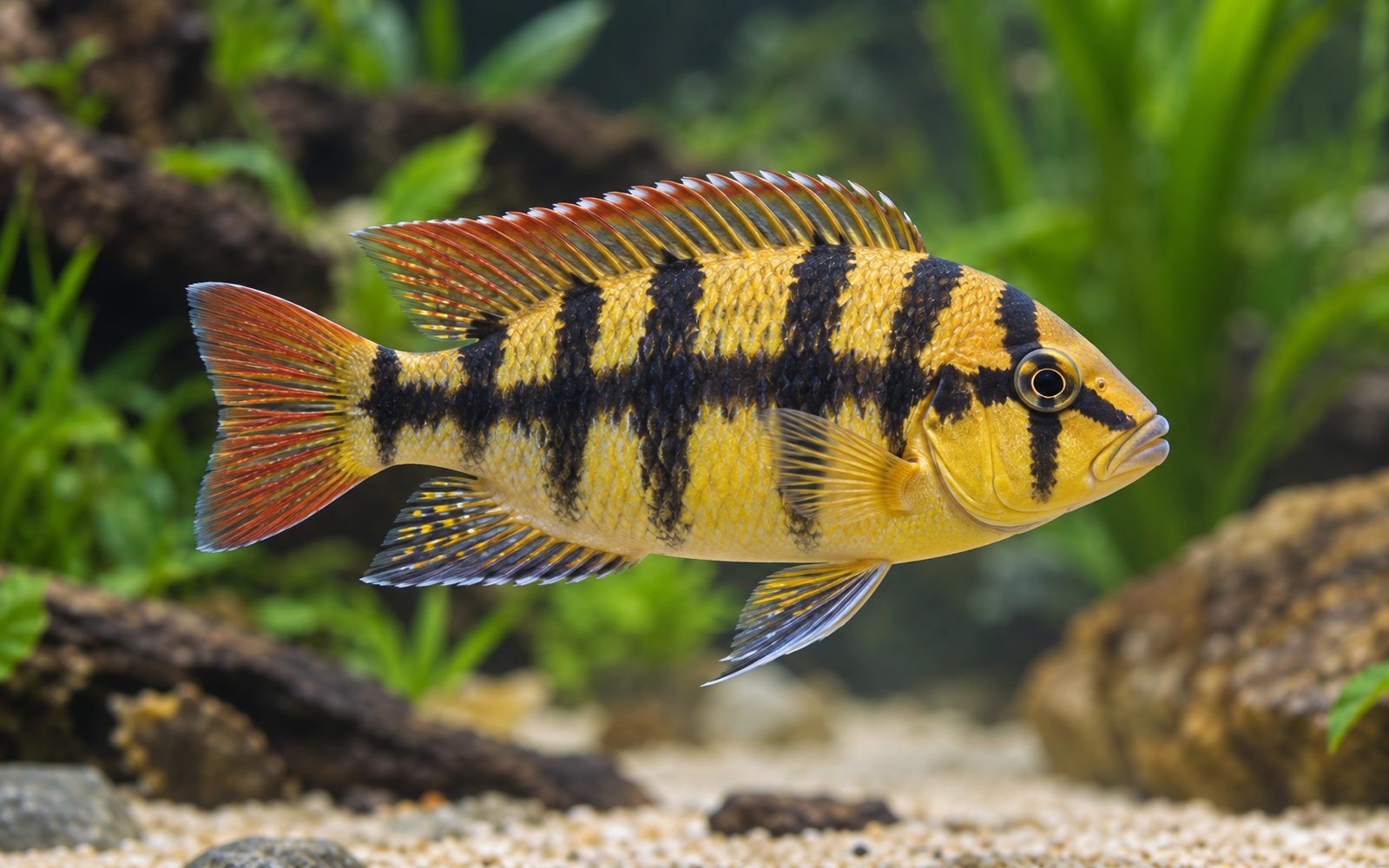 Zebra Obliquidens
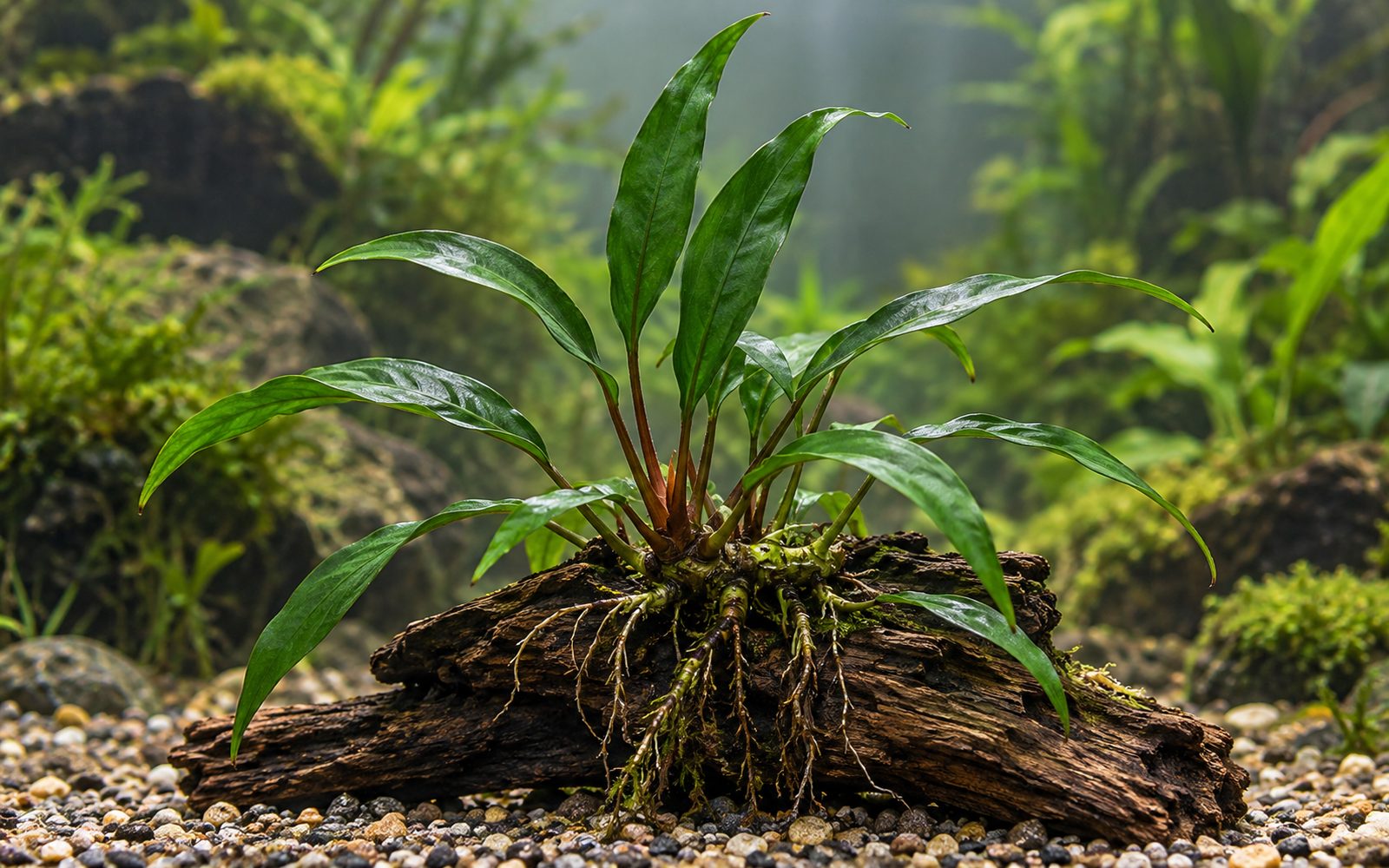 Anubias Angustifolia
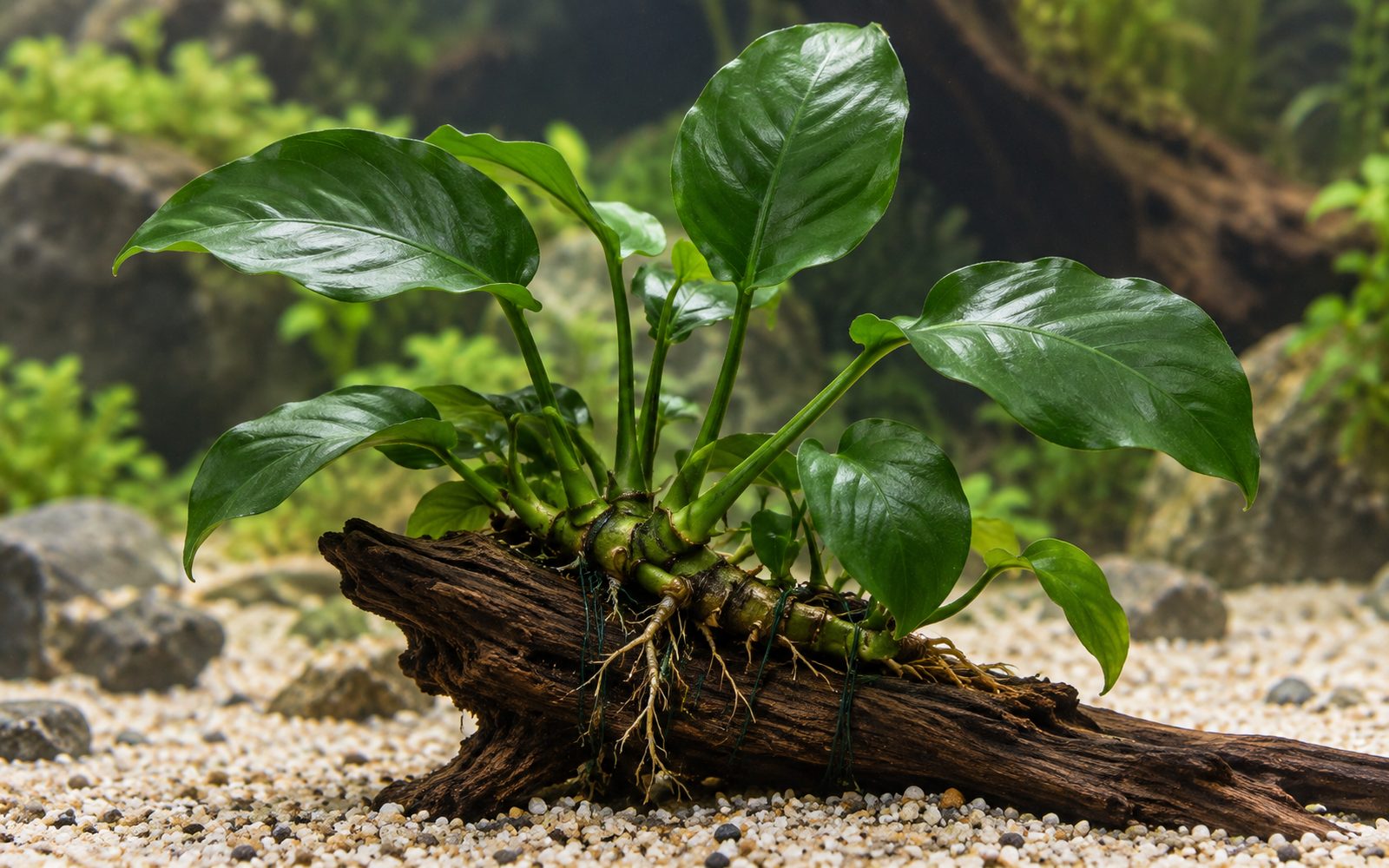 Anubias Barteri
Should not be kept together








Hobbyist notes
Things you won't find in books, learned by trial and error. The most helpful ones are on top.
Change history and contributors
- Page created · October 16, 2026