
Water parameters
Overview
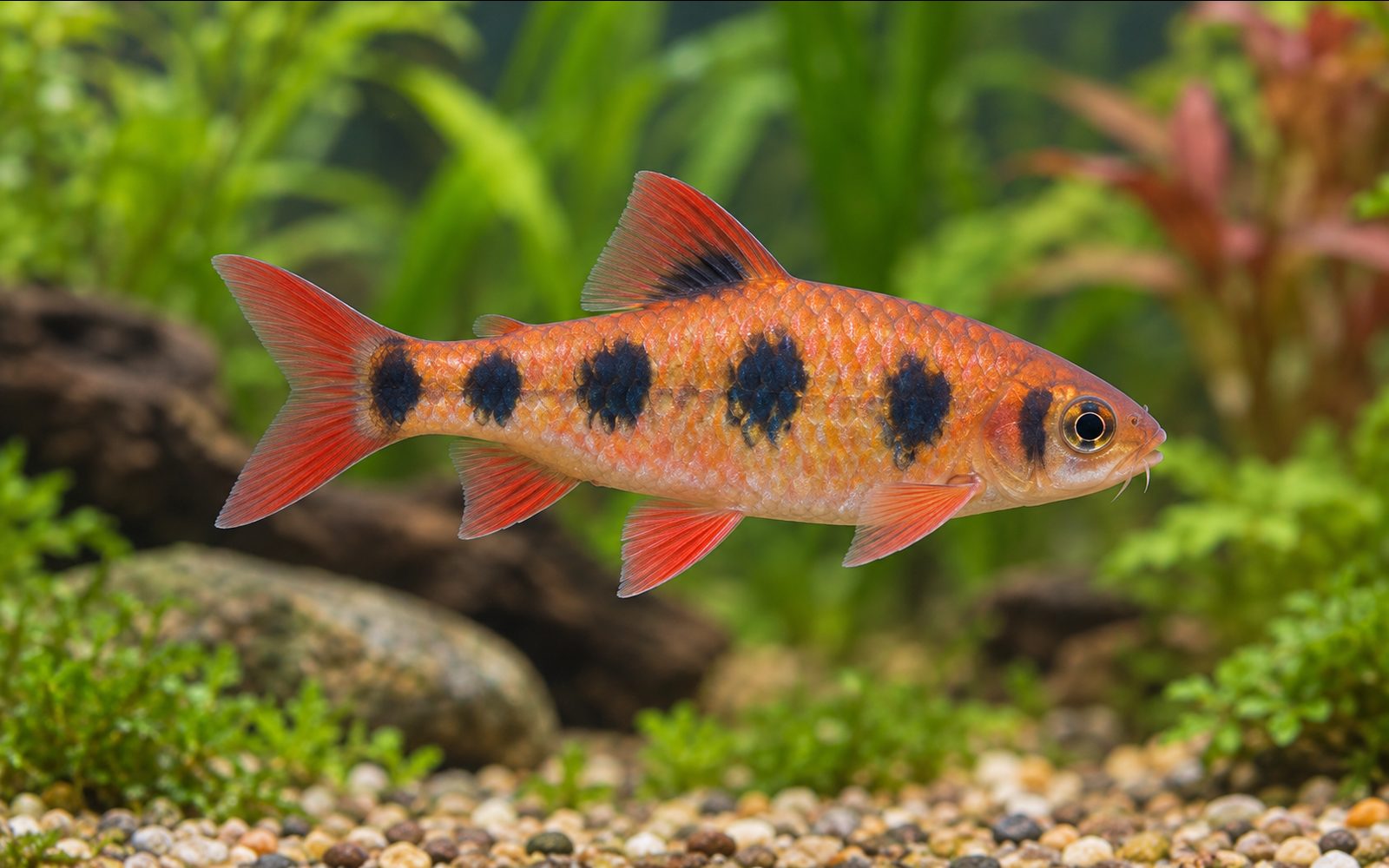
The clown barb is a large barb endemic to Borneo. The five or six large dark blue-black blotches on its salmon-orange body and its red fins create the "clown" look that gives it its name. It matures slowly and usually reaches its full color only after one year of age.
It is peaceful but active, and since it reaches 10 cm it needs a large tank. It may pick at soft-leaved plants.
Natural Habitat
It lives in clear or slightly tannin-stained streams in the forested areas of Borneo. The water is soft and slightly acidic, and the bottom is covered with sand and leaf litter. Bankside vegetation and branches fallen into the water provide shade and hiding places; the fish roam open water as a school and retreat under this cover when threatened.
Tank Setup
- Volume: at least 200 liters and 120 cm in length for a group of 6.
- Water: 24–27°C; it prefers soft, slightly acidic water, but farm-bred fish adapt to moderate hardness.
- Decor: tough-leaved plants (anubias, Java fern) and roots along the edges, with plenty of open swimming space.
- Maintenance: a 25–30% weekly water change; clean, well-oxygenated water.
Diet
Omnivorous. Granules and flakes, spirulina food, vegetables such as blanched spinach and zucchini; frozen bloodworms, brine shrimp and mysis shrimp. A plant-heavy diet reduces its tendency to pick at plants.
Behavior and Compatibility
Peaceful and social. It swims in a school in the middle level. Because of its size it may eat dwarf shrimp and very small fish; it shows no interest in other medium to large fish.
Good companions: peaceful fish of similar size: large rasboras, rainbowfish, pearl gouramis, bristlenose plecos, clown loaches.
Avoid: dwarf shrimp, very small fish such as neons, and aggressive cichlids.
Group and Colony Structure
Keep at least 6, ideally 8 or more. Kept alone or in a group of 2–3, it becomes shy and its colors fade. The sex ratio is of no particular importance.
Breeding
Breeding it in a home aquarium is difficult. Mature fish scatter their eggs among fine-leaved plants in the morning; the parents eat the eggs. A separate, heavily planted breeding tank with soft water is recommended.
Health and Common Problems
Hardy, but it reacts to a drop in water quality with loss of color. White spot and bacterial infections in poor water may occur. Quarantine new arrivals for 2–3 weeks. Juveniles usually look pale in the store; the orange base and dark blotches become more pronounced as they mature and are well fed, so do not judge by the color of a young fish.
Sexing
Males are slimmer and take on more red color during the breeding season. Females are larger with a fuller belly; the difference is clearer when viewed from above. Sexing juveniles is almost impossible; it becomes clear as the fish mature.
Tank mates
This list is calculated automatically from the species profile and grows as new species are added to the catalog. Try it in the planner for a definite answer.
Usually compatible
 Flame Tetra
Glass Tetra
Flame Tetra
Glass Tetra
 Blackfin Corydoras
 Polystictus Corydoras
 Emerald Betta
 Emerald Cory
 Porthole Catfish
 Keyhole Cichlid
 Cupid Cichlid
 Geophagus altifrons
Should not be kept together







Hobbyist notes
Things you won't find in books, learned by trial and error. The most helpful ones are on top.
Change history and contributors
- Page created · October 16, 2026