
Water parameters
Overview
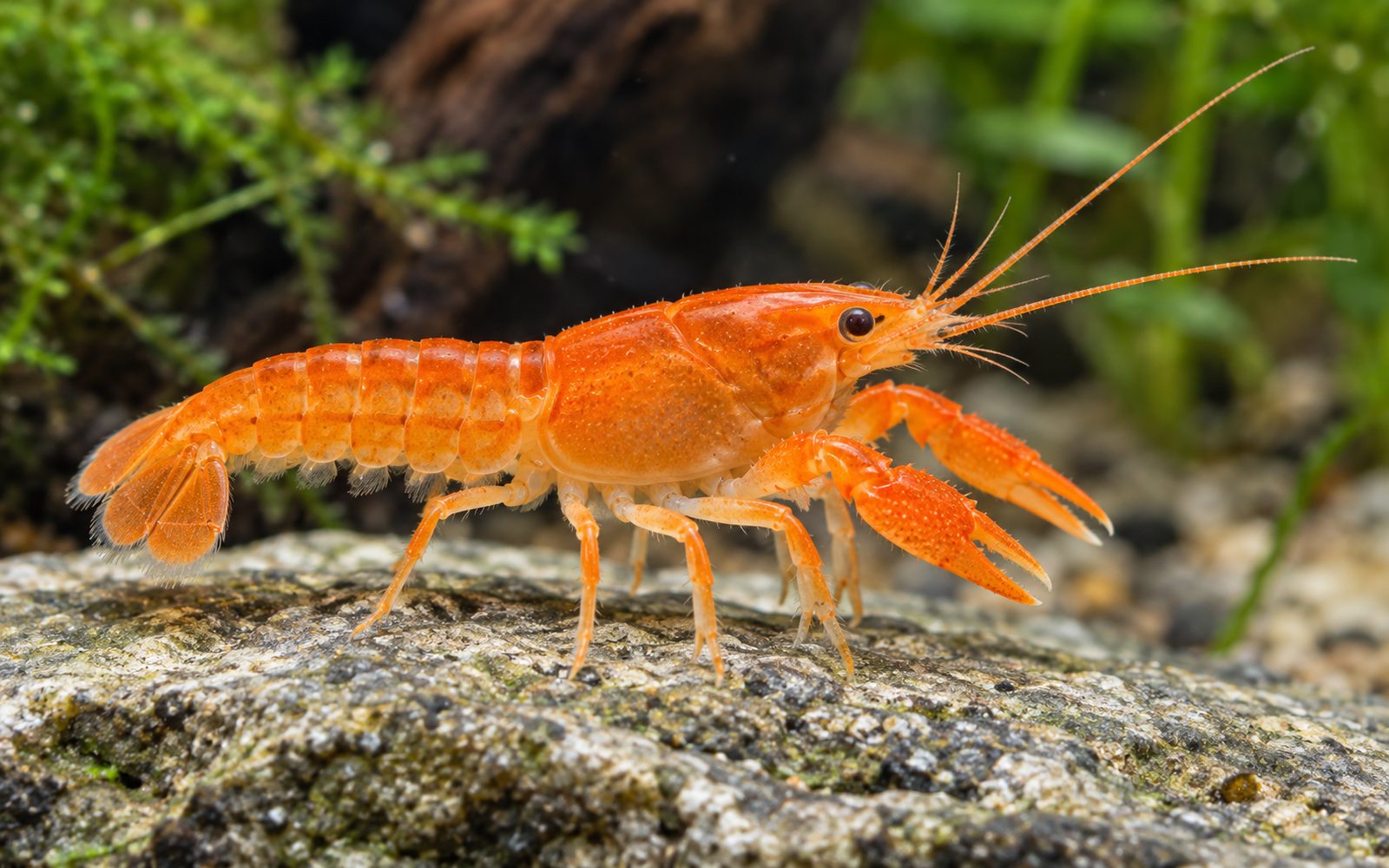
The CPO (Cambarellus patzcuarensis 'Orange') is the orange-colored captive-bred form of the dwarf crayfish endemic to Lake Pátzcuaro in Mexico. Wild individuals are gray-brown; the bright orange color was fixed in the aquarium through selective breeding.
It is among the smallest crayfish that can be kept in an aquarium: adults rarely exceed 3–4 cm. Unlike large crayfish, it does not cut down plants and is mostly harmless to fish. These traits make it a species crayfish fans can keep even in small aquariums.
Natural Habitat
The wild form lives along the shallow, vegetated and muddy shores of Lake Pátzcuaro, high in the mountains of Mexico. Because of this altitude, the lake's water is cool all year round.
Tank Setup
- Volume: 30 liters or more for one male and 2–3 females; floor area matters more than height.
- Hiding places: A cave for each individual: small rocks, pieces of root, ceramic tubes and dense plants. It hides while molting.
- Water: 20–24°C is ideal; moderately hard, slightly alkaline water. Enough calcium is needed for the exoskeleton.
- Lid: It can climb hoses and filter pipes and escape from the aquarium; use a lid without gaps.
- Copper: Deadly for crayfish too.
Diet
Omnivorous. It eats sinking tablets, shrimp and crayfish foods, frozen bloodworms and brine shrimp, blanched vegetables and dried leaves. Foods containing minerals are beneficial for the exoskeleton. Feed small amounts regularly; do not leave leftovers.
Behavior and Compatibility
It is active during the day too, but shy. It squabbles with its own kind over caves, especially between males. It is mostly harmless to fish; still, on rare occasions it may catch small fish resting on the bottom at night or sick fish. It may eat dwarf shrimp babies and molting shrimp.
Good companions: Small tetras, rasboras, danios, otocinclus, snails, adult Neocaridina (accepting the loss of some shrimplets).
Avoid: Large and bottom-dwelling fish, cichlids, loaches (botias; they may eat the crayfish), other crayfish, valuable shrimp colonies.
Group and Colony Structure
The best arrangement is one male with two or three females. More than one male can only be housed in aquariums with a large floor area and many caves. The colony reproduces on its own; once it becomes crowded, the surplus individuals need to be moved to another aquarium.
Breeding
There is no larval stage. After mating, the female carries 20–40 eggs under her tail for about 3–4 weeks. The young hatch as tiny but fully formed crayfish and stay near the mother for a few days. Since adults can eat the young, dense plants and moss increase survival.
Health and Common Problems
- Failed molts: Low calcium or sudden changes in parameters.
- Sudden death: Copper, ammonia, drying out after an escape.
- Crayfish plague: This disease, which North and Central American crayfish can carry, is deadly to native crayfish. Never release them into the wild.
Sexing
Males have longer, slimmer claws; the first two pairs of swimming legs under the abdomen are hardened into rod-like structures (gonopods). Females are plumper, have wider tails and lack gonopods.
Tank mates
This list is calculated automatically from the species profile and grows as new species are added to the catalog. Try it in the planner for a definite answer.
Usually compatible









Hobbyist notes
Things you won't find in books, learned by trial and error. The most helpful ones are on top.
Change history and contributors
- Page created · October 16, 2026