
Water parameters
Overview
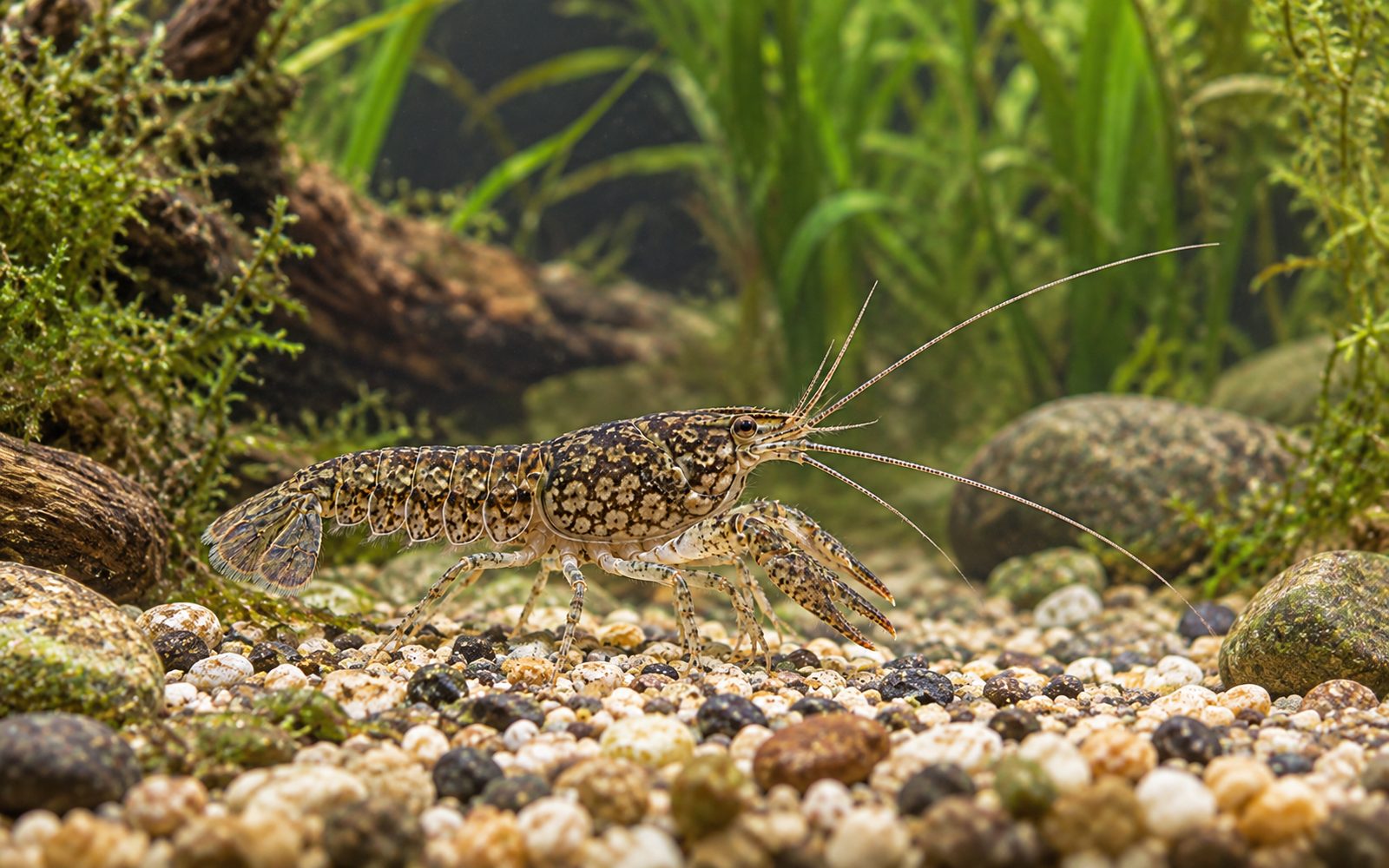
The marbled crayfish is the only known parthenogenetic (asexually reproducing) decapod crustacean. All individuals are female and lay eggs without fertilization; the offspring are genetic copies of the mother. It was first noticed in the aquarium trade in Germany in the 1990s and was described as a separate species in 2017. It is named after the dark marbled pattern on its brown-olive body.
Legal and ethical warning: The marbled crayfish is on the European Union's list of invasive alien species; keeping, breeding, selling and transporting it are banned in the EU. Individuals that escaped or were released from aquariums have established large invasive populations in many lakes in Europe and in Madagascar. Check the current regulations for its legal status in Türkiye. Never release it into the wild. If you have some, find out the legal status before giving them to anyone else and limit their reproduction.
Natural Habitat
It has no natural habitat; the species arose in the aquarium. Where it has got into the wild, it spreads rapidly through a wide range of fresh waters, including lakes, canals, rice paddies and swamps.
Tank Setup
- Volume: 60 liters or more for a single individual.
- Hiding places: Sturdy caves; it hides after molting.
- Lid: A lid without gaps is essential; even a single escaped individual can found a new population on its own.
- Water: 20–25°C, moderately hard to hard, alkaline water; it tolerates a wide range of parameters.
- Waste water: Never pour aquarium water, bottom mulm or filter sponges into a stream or lake; eggs and young can spread this way.
Diet
Omnivorous and greedy. It is given crayfish tablets, granules, blanched vegetables, dried leaves and occasionally animal protein (bloodworms, shrimp).
Behavior and Compatibility
Somewhat less aggressive than other crayfish, but it still catches bottom-dwelling and slow fish, shrimp and snails; it cuts and eats plants.
Good companions: It should be kept alone.
Avoid: Fish, shrimp, snails, live plants and other crayfish.
Group and Colony Structure
A single individual can produce hundreds of young within a few months; that is why a "colony" forms on its own and uncontrollably. In a crowded aquarium individuals eat each other and water quality deteriorates rapidly. Keeping reproduction under control is the most important care issue with this species.
Breeding
No male is needed. Every mature female carries hundreds of unfertilized eggs under her tail every few months. There is no larval stage; the young hatch as fully formed little crayfish and soon breed themselves.
Health and Common Problems
- Failed molts: Calcium deficiency or sudden changes in parameters.
- Crayfish plague: Like crayfish of North American origin, it can carry this disease; it is deadly to native crayfish.
- Overcrowding: Rising ammonia and cannibalism.
Sexing
There are no males; all individuals are female.
Tank mates
This list is calculated automatically from the species profile and grows as new species are added to the catalog. Try it in the planner for a definite answer.
Usually compatible
 Yellow Regal Peacock
Glass Tetra
Yellow Regal Peacock
Glass Tetra
 Emerald Betta
 Firemouth Cichlid
 Banded Jewel Cichlid
 Spotted Tilapia
 Buffalohead Cichlid
 Demasoni Cichlid
 Festivum
 Rainbow Cichlid
Should not be kept together


Hobbyist notes
Things you won't find in books, learned by trial and error. The most helpful ones are on top.
Change history and contributors
- Page created · October 16, 2026