
Water parameters
Overview
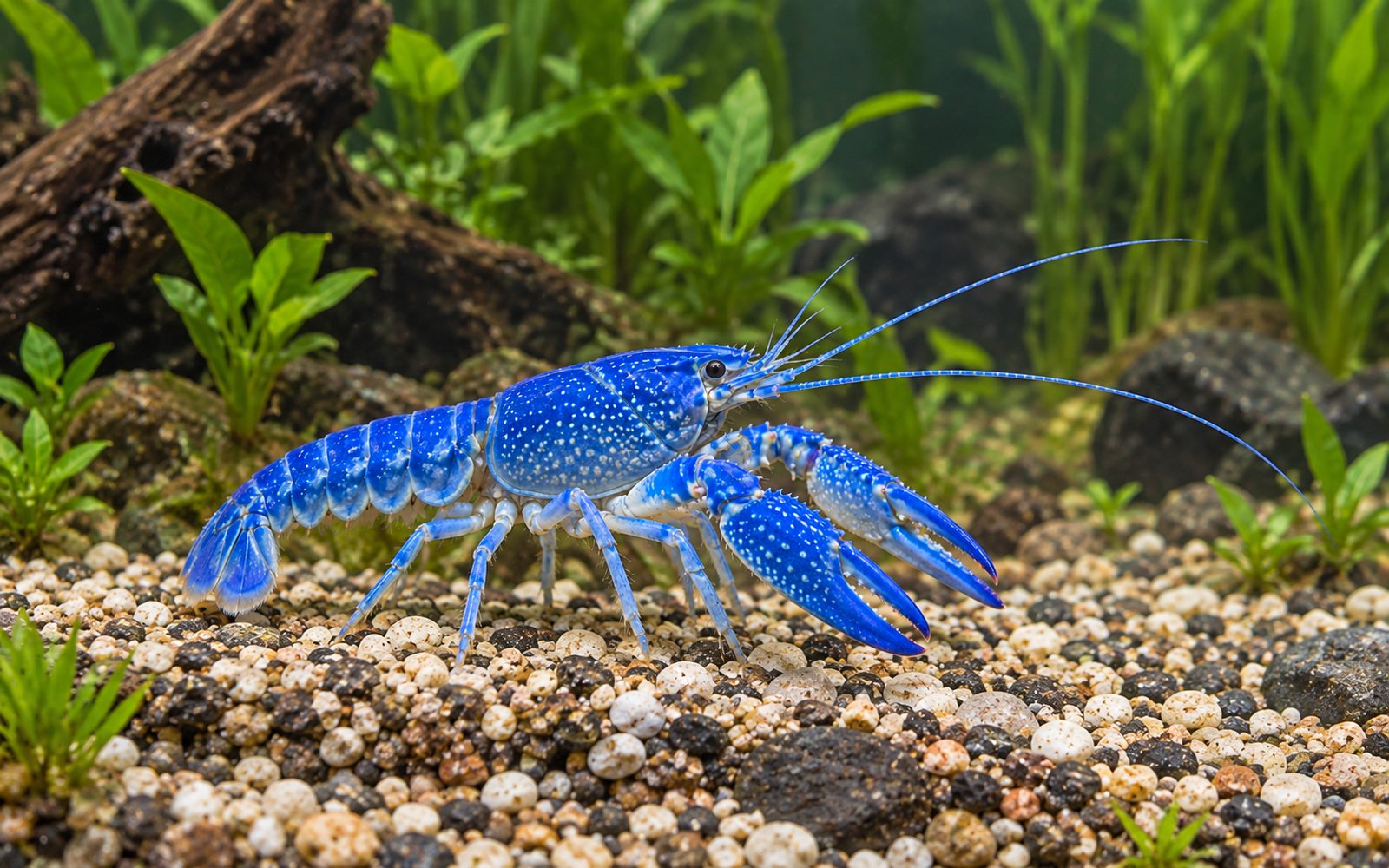
The electric blue crayfish is the blue form of Procambarus alleni, a species endemic to Florida, fixed through selective breeding in the aquarium. In the wild, individuals are mostly brownish-red or dull bluish; the bright blue seen in stores was achieved through captive breeding.
It is a hardy, easy-to-care-for animal with personality: it rearranges the decor, digs caves and carries its food around in its claws. However, it is not a community aquarium resident; it eats every animal it can catch and cuts plants.
Natural Habitat
It lives in Florida's shallow swamps, grassy wetlands and canals. During droughts it survives by staying moist in burrows it digs into the ground.
Tank Setup
- Volume: 80 liters or more for a single adult; floor area matters more than height.
- Hiding places: At least one sturdy cave (rock cave, ceramic tube). In the days after a molt it is defenseless and hides.
- Lid: A lid without gaps is a must; it can escape even through hose and cable holes.
- Water: 20–25°C, moderately hard to hard, alkaline water; calcium is needed for the exoskeleton.
- Decor: Light plants and unsecured ornaments get moved around; set rocks firmly into the substrate.
Diet
Omnivorous. It is given sinking crayfish/shrimp tablets, granules, blanched vegetables, dried leaves and, several times a week, frozen bloodworms, shrimp or fish meat. It is normal for it to eat its shed exoskeleton after a molt; leave it in for a few days so it can recover the calcium.
Behavior and Compatibility
Territorial and aggressive. It catches fish that sleep on the bottom or swim slowly, as well as shrimp and snails; it tears up, cuts and uproots plants.
Good companions: The safest option is to keep it alone. In large aquariums, fast-swimming, medium-sized fish that live in the upper levels (zebra danios, large tetras) sometimes live with it without problems, but losses are always possible.
Avoid: Bottom-dwelling fish (corydoras, plecos), long-finned and slow fish, shrimp, snails, other crayfish and large cichlids (they may injure the crayfish).
Group and Colony Structure
It is kept alone. More than one crayfish can stay together only in very large aquariums with many caves, and briefly for breeding purposes; an individual that is molting is often eaten by the others.
Breeding
There is no larval stage. After mating, the female attaches her eggs under her tail and carries them for several weeks. The young hatch as small but fully formed crayfish; because they may be eaten by the mother and other adults, they need to be moved to a separate aquarium.
Health and Common Problems
- Failed molts: Calcium deficiency, low GH or sudden water changes.
- Sudden death: Copper, ammonia, drying out after an escape.
- Crayfish plague: North American crayfish can carry this disease; it is deadly to the native crayfish of Türkiye (the narrow-clawed crayfish, Pontastacus leptodactylus). Never release them into the wild.
Sexing
Males have larger, longer claws; the first two pairs of swimming legs under the abdomen are hardened into rod-like structures (gonopods). Females have a wider tail and no gonopods.
Tank mates
This list is calculated automatically from the species profile and grows as new species are added to the catalog. Try it in the planner for a definite answer.
Usually compatible
 Banded Jewel Cichlid
 Spotted Tilapia
 Demasoni Cichlid
 Jack Dempsey
 Jaguar Cichlid
 Redhead Cichlid
 Red Devil Cichlid
 Red Terror Cichlid
 Convict Cichlid
 Cryptocoryne Parva
Should not be kept together








Hobbyist notes
Things you won't find in books, learned by trial and error. The most helpful ones are on top.
Change history and contributors
- Page created · October 16, 2026