
Water parameters
Overview
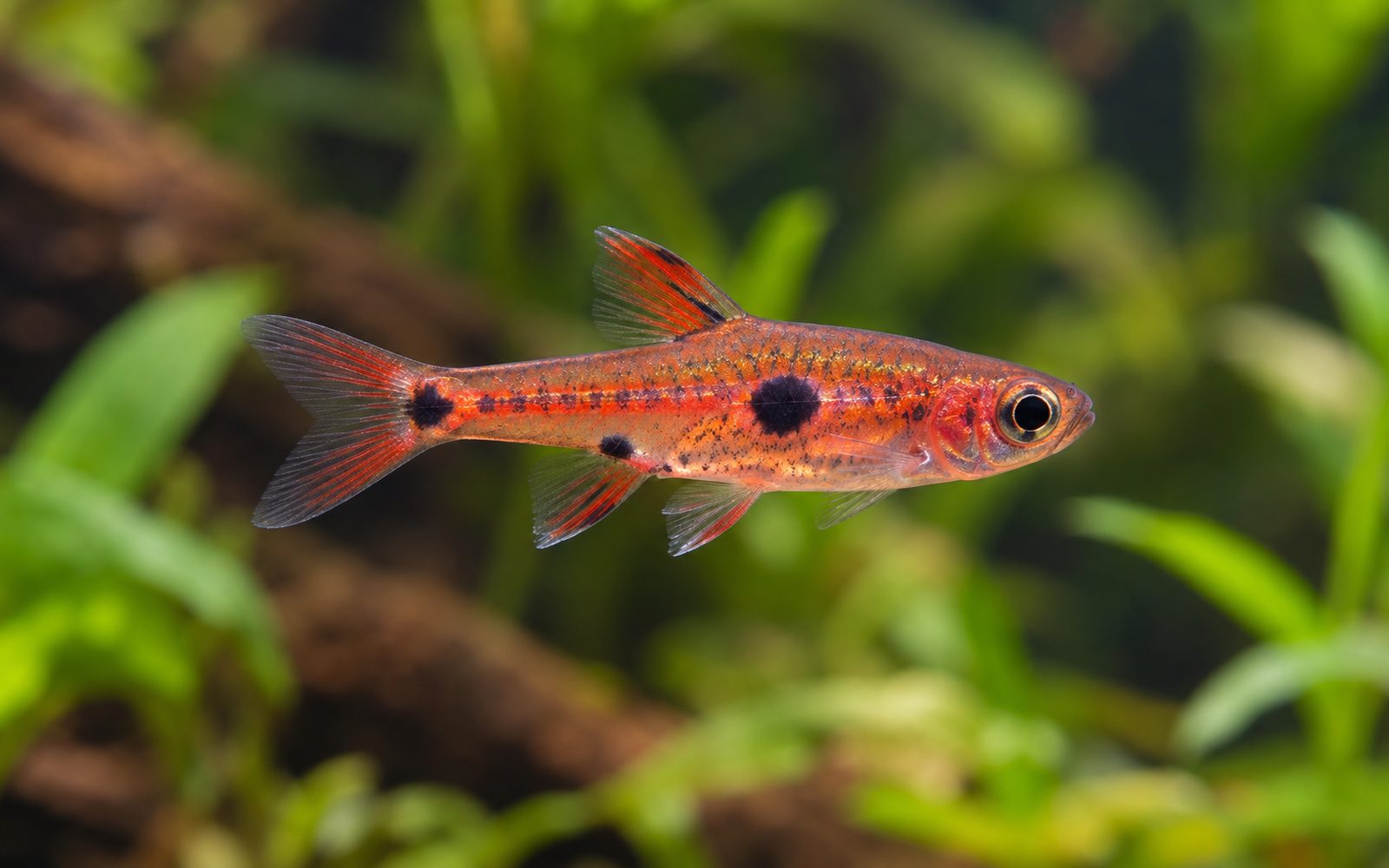
The dwarf rasbora was the first member of the genus Boraras to be scientifically described and is one of the relatively larger species in the genus; even so, it rarely exceeds 2.5 cm. Its body, ranging from salmon to brick red, bears three dark spots: a large round blotch in the middle of the body, a small spot above the anal fin and another on the caudal peduncle. Red tones are prominent in the males' fins.
Because it is calm, small and shrimp-safe, it is a favorite for planted nano aquariums. It is a species adapted to soft water; when kept in hard water for long periods, its colors fade and its hardiness declines.
Natural Habitat
It lives in the southern Malay Peninsula and Sumatra, in forest-fringed swamps, shallow ditches and slow-flowing blackwater streams. These waters are tannin-stained, very soft and acidic, with dense aquatic plants and overhanging roots along the banks.
Tank Setup
- Volume: at least 25 liters for a group of 10–15.
- Water: 24–27°C, pH 5.5–6.8, very soft to soft water. Stable values matter more than exact numbers.
- Decor: dark substrate, roots, dried leaves and plenty of plants. Floating plants diffuse the light.
- Flow: gentle; a sponge filter is suitable.
- Filter: because the fish are so small, cover the filter intake with a sponge.
Diet
It is a micropredator. In the aquarium it accepts fine flakes and micro granules. Newly hatched brine shrimp, frozen cyclops, daphnia and microworms are very valuable for color and condition. Two small meals a day are enough.
Behavior and Compatibility
Peaceful and calm. It moves in a loose group in front of the plants and retreats into dense vegetation as soon as it senses danger. Males display to each other by flaring their fins, but they do not fight.
Good companions: Neocaridina and Caridina shrimp, other Boraras species, celestial pearl danios, otocinclus, dwarf corydoras species, small snails.
Avoid: large, active fish, any species with a mouth big enough to swallow it, and large territorial cichlids.
Group and Colony Structure
At least 10, ideally 15 or more individuals. In a large group the fish become bolder and swim in the open; kept in small numbers they stay pale and skittish. The male-to-female ratio is not particularly important.
Breeding
It is an egg scatterer that spawns among plants. In a small container with very soft (GH 1–3), acidic water and fine-leaved plants or moss, a well-fed pair or small group will spawn within a few days. Since adults eat the eggs, they should be removed after spawning. The fry are very small; start them on infusoria, then move on to newly hatched brine shrimp.
Health and Common Problems
- Hard water: individuals kept in hard, alkaline water for long periods show color loss and susceptibility to disease.
- Acclimation: sensitive to sudden changes in water parameters; acclimate slowly.
- White spot: can appear with temperature swings; keep the heater stable.
- Water changes: 20–30% weekly, using water at the same temperature as the aquarium.
Sexing
Males are slimmer and redder, with prominent red tones in the dorsal and anal fins. Females are plumper and paler; their flank spots may look slightly smaller.
Tank mates
This list is calculated automatically from the species profile and grows as new species are added to the catalog. Try it in the planner for a definite answer.
Usually compatible
 Flame Tetra
 Blackfin Corydoras
 Polystictus Corydoras
 Emerald Cory
 Porthole Catfish
 Keyhole Cichlid
 Cupid Cichlid
 Geophagus altifrons
 Geophagus surinamensis
 Cryptocoryne Parva
Should not be kept together





Hobbyist notes
Things you won't find in books, learned by trial and error. The most helpful ones are on top.
Change history and contributors
- Page created · October 16, 2026