
Water parameters
Overview
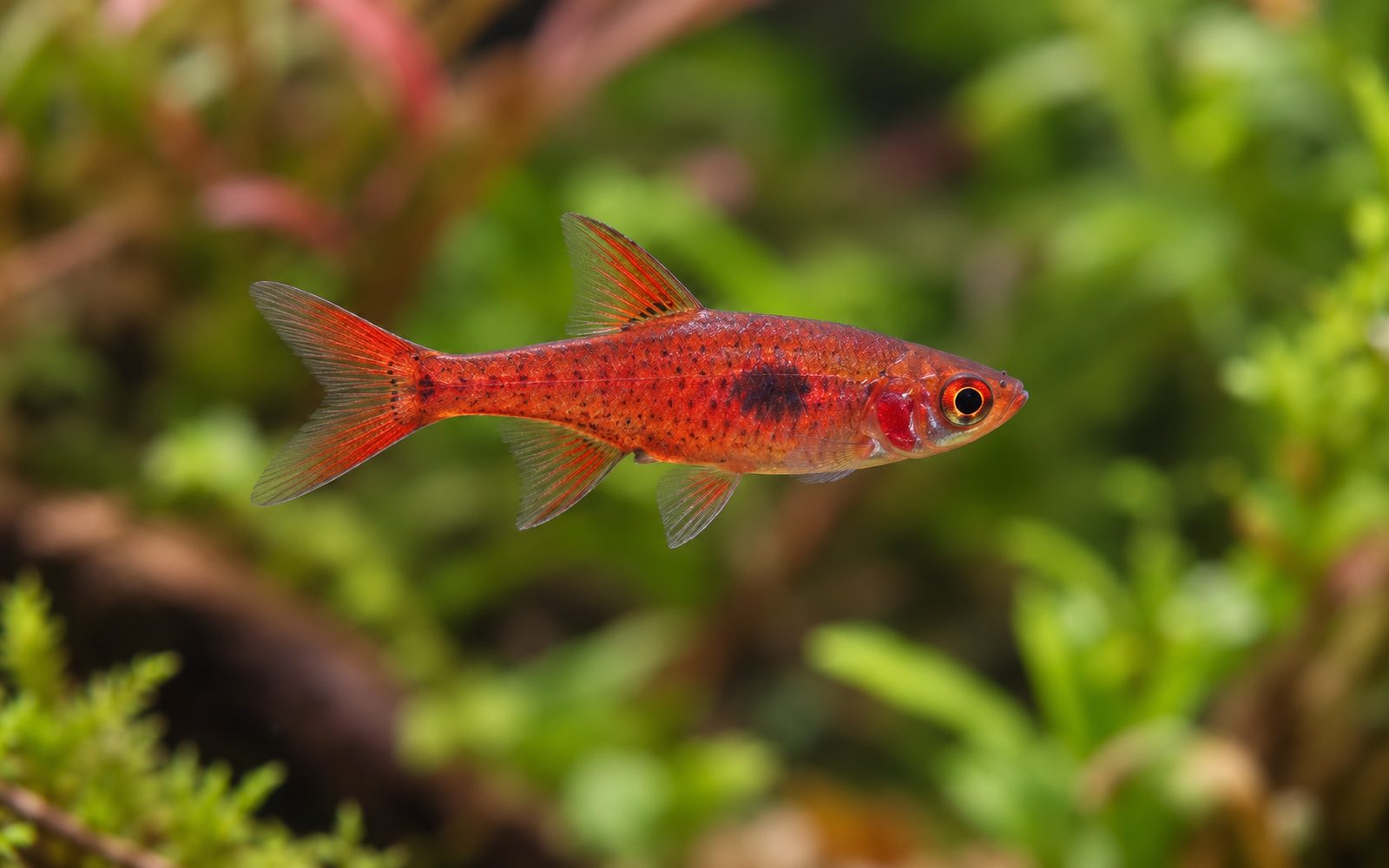
The strawberry rasbora is a relatively recently described member of the genus Boraras. The naevus in its scientific name means "birthmark" in Latin and refers to the large dark spot in the middle of the body. As males mature they take on an intense strawberry red; females are noticeably paler. This strong color difference makes it easier to sex than other members of the genus.
With its size of about 2 cm and its calm nature, it is very well suited to shrimp aquariums and planted nano setups. It only shows its full colors in a mature, planted and calm environment.
Natural Habitat
It lives in lowland swamps, shallow, densely vegetated pools and slow-flowing channels in the Thai part of the Malay Peninsula. The water is usually soft, slightly acidic and shaded by vegetation.
Tank Setup
- Volume: at least 25 liters for a group of 10–15.
- Water: 24–27°C, pH 6–7, soft water. A dark substrate and slightly tannin-stained water bring out the red.
- Plants: a dense layout with mosses, stem plants and floating plants; moderate or dim light.
- Flow: weak; a sponge filter is suitable.
- Maturity: a fully cycled aquarium with established biofilm.
Diet
A micropredator. It accepts micro granules and finely crushed flakes; newly hatched brine shrimp, frozen cyclops and daphnia noticeably deepen the males' color. Feed small amounts often.
Behavior and Compatibility
Peaceful. It moves through the middle layer as a group; males compete with each other in front of the females by darkening their colors and spreading their fins. These displays are harmless and are the species' most beautiful moments.
Good companions: Neocaridina and Caridina shrimp, other Boraras species, galaxy rasboras, otocinclus, dwarf corydoras species, nerite snails.
Avoid: Any fish whose mouth it fits into, large and active species, bettas depending on the individual.
Group and Colony Structure
At least 10, ideally 15 or more individuals. A female-heavy group spreads out the males' rivalry and enhances the color display. Kept in small numbers, the fish remain pale and skittish.
Breeding
It scatters its eggs among moss and fine-leaved plants; there is no parental care and the eggs may be eaten. In mature aquariums with plenty of moss, fry occasionally appear on their own. For controlled breeding a small container filled with soft water and moss is used and the adults are removed after a few days. The fry are fed infusoria and then newly hatched brine shrimp.
Health and Common Problems
- Color loss: stress, unsuitable water or a monotonous dry-food diet make the colors fade.
- Acclimation: sensitive to sudden changes in pH and hardness; acclimate slowly.
- Water quality: in a small volume make a 20–30% water change every week.
Sexing
Males are bright strawberry red with large, prominent side spots and red tones in their fins. Females are orange-brown, have fuller bellies and are paler; their side spots are smaller.
Tank mates
This list is calculated automatically from the species profile and grows as new species are added to the catalog. Try it in the planner for a definite answer.
Usually compatible
 Flame Tetra
 Blackfin Corydoras
 Polystictus Corydoras
 Emerald Cory
 Porthole Catfish
 Keyhole Cichlid
 Cupid Cichlid
 Geophagus altifrons
 Geophagus surinamensis
 Cryptocoryne Parva
Should not be kept together





Hobbyist notes
Things you won't find in books, learned by trial and error. The most helpful ones are on top.
Change history and contributors
- Page created · October 16, 2026