
Water parameters
Overview
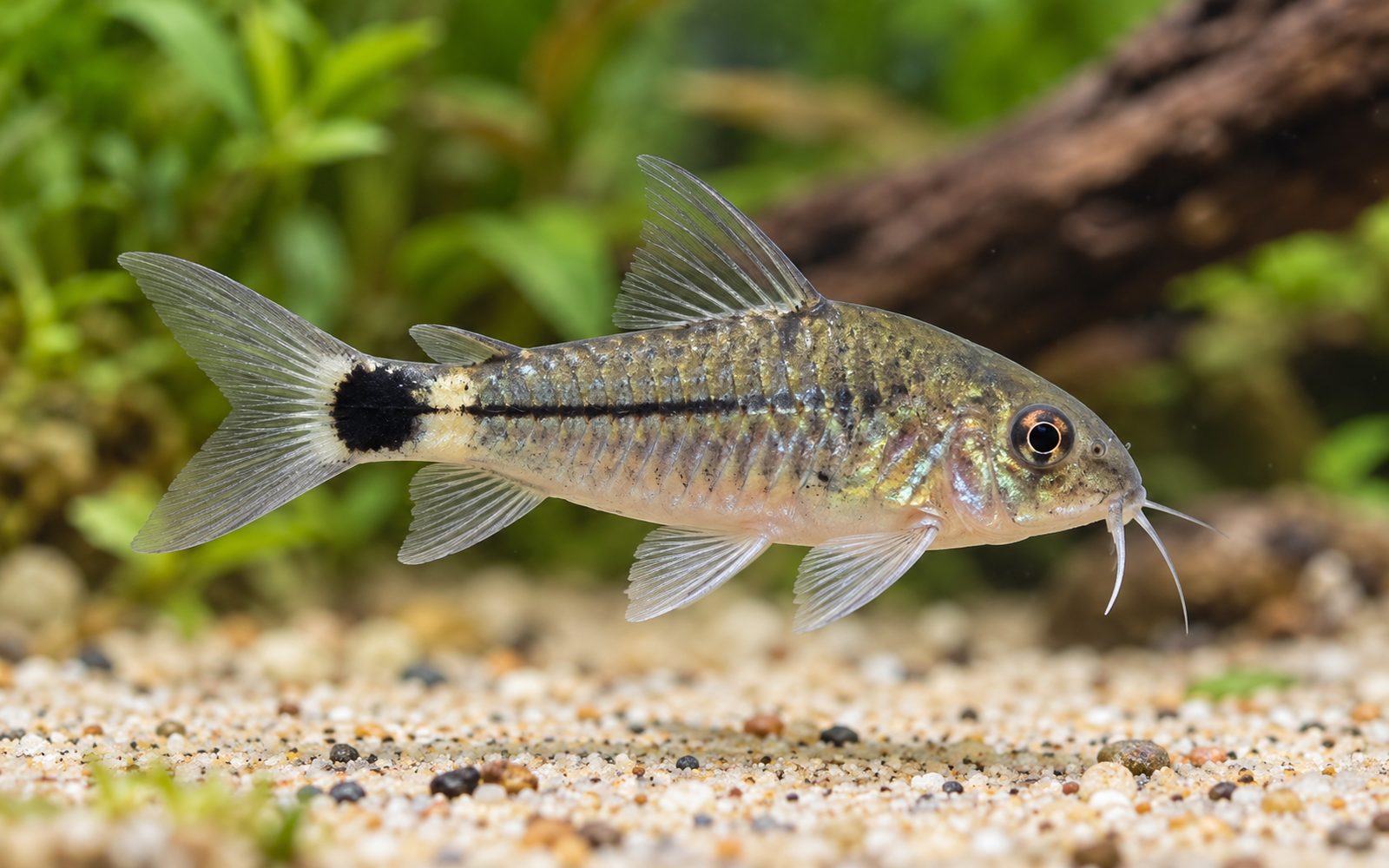
The dwarf cory (Corydoras hastatus) is, together with the pygmy cory, one of the two dwarf corydoras species that swim in midwater. Its olive-gray body looks plain; its real identifying mark is the large black spot on the caudal peduncle, surrounded by a cream-white area. There may be a thin dark line on the rear half of the body, but there is no thick stripe starting at the snout as in the pygmy cory.
Unusually for corydoras, besides searching for food on the bottom it spends a large part of its time in midwater as a school. With a size not exceeding 3 cm, it is suitable for small aquariums.
Natural Habitat
It lives in the tributaries of the Amazon basin and in the shallow, still, densely vegetated waters of the Pantanal region. In these shallow areas the water can warm up noticeably during the day; the species' tolerance of warm water comes from this. In the wild it is reported to form mixed schools with small characins that carry a similar spot on the caudal peduncle.
Tank Setup
- Volume: at least 40 liters for a school of 10–15.
- Plants: dense planting and light softened by floating plants; the school likes to hover in front of clumps of plants.
- Substrate: fine sand; it also regularly searches for food on the bottom.
- Water: 22–28°C; soft to moderately hard, mature and clean water. It prefers still water or very gentle flow.
- Filter: fit a sponge over the intake; fish of this size can get sucked in by strong suction.
Diet
Fine granules, crushed flakes and crumbled sinking food suited to its small mouth; frozen or live brine shrimp, daphnia and cyclops. Since it swims in midwater it also catches food in the water column, but make sure that enough food reaches the bottom too. Small, frequent feedings suit this little species better.
Behavior and Compatibility
Extremely peaceful and active. In a large school the fish hover together in front of the plants and now and then go down to the bottom to probe the sand. It does not harm shrimp.
Good companions: tiny tetras and rasboras, Boraras species, Endler's livebearers, otocinclus, dwarf shrimp, pygmy and salt and pepper corydoras.
Avoid: any large fish that can fit it in its mouth (angelfish, large gouramis, cichlids), fast and greedy food competitors.
Group and Colony Structure
Kept alone or with only a few individuals, it hides; at least 10, ideally 15 or more individuals are recommended. In a large school, its behavior of swimming together in midwater is at its most beautiful. A mixed school with the pygmy cory can be formed.
Breeding
It breeds in the aquarium; a cool water change and live food can trigger spawning. The female sticks the fertilized eggs one by one to plant leaves and the glass. The eggs hatch in 3–4 days. The fry are very small; in the first days they are fed infusoria and microworms, then freshly hatched brine shrimp. Dense plants and moss help protect the fry from the adults.
Health and Common Problems
- Its small body is sensitive to sudden water changes; keep parameters stable.
- Newly arrived fish may be weak; quarantine and small, frequent meals are recommended.
- It is sensitive to salt and copper-based medications.
Sexing
Females are larger and plumper; viewed from above, their bellies are clearly broader. Males are small and slim.
Tank mates
This list is calculated automatically from the species profile and grows as new species are added to the catalog. Try it in the planner for a definite answer.
Usually compatible
 Flame Tetra
 Blackfin Corydoras
 Polystictus Corydoras
 Emerald Cory
 Emerald Dwarf Rasbora
 Porthole Catfish
 Keyhole Cichlid
 Cupid Cichlid
 Geophagus altifrons
 Geophagus surinamensis
Should not be kept together






Hobbyist notes
Things you won't find in books, learned by trial and error. The most helpful ones are on top.
Change history and contributors
- Page created · October 16, 2026