
Water parameters
Overview
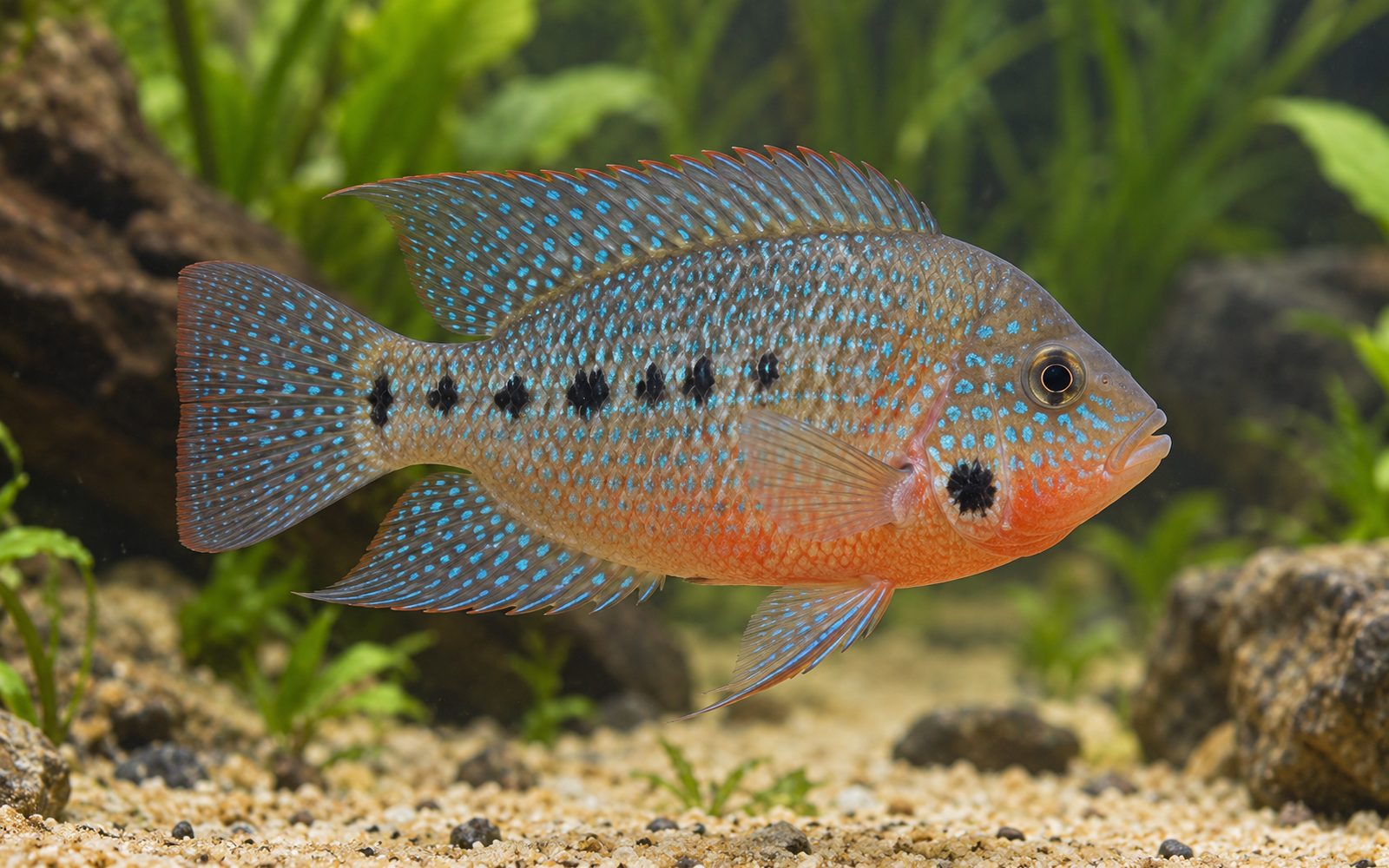
Thorichthys ellioti is the Mexican close relative of the firemouth cichlid (T. meeki). Its silver–gray body is covered with shiny blue spots; dark blotches are lined up along the middle of the body, and the throat and belly are orange–red. It uses the dark spot on the lower gill cover for display against rivals. Its old name, Thorichthys maculipinnis, is now considered a synonym of this species.
Tank Setup
- At least 150 liters and 100 cm of length for a pair.
- Fine sand substrate is a must; it takes sand into its mouth and sifts it.
- Territory borders made with rocks, roots and caves; rooted plants may be uprooted.
- Moderately hard, slightly alkaline water; change 25–30% weekly.
Diet
Omnivorous. Make small sinking cichlid granules the staple; vary them with frozen bloodworms, brine shrimp, mysis and spirulina-based food. Give two small meals a day and make sure the food reaches the bottom.
Behavior and Compatibility
Mild among Central American cichlids; it guards the area around the eggs during breeding, but serious aggression is rare.
Good companions: firemouth, rainbow cichlid, large livebearers, medium to large barbs, plecos.
Avoid: very small fish and shrimp, large aggressive cichlids, delicate planted layouts.
A short profile for this species
The Elliot's Cichlid page has the basics, but the sections below have not been written yet. If you keep this species, write a section from your own experience; it will be published under your name after editor approval.
Tank mates
This list is calculated automatically from the species profile and grows as new species are added to the catalog. Try it in the planner for a definite answer.
Usually compatible
 Yellow Regal Peacock
Glass Tetra
Yellow Regal Peacock
Glass Tetra
 Emerald Betta
 Firemouth Cichlid
 Buffalohead Cichlid
 Chocolate Cichlid
 Festivum
 Rainbow Cichlid
 Gymnogeophagus balzanii
 Pearl Cichlid
Should not be kept together






Hobbyist notes
Things you won't find in books, learned by trial and error. The most helpful ones are on top.
Change history and contributors
- Page created · October 16, 2026