
Water parameters
Overview
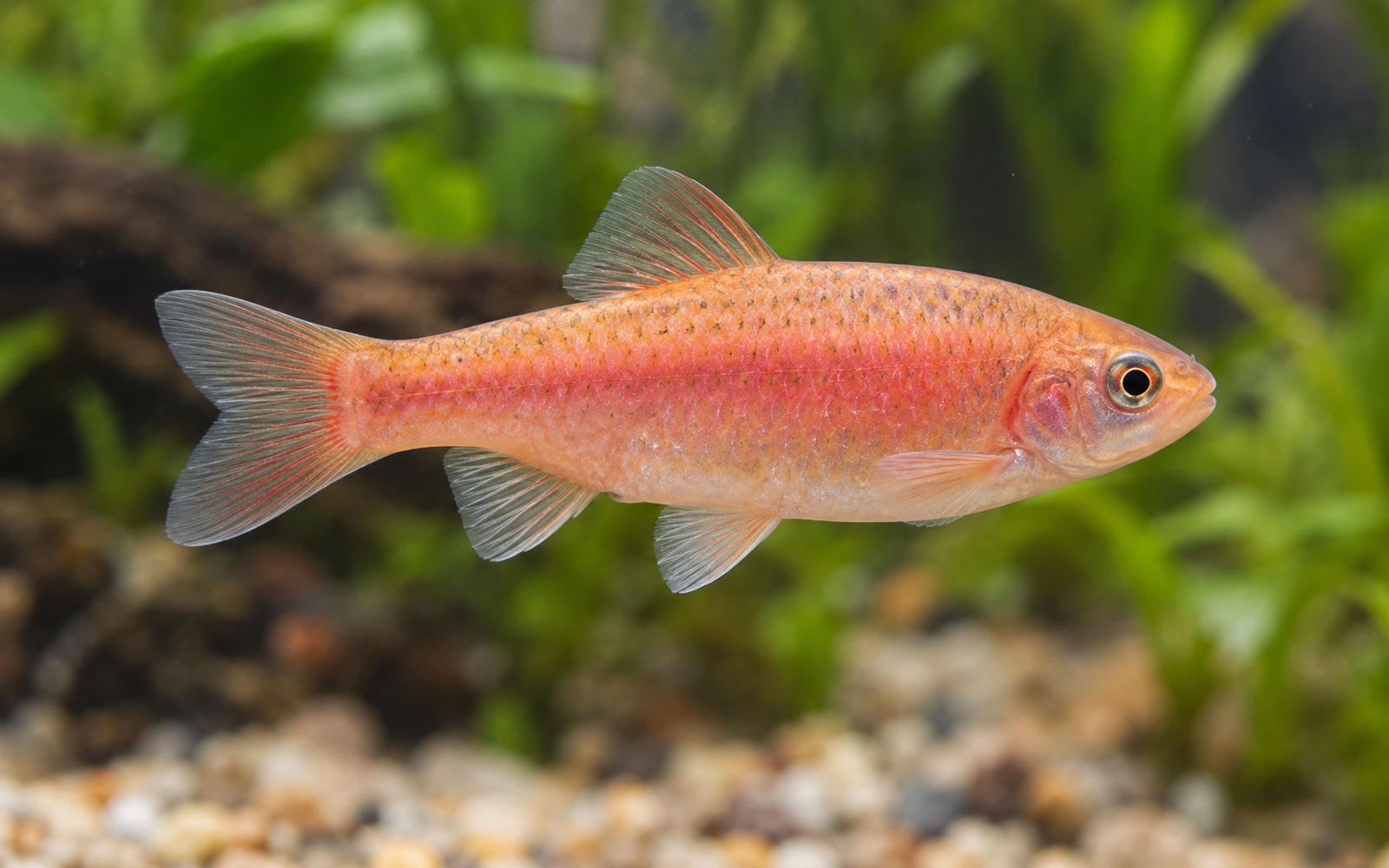
The fathead minnow is a small fish that is very common in the lakes, ponds and slow-flowing waters of North America. The wild form is olive-brown; in the hobby and in ponds the pink-orange "rosy red" form is more often found. Because of its hardiness it is widely used as a feeder fish and in laboratory studies. In breeding males the head darkens, a spongy pad forms on the nape and small tubercles appear on the snout. Adults reach 5–7 cm; males are larger than females.
Tank Setup
- At least 80 liters for a group of 6–10; it can also be kept in cool-water ponds.
- 15–22°C is ideal; no heater is needed.
- Plants, rocks and, for spawning, hiding places with an underside, such as a flat stone or an upturned flowerpot.
- A 25% weekly water change; well-oxygenated water.
Diet
Omnivorous. Flakes and granules, frozen daphnia, brine shrimp and bloodworms; spirulina as a plant supplement.
Behavior and Compatibility
A peaceful schooling fish. In the breeding season the male claims a nest under a stone or root; the female sticks the eggs to the underside of this surface, and the male cleans and guards them until they hatch. During this period males chase each other.
Good companions: small, peaceful species that like cool water: white cloud mountain minnows, gold barbs, bitterlings, snails.
Avoid: tropical species that need warm water, large fish (it is seen as food).
A short profile for this species
The Fathead Minnow page has the basics, but the sections below have not been written yet. If you keep this species, write a section from your own experience; it will be published under your name after editor approval.
Tank mates
This list is calculated automatically from the species profile and grows as new species are added to the catalog. Try it in the planner for a definite answer.
Usually compatible
 Flame Tetra
 Blackfin Corydoras
 Polystictus Corydoras
 Emerald Cory
 Emerald Dwarf Rasbora
 Porthole Catfish
 Keyhole Cichlid
 Cryptocoryne Parva
 European Bitterling
 Adolfo's Cory
Should not be kept together






Hobbyist notes
Things you won't find in books, learned by trial and error. The most helpful ones are on top.
Change history and contributors
- Page created · October 16, 2026