
Water parameters
Overview
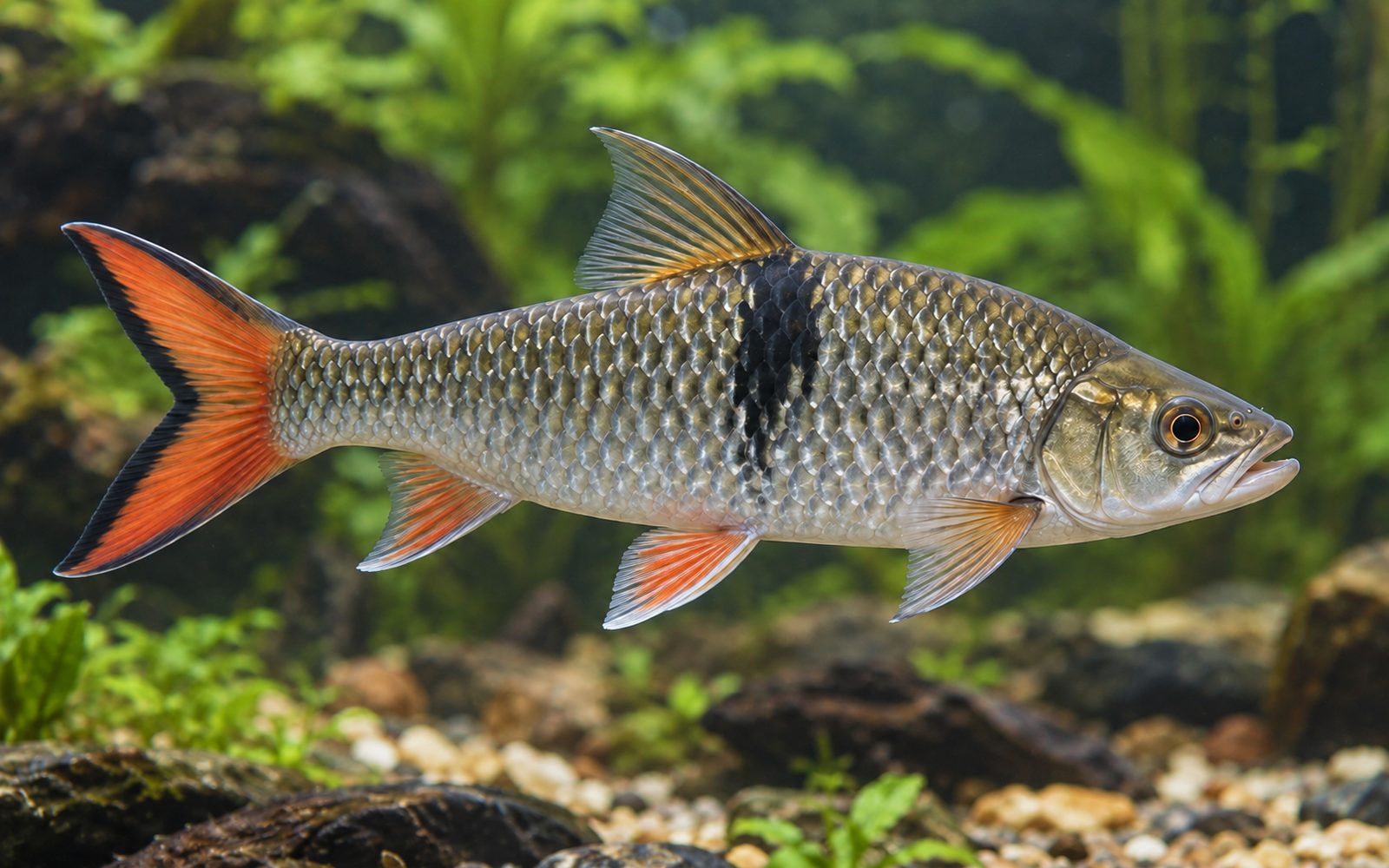
The hampala barb lives in the rivers and lakes of Southeast Asia and is a true predator, something rarely seen among cyprinids. It is recognized by its large mouth and big silver scales; juveniles show a thick black vertical bar running down from below the dorsal fin and orange-red, black-edged tail lobes. It is a favorite species for sport fishing and food fishing in the region. Adults exceed 50 cm, and it grows very fast.
Tank Setup
- At least 1500 liters and 250 cm in length for one adult.
- 24–27°C; very powerful filtration, high oxygen levels and flow.
- A simple layout with roots and large rocks; plenty of open swimming space.
- It jumps powerfully when hunting and when startled; a heavy lid is essential.
Diet
Carnivorous; in the wild it feeds on fish and large invertebrates. In the aquarium it is fed predator pellets, frozen fish meat, mysis and large shrimp. Feeding live fish is not recommended because of the risk of introducing disease.
Behavior and Compatibility
Predatory: it sees any fish that fits in its mouth as prey. It is generally not aggressive toward fish of similar size, but it is rough and fast during feeding.
Good companions: in a very large tank, large fish that do not fit in its mouth: large plecos, big catfish, giant barbs.
Avoid: any fish that could fit in its mouth, shrimp, and slow, shy species.
A short profile for this species
The Hampala Barb page has the basics, but the sections below have not been written yet. If you keep this species, write a section from your own experience; it will be published under your name after editor approval.
Tank mates
This list is calculated automatically from the species profile and grows as new species are added to the catalog. Try it in the planner for a definite answer.
Usually compatible
 Chocolate Cichlid
 Jack Dempsey
 Redhead Cichlid
 Red Devil Cichlid
 Cryptocoryne Parva
Adonis Pleco
African Brown Knifefish
Cryptocoryne Parva
Adonis Pleco
African Brown Knifefish
 Weeping Moss
 Flame Moss
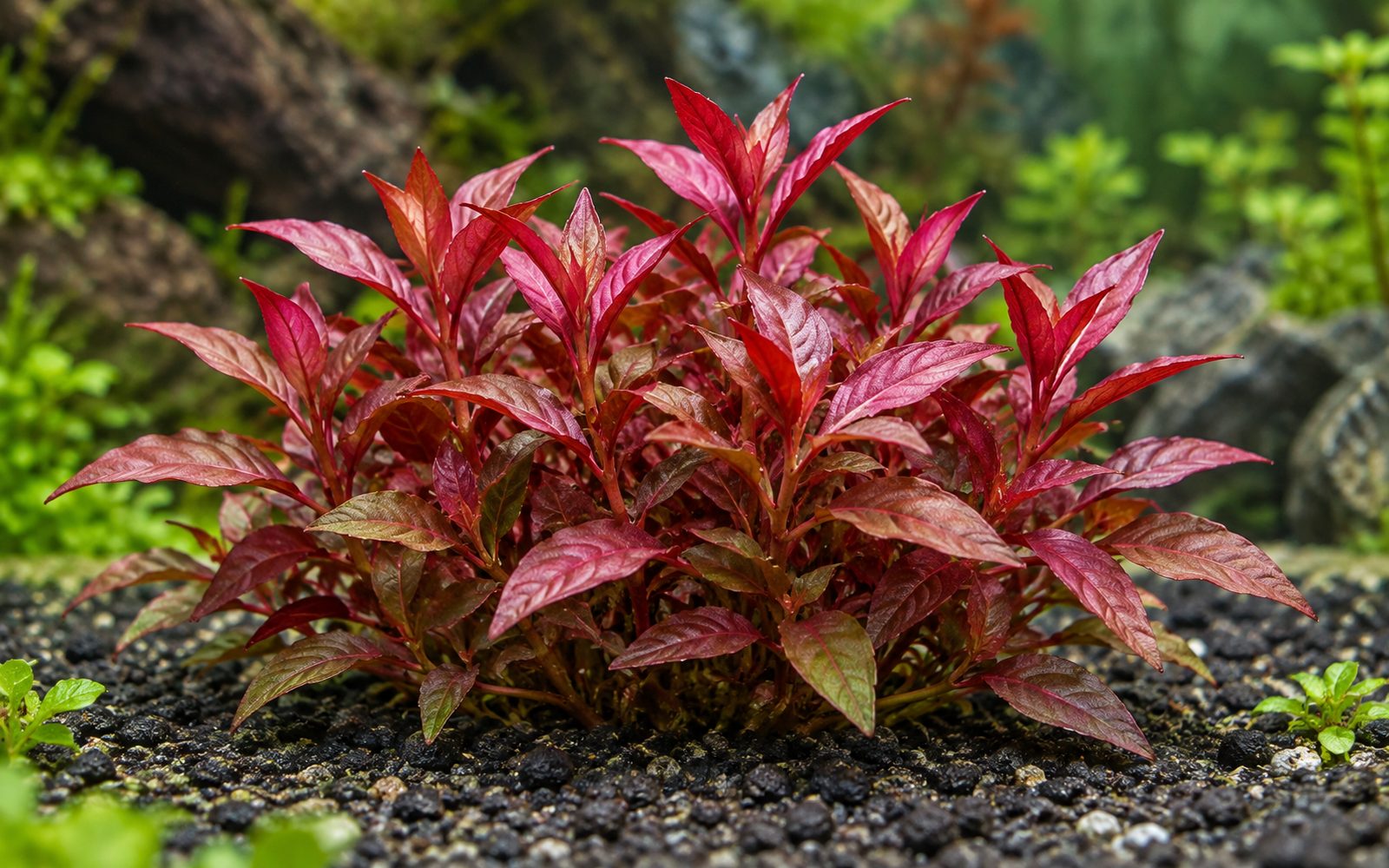 Alternanthera Reineckii 'Mini'
Should not be kept together









Hobbyist notes
Things you won't find in books, learned by trial and error. The most helpful ones are on top.
Change history and contributors
- Page created · October 16, 2026