
Water parameters
Overview
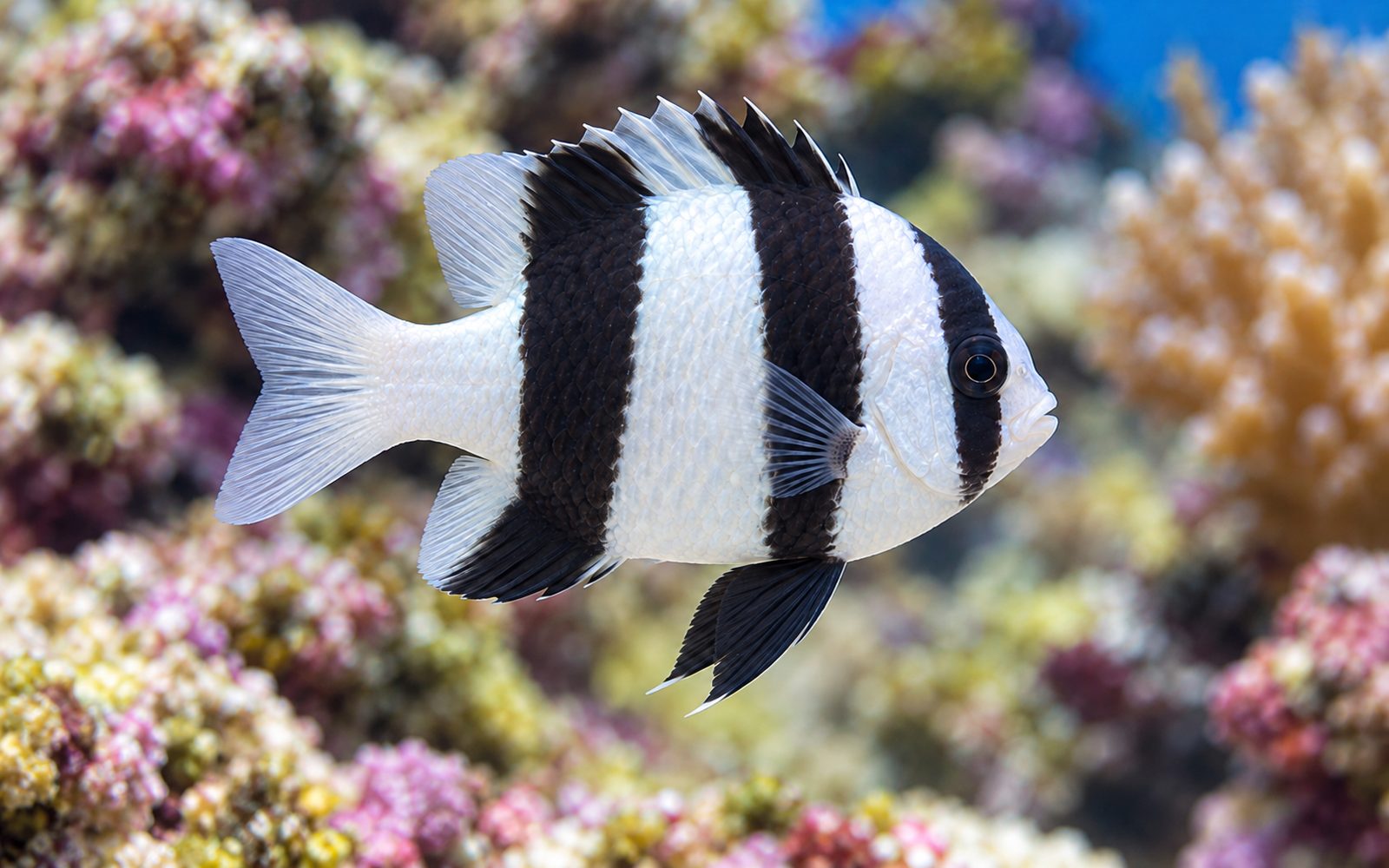
The humbug damsel (three-striped damselfish) is a reef fish easily recognized by its white body and three thick black vertical bands. It is very hardy and inexpensive; that is why it is one of the species new marine aquarists often buy. However, this fish, which looks peaceful when young, becomes the boss of the aquarium as it grows and is counted among the most quarrelsome damselfish.
Its white or transparent tail fin distinguishes it from the blacktail damsel (Dascyllus melanurus), which carries a fourth black band on its tail.
Natural Habitat
From the Red Sea to the Central Pacific it lives in groups above branching coral colonies (Acropora, Pocillopora) in shallow lagoons. When in danger they all dive together among the coral branches. Each coral head has a hierarchy headed by the largest male.
Tank Setup
- Volume: At least 110 liters for a single specimen; 300 liters or more for a group.
- Water: Salinity specific gravity 1.023–1.026, pH 8.1–8.4, temperature 24–27°C. It tolerates wide ranges of parameters.
- Reef compatibility: Reef-safe; it leaves corals and invertebrates alone.
- Layout: Branching coral or a rock structure full of holes; the fish spends the night in these holes.
- Order of addition: It should be the last member of the community; if added first, it leaves no living space for fish that come later.
Diet
Omnivorous and very greedy. Offer marine flakes and granules, frozen mysis, brine shrimp and foods containing algae. Twice a day, as much as is eaten within a few minutes, is enough.
Behavior and Compatibility
As it ages it defends its territory fiercely; it may attack even fish larger than itself and tries to bite the keeper's hand. Slow, shy and small species quickly come under pressure.
Good companions: Large, fast species that can defend themselves: tangs, large wrasses, Clark's clownfish (in a large aquarium), cleaner shrimp.
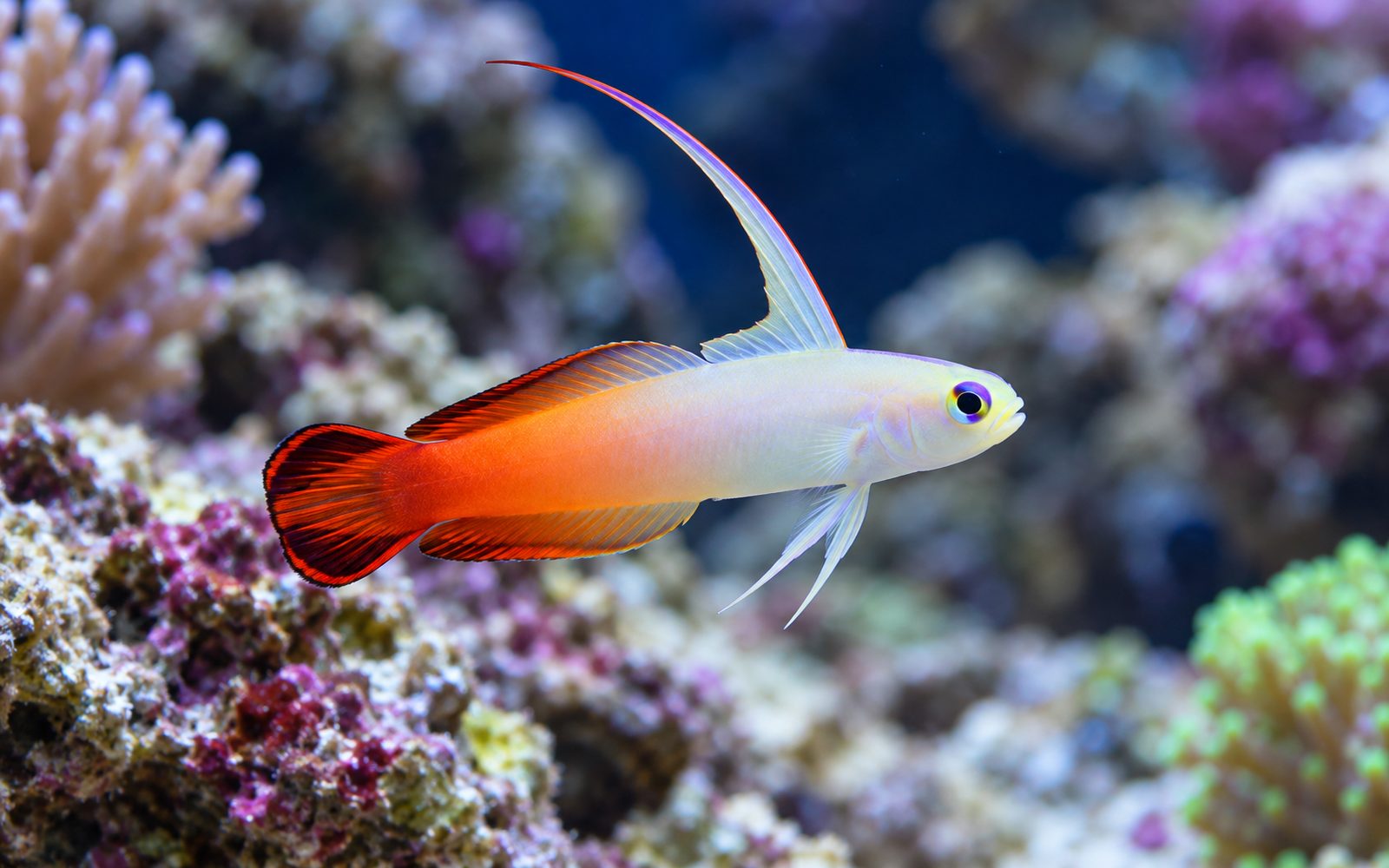
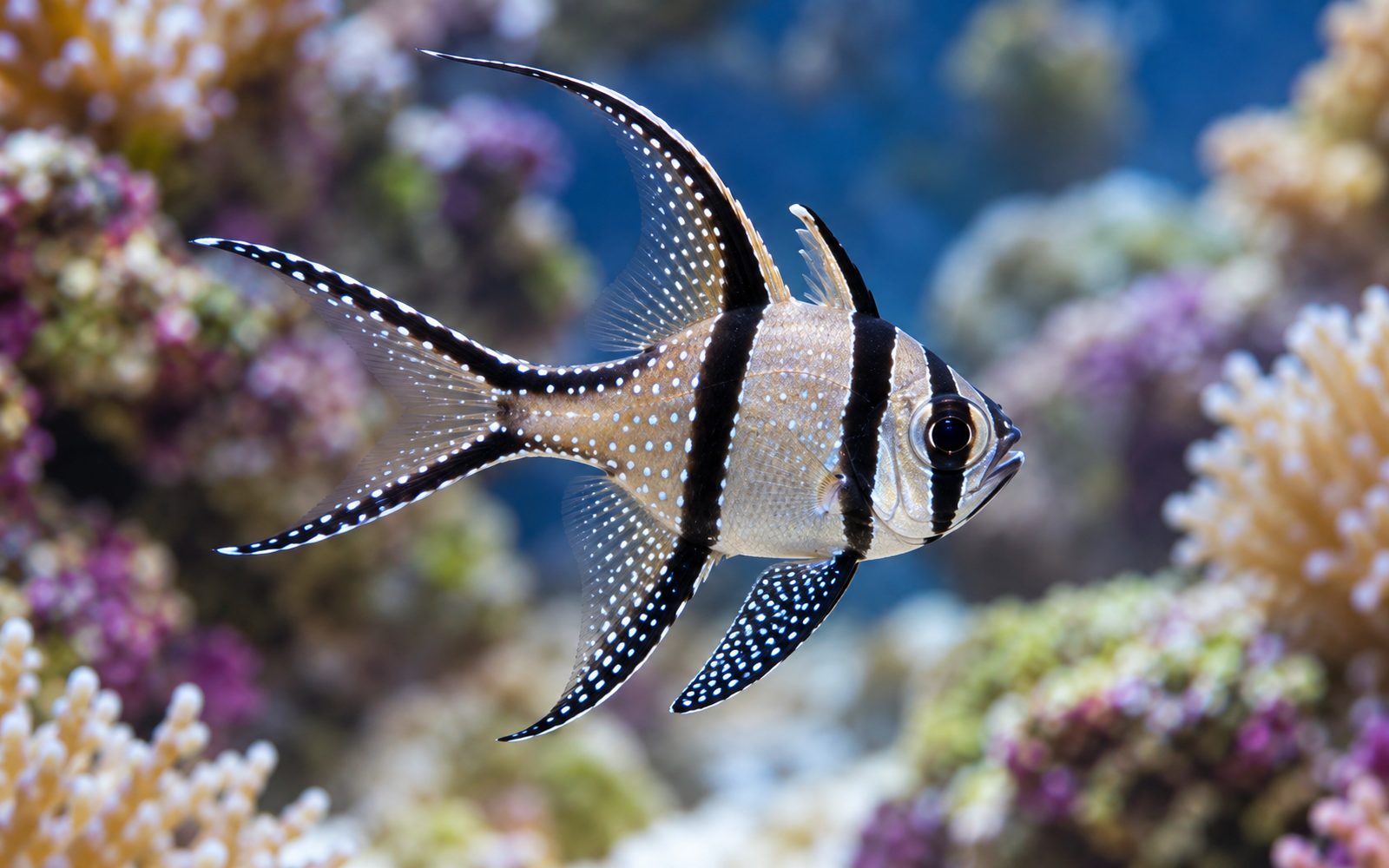
Avoid: Peaceful species such as firefish, mandarins, neon gobies, cardinalfish and the royal gramma; other Dascyllus species.
Group and Colony Structure
In a normal-sized aquarium it is kept as a single specimen. The group life seen in the wild can be attempted in the aquarium only in a very large volume (300 liters or more) with at least 5 individuals, all added at the same time. When only a few individuals are together, the dominant one may chase the others until it kills them.
Breeding
The male cleans a nest site at the base of a rock or coral and lures females there; the eggs stick to the surface, and the male guards and fans them. Spawning can be seen in the aquarium, but raising the planktonic fry is very difficult.
Health and Common Problems
- Extremely hardy; it rarely gets sick in suitable water.
- Marine white spot and velvet: Keep new fish in quarantine.
- Torn fins seen on other fish are mostly caused by this species' attacks.
Sexing
There is no reliable external difference. The largest individual in the group is usually the dominant male.
Tank mates
This list is calculated automatically from the species profile and grows as new species are added to the catalog. Try it in the planner for a definite answer.
Should not be kept together


Hobbyist notes
Things you won't find in books, learned by trial and error. The most helpful ones are on top.
Change history and contributors
- Page created · October 16, 2026