
Water parameters
Overview
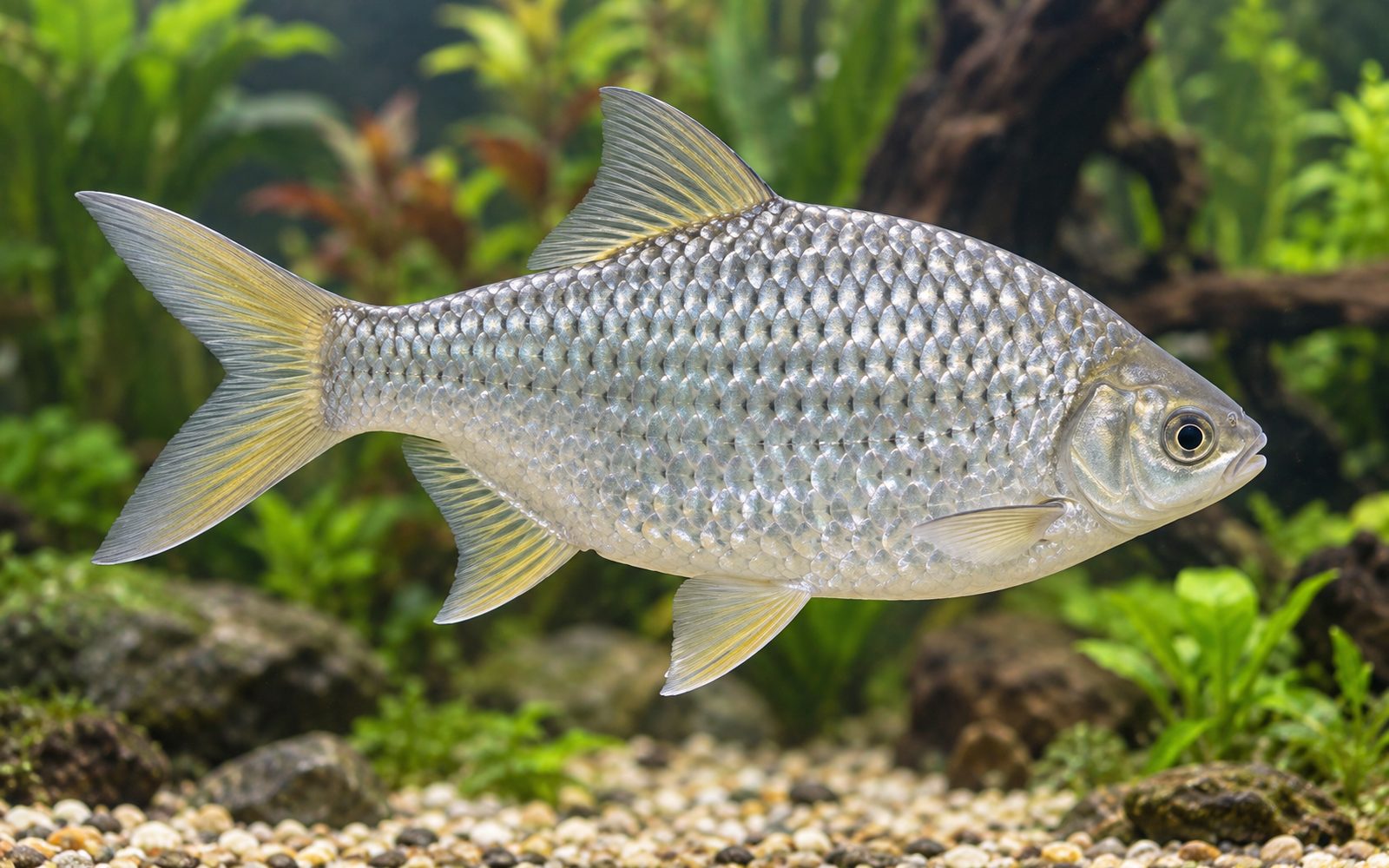
The Java barb is an important food fish widely farmed in ponds and rice paddies in Southeast Asia. Juveniles of its silver, gold and albino forms are sold in the aquarium trade; but adults reach 35–40 cm. Like the tinfoil barb it has a deep, laterally compressed body, but its fins are gray-yellowish rather than red. It has been introduced to many countries for aquaculture; aquarium fish must never be released into the wild.
Tank Setup
- At least 1000 liters and 200 cm in length for 5–6 adults; in the long run a large indoor pond is more suitable.
- 24–27°C; powerful filtration, high oxygen levels, a 30–50% weekly water change.
- Simple decor: roots and large rocks; plants are eaten in a short time.
- It jumps powerfully; a heavy, tight-fitting lid is essential.
Diet
An omnivore that feeds mostly on plant matter. Use spirulina pellets, blanched vegetables, lettuce and spinach as the staple; supplement with granules and frozen foods. It also eats small fish and shrimp that fit in its mouth.
Behavior and Compatibility
A peaceful but very fast and large schooling fish. It does not attack fish of similar size; it sees small species as prey and stresses shy species.
Good companions: peaceful giant fish of similar size: tinfoil barbs, bala sharks, large plecos, large gouramis.
Avoid: small and medium community fish, dwarf shrimp, planted tanks.
A short profile for this species
The Java Barb page has the basics, but the sections below have not been written yet. If you keep this species, write a section from your own experience; it will be published under your name after editor approval.
Tank mates
This list is calculated automatically from the species profile and grows as new species are added to the catalog. Try it in the planner for a definite answer.
Usually compatible
 Firemouth Cichlid
 Chocolate Cichlid
 Festivum
 Geophagus altifrons
 Geophagus surinamensis
 Gymnogeophagus balzanii
 Pearl Cichlid
 Threadfin Acara
 Blood Parrot
 Redhead Cichlid
Should not be kept together









Hobbyist notes
Things you won't find in books, learned by trial and error. The most helpful ones are on top.
Change history and contributors
- Page created · October 16, 2026