
Water parameters
Overview
Ornatipinnis takes its name from the decoration on its fins (ornatipinnis: with ornate fins). Although its light brown body looks plain, the males' dorsal and tail fins are patterned with fine dots and lines. Males reach 5–6 cm, while females stay noticeably smaller. It is known for burying its shells almost completely in the sand; females spend most of their time inside the shell or right at its opening.
Tank Setup
- 54–60 liters for 1 male and 2–3 females; a wide footprint.
- At least 5–6 cm of fine sand; a deep substrate is needed because the shells get buried.
- 2–3 clean, unpainted snail shells per fish.
- pH 8–9, hard water; a 20–25% water change every week.
Diet
A small carnivore. Fine-grained granules, frozen cyclops and brine shrimp are suitable; feed small amounts 1–2 times a day.
Behavior and Compatibility
It defends the area around its shell but is not as aggressive as ocellatus; it spends most of its time near its shell, close to the sand. Having calm fish in the upper water makes it more visible. The female guards her eggs inside the shell.
Good companions: Cyprichromis, Paracyprichromis and calm Julidochromis species (with enough space).
Avoid: other shell dwellers in a small tank, cichlids that hold territories on the bottom, large carnivorous fish. It eats baby shrimp.
A short profile for this species
The Lamprologus ornatipinnis page has the basics, but the sections below have not been written yet. If you keep this species, write a section from your own experience; it will be published under your name after editor approval.
Tank mates
This list is calculated automatically from the species profile and grows as new species are added to the catalog. Try it in the planner for a definite answer.
Usually compatible
 Yellow Regal Peacock
 Egyptian Mouthbrooder
 Yellow Tail Acei
Amazon Molly
Yellow Tail Acei
Amazon Molly
 Butterfly Goodeid
Anatolian Killifish
Eastern Happy
Red Shoulder Peacock
Butterfly Goodeid
Anatolian Killifish
Eastern Happy
Red Shoulder Peacock
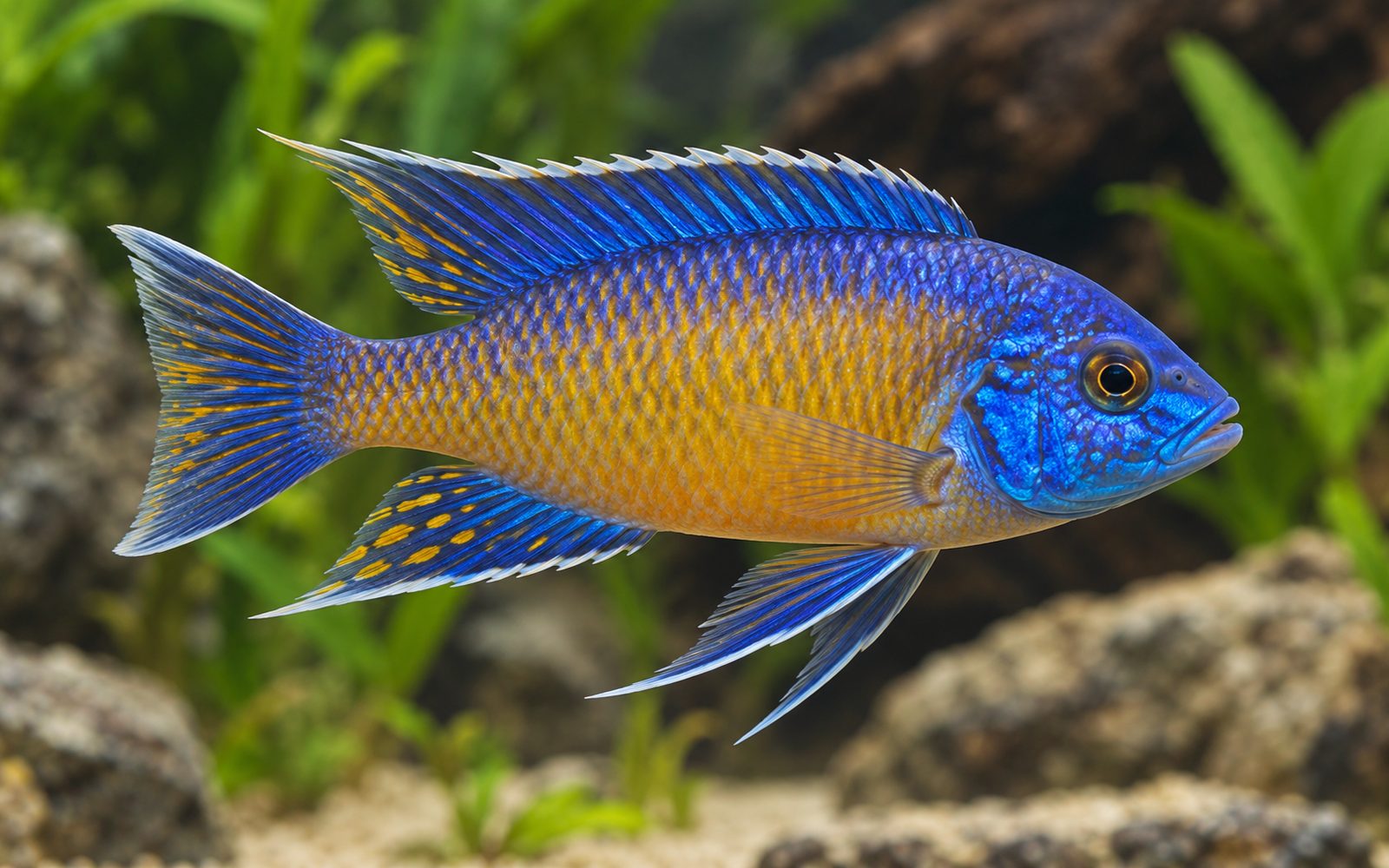 Fairy Cichlid
Blue Orchid Peacock
Fairy Cichlid
Blue Orchid Peacock
Should not be kept together






Hobbyist notes
Things you won't find in books, learned by trial and error. The most helpful ones are on top.
Change history and contributors
- Page created · October 16, 2026