
Water parameters
Overview
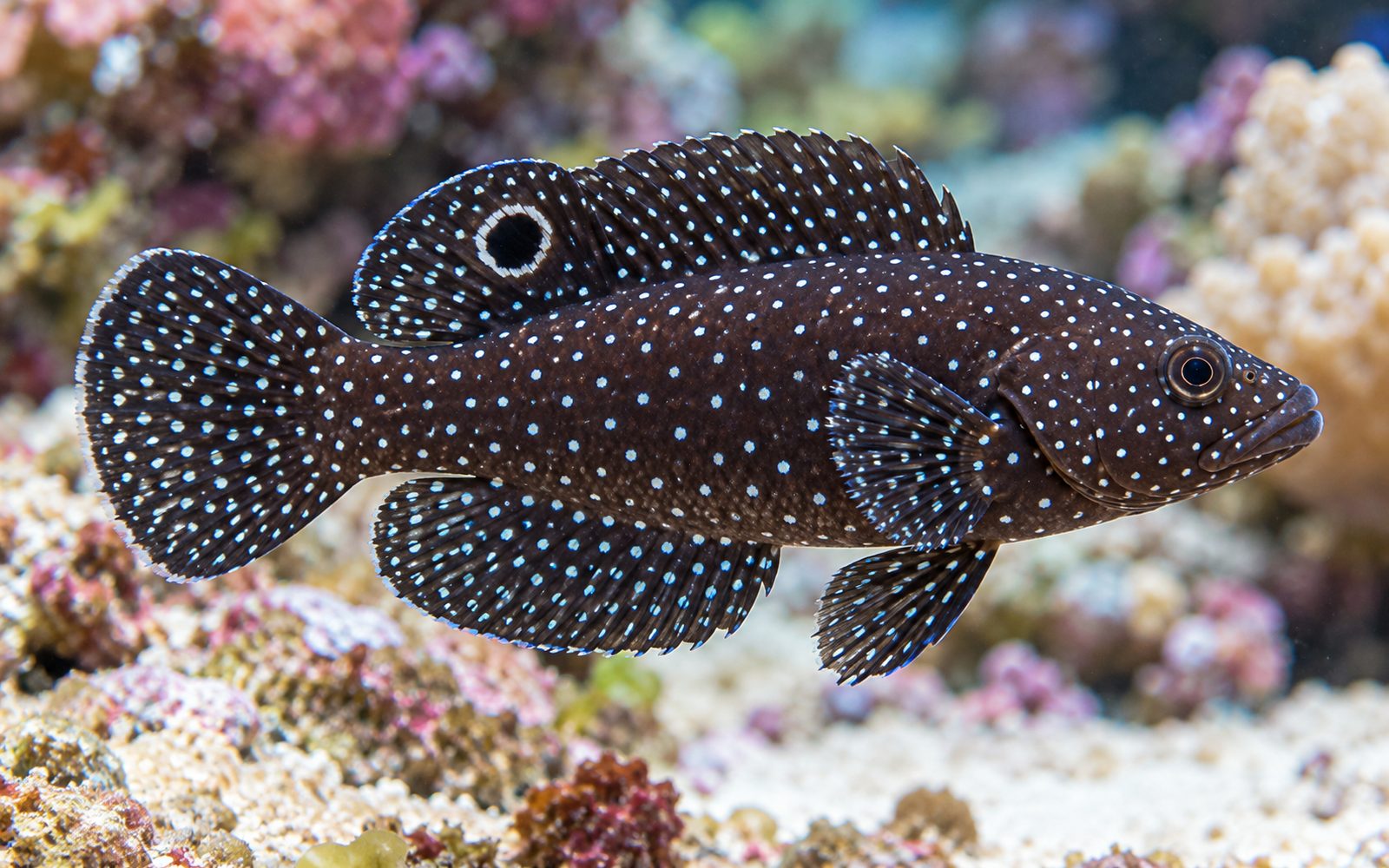
The marine betta is recognized by the white spots covering its dark brown-black body and its large, rounded fins; it is not related to the freshwater betta and takes its name from the look of its fins. When in danger it pushes its head into a rock crack; its rear body left outside and the eyespot at the base of the dorsal fin resemble the head of a white-spotted moray eel. It is a shy predator, active at dusk. It is hardy and long-lived; captive-bred individuals are also available.
Tank Setup
- At least 200 liters.
- Salinity specific gravity 1.023–1.026, pH 8.1–8.4, temperature 24–27°C.
- Reef-safe with caution: it leaves corals alone, but hunts small fish that fit in its mouth and ornamental shrimp.
- A rock structure with plenty of caves and dim corners.
Diet
Carnivorous. Offer frozen mysis, krill and chopped seafood; newly arrived individuals may at first want live food, then get used to frozen food over time. Feeding in the evening gives good results.
Behavior and Compatibility
Peaceful towards fish that do not fit in its mouth, and it shows itself very little. It can be territorial towards its own species; keep a single specimen.
Good companions: Calm species that do not fit in its mouth: tangs, dwarf angelfish, large cardinalfish, calm scorpionfish.
Avoid: Small gobies, firefish goby, chromis, ornamental shrimp, aggressive and greedy fish (they steal its food).
A short profile for this species
The Marine Betta page has the basics, but the sections below have not been written yet. If you keep this species, write a section from your own experience; it will be published under your name after editor approval.
Tank mates
This list is calculated automatically from the species profile and grows as new species are added to the catalog. Try it in the planner for a definite answer.
Should not be kept together



Hobbyist notes
Things you won't find in books, learned by trial and error. The most helpful ones are on top.
Change history and contributors
- Page created · October 16, 2026