
Water parameters
Overview
The linni is the oddest-looking member of the genus Nimbochromis: its snout is long and curves downward, which is why it is called "elephant-nose" in English. Its body carries large brown blotches on a cream background. When hunting, it stays on top of the rocks, and thanks to this snout it can catch small fish hiding in the crevices below. A bluish sheen appears on the heads of mature males.
Tank Setup
- At least 600 liters and 180 cm in length for an adult group.
- Rock groups with crevices along the sides and a wide open swimming area.
- Hard and alkaline water (pH 7.8–8.5); aragonite substrate or Malawi salt.
- Strong filtration and weekly 40–50% water changes.
Diet
Carnivorous. A sinking large cichlid pellet should be the staple; frozen mysis, krill, shrimp and fish meat are added. Because of the structure of its mouth, it takes food from the bottom more easily.
Behavior and Compatibility
It is relatively calm toward fish of its own size; as males mature, they become territorial toward their own species. It hunts small fish that fit in its mouth. It can hybridize with other Nimbochromis species.
Good companions: large haps such as the blue dolphin cichlid, Malawi eye-biter, electric blue ahli and Fossorochromis rostratus, large Synodontis catfish suited to hard water.
Avoid: other Nimbochromis species (hybridization), mbuna, small Aulonocara species, any fish that fits in its mouth, community fish, shrimp and snails.
A short profile for this species
The Nimbochromis linni page has the basics, but the sections below have not been written yet. If you keep this species, write a section from your own experience; it will be published under your name after editor approval.
Tank mates
This list is calculated automatically from the species profile and grows as new species are added to the catalog. Try it in the planner for a definite answer.
Usually compatible
 Yellow Regal Peacock
 Firemouth Cichlid
 Rainbow Cichlid
 Pearl Cichlid
 Redhead Cichlid
 Red Hump Eartheater
 Convict Cichlid
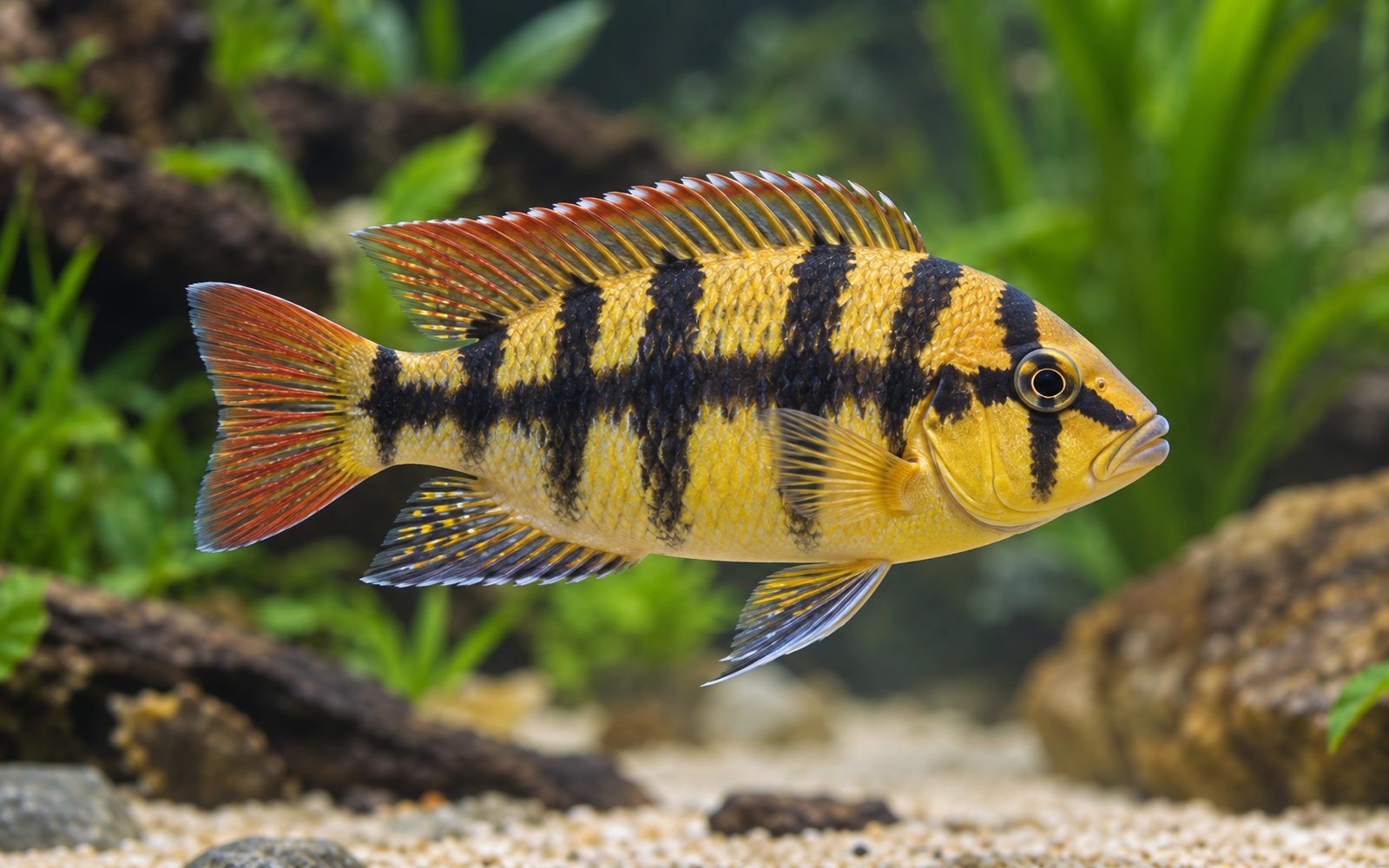 Zebra Obliquidens
 Yellow Tail Acei
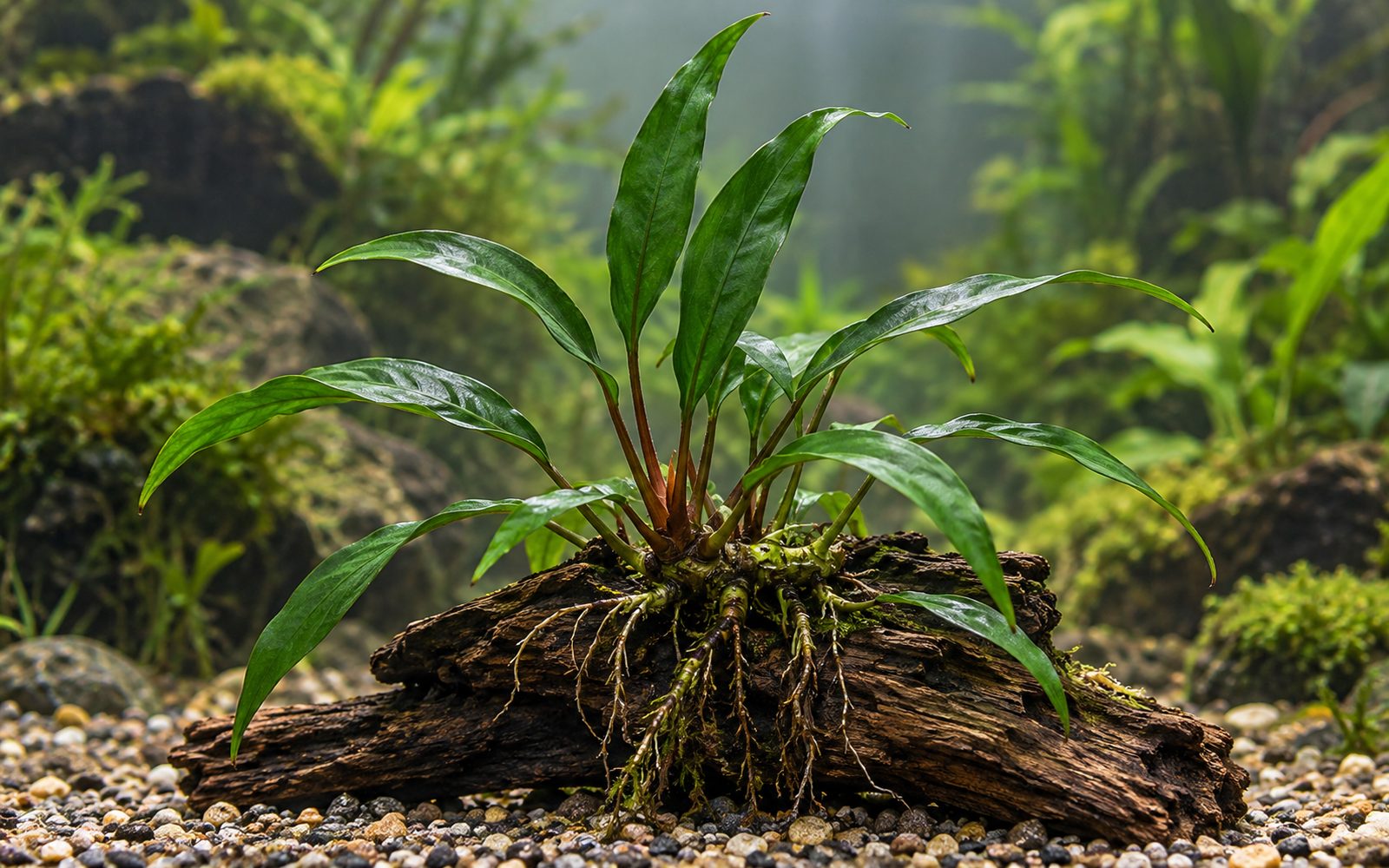 Anubias Angustifolia
Should not be kept together






Hobbyist notes
Things you won't find in books, learned by trial and error. The most helpful ones are on top.
Change history and contributors
- Page created · October 16, 2026