
Water parameters
Overview
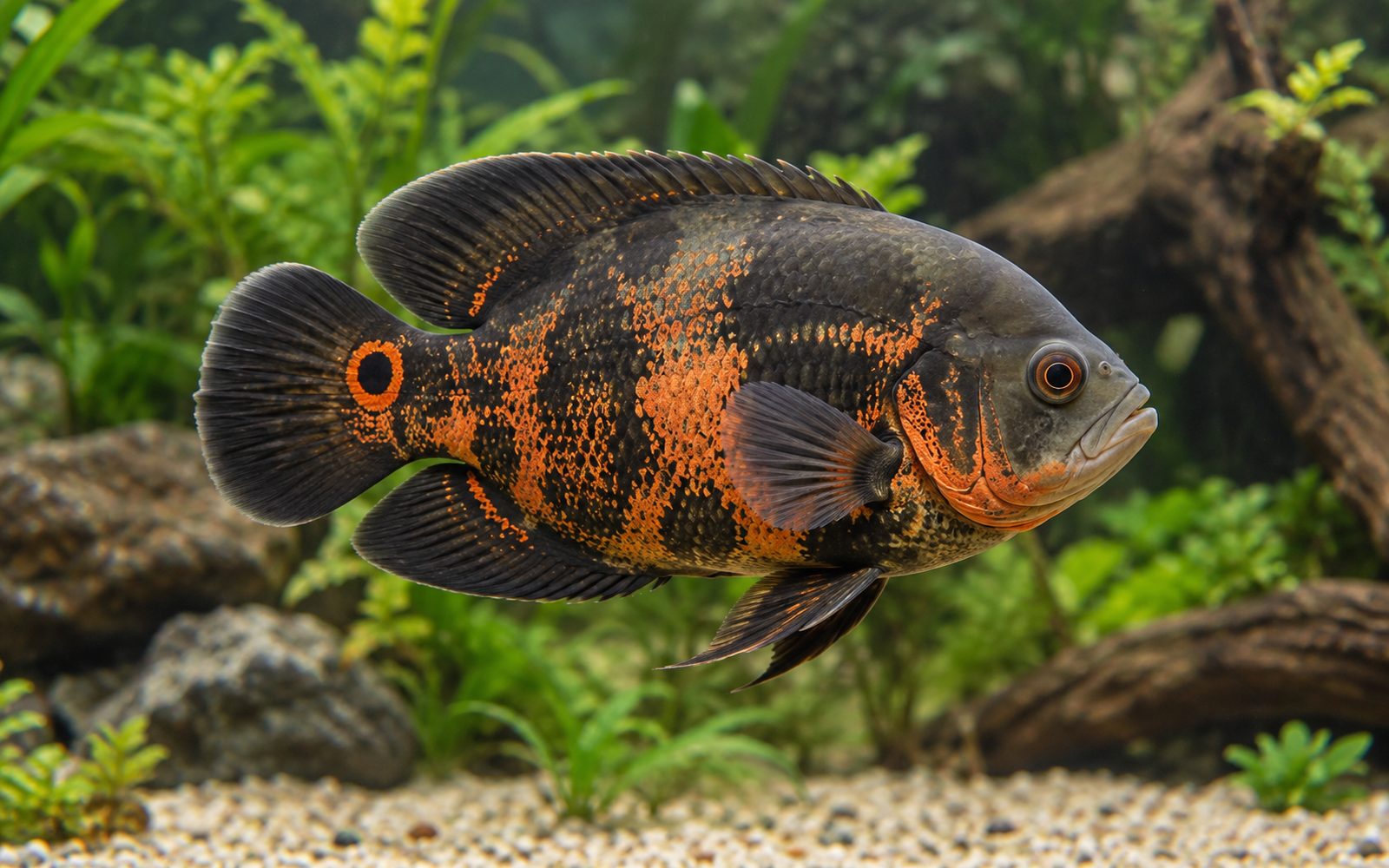
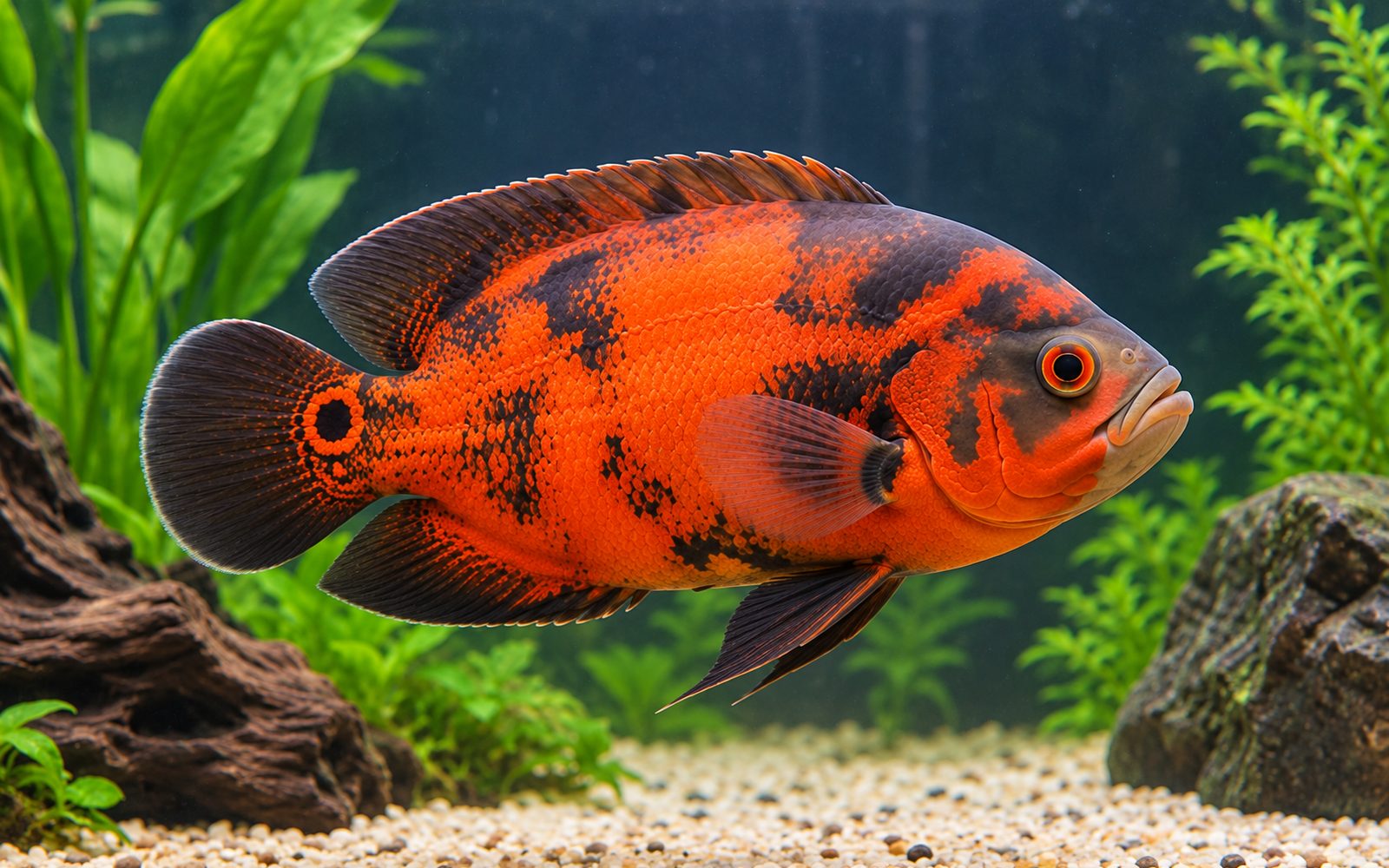
The oscar is recognized by its velvety dark body and orange–red blotches; the orange-ringed eyespot (ocellus) on the caudal peduncle gives the species its name. Red, tiger, albino and "lemon" forms are common. Among aquarium fish it is one of the few interactive enough to be called a "pet": it recognizes its owner, comes to the front glass when the door opens and rearranges the decor.
It is sold in stores as 3–4 cm juveniles and reaches 20–25 cm within the first year. An aquarium of 300 liters or more should be planned before buying one.
Color and Fin Varieties
The varieties have not been described yet. Be the first to write it.
Natural Habitat
It lives in slow-flowing tributaries, flooded forests and lakes of the Amazon, among fallen trees and roots. In the wild it eats small fish, crayfish, insects and fruit.
Tank Setup
- Volume: at least 300 liters for a single adult, 450 liters or more for a pair.
- Filter: a canister filter or sump turning over 5–10 times the tank volume per hour. Oscars eat a lot and produce a lot of waste.
- Decor: sturdy, large rocks and roots; oscars dig through sand and knock over light objects. Plants are usually uprooted.
- Heater: should be guarded or placed outside the tank; oscars can break glass heaters.
- Lid: it jumps at feeding time or when frightened.
Diet
An omnivore leaning toward meaty foods. Large cichlid granules as the staple; occasionally frozen shrimp, mysis, worms and vegetables such as peas. Live feeder fish (guppies, goldfish) are not recommended: they carry disease and create fat/thiaminase imbalances. Adults are fed once a day.
Behavior and Compatibility
It is usually manageable toward its own kind and fish of similar size, but it eats anything that fits in its mouth. During breeding it fiercely defends its territory.
Good companions: calm, large fish of the same size — large plecos, silver dollars, silver arowana (in a very large tank), South American cichlids such as the severum.
Avoid: all small community fish, shrimp, snails, slow and long-finned fish.
Group and Colony Structure
The oscar is a fish that can be kept alone and is not unhappy about it; most hobbyists keep a single oscar.
A pair can only be obtained by raising juveniles together and letting them pair off naturally, and it needs an aquarium of 450 liters or more. Once paired, they can be harsh toward other individuals. Whether two oscars get along in the same tank depends on their individual personalities; a spare aquarium should be ready to separate them if they prove incompatible.
Breeding
Mature pairs (about 15 cm and up) lay hundreds, sometimes more than a thousand, eggs on a flat stone they have cleaned. The parents guard the eggs and fry. To form a pair, several juveniles are usually raised together; once a pair forms, the others are removed.
Health and Common Problems
- Hole-in-the-head disease (HLLE): erosion and pits on the head and along the lateral line. It is associated with poor water quality, activated carbon residue and poor nutrition.
- Fin and body wounds: from sharp decor and broken heaters.
- Constipation: with a monotonous diet and overfeeding.
Sexing
Hard to tell apart externally. Some breeders say the male has a few dark spots at the base of the dorsal fin, but this is not reliable. Sexing is confirmed by the shape of the papilla during spawning.
Tank mates
This list is calculated automatically from the species profile and grows as new species are added to the catalog. Try it in the planner for a definite answer.
Usually compatible
 Festivum
 Firemouth Cichlid
 Chocolate Cichlid
 Gymnogeophagus balzanii
 Pearl Cichlid
 Threadfin Acara
 Blood Parrot
 Redhead Cichlid
 Red Hump Eartheater
 Cryptocoryne Parva
Should not be kept together









Hobbyist notes
Things you won't find in books, learned by trial and error. The most helpful ones are on top.
Change history and contributors
- Page created · October 16, 2026