
Water parameters
Overview
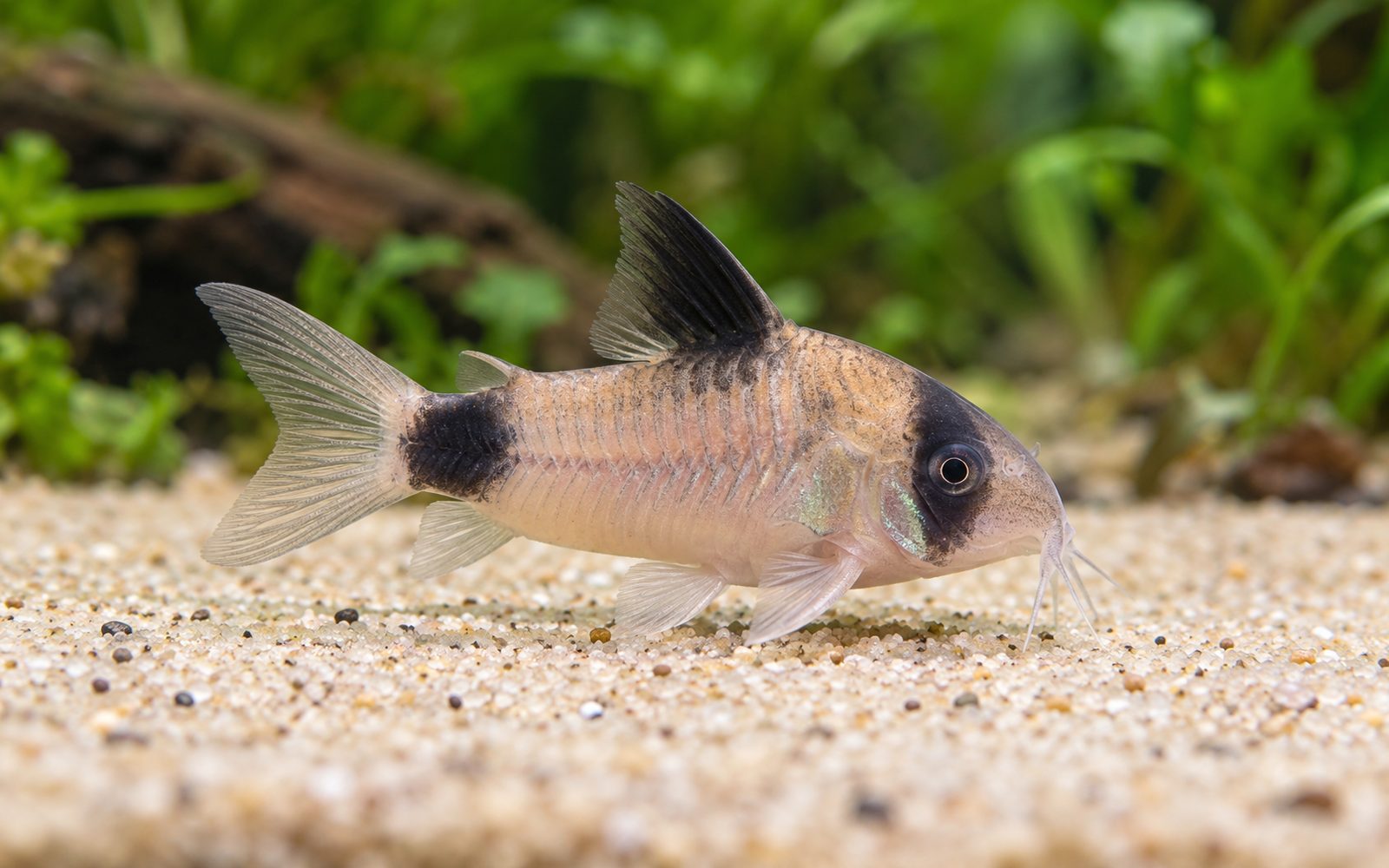
The panda cory takes its name from the panda because of the black band covering its eye, its black dorsal fin and the black patch on its caudal peduncle, all on a white-pink body. At 4–5 cm it is suitable for small aquariums. Captive-bred fish are common today and are hardy.
Natural Habitat
It lives over sandy bottoms in clear, relatively cool streams with moderate current in the foothills of the Andes in Peru.
Tank Setup
- Volume: at least 60 liters for a group of 6–8; footprint matters.
- Substrate: fine, rounded sand is essential.
- Water: 21–24°C; cooler than many tropical species. It likes oxygen-rich water and gentle flow; constantly above 26°C its lifespan is shortened.
Diet
Sinking tablets and granules, frozen bloodworms, brine shrimp and daphnia. Sinking food given in the evening reduces competition with fast fish.
Behavior and Compatibility
Extremely peaceful; it does not bother fish or shrimp.
Good companions: neon tetra, harlequin rasbora, galaxy rasbora (celestial pearl danio), zebra danio, otocinclus, shrimp.
Avoid: cichlids that claim the bottom, species that need warm water (discus), large and boisterous fish.
Group and Colony Structure
At least 6, ideally 8 or more panda corys. A large group roams together and is much more active. Mixed groups with bronze corys can form, but each species is more at ease with its own kind. For breeding, 2 males to each female.
Breeding
A large, cool water change often triggers spawning. The female sticks the fertilized eggs one by one to the glass and leaves. The eggs hatch in 4–5 days; since the adults may eat them, they can be moved to a separate container.
Health and Common Problems
Barbel erosion (sharp substrate, dirty sand), weakened immunity in warm water. It is sensitive to salt and some medications.
Sexing
Viewed from above, females are clearly broader and plumper; males are smaller and slimmer.
Tank mates
This list is calculated automatically from the species profile and grows as new species are added to the catalog. Try it in the planner for a definite answer.
Usually compatible
 Flame Tetra
 Blackfin Corydoras
 Polystictus Corydoras
 Emerald Cory
 Emerald Dwarf Rasbora
 Porthole Catfish
 Keyhole Cichlid
 Cryptocoryne Parva
 European Bitterling
 Adolfo's Cory
Should not be kept together






Hobbyist notes
Things you won't find in books, learned by trial and error. The most helpful ones are on top.
Change history and contributors
- Page created · October 16, 2026