
Water parameters
Overview
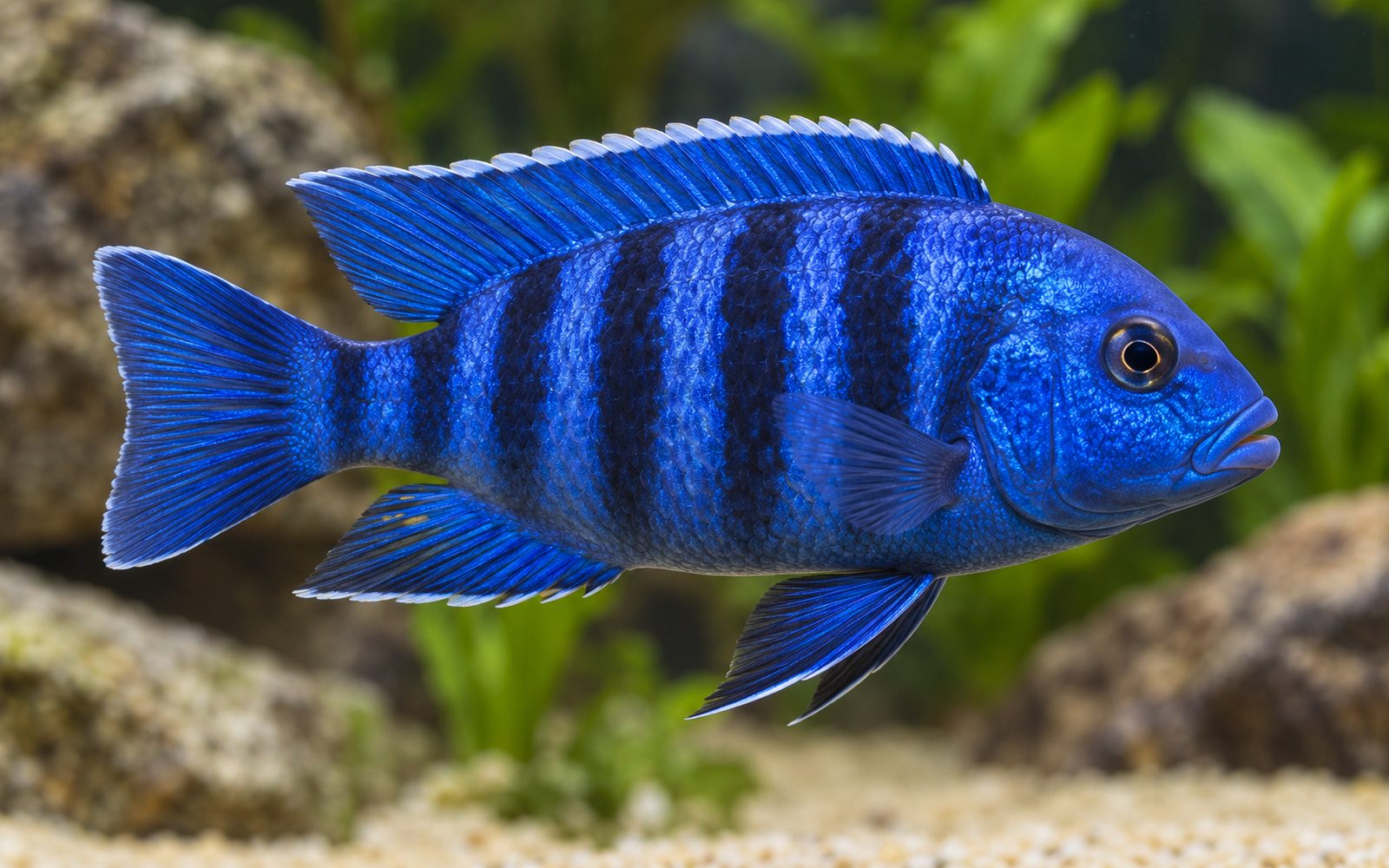
Placidochromis electra, also known in the hobby as the "deepwater hap", is a medium-sized, calm Malawi hap. Mature males take on a deep blue adorned with dark vertical bars. Females, on the other hand, are silvery gray in tone, with faint bars and a plain appearance.
Its temperament is one of the most docile in this group: males display their colors to each other but rarely get into serious fights. This makes it a good addition to a calm hap and Aulonocara aquarium.
Natural Habitat
It lives around Likoma Island in Lake Malawi and along the Mozambique shore, in relatively deep water where sandy and rocky areas mix. In the wild it has been observed following large fish that dig through the sand and picking up the small invertebrates they expose. It roams in groups.
Tank Setup
- Volume: at least 400 liters and 150 cm in length for a group.
- Layout: A wide area of fine sand with rock groups along the sides; open swimming space is important.
- Water: Hard and alkaline (pH 7.8–8.5); aragonite substrate or Malawi salt.
- Maintenance: Strong filtration, weekly 30–50% water changes.
Diet
Carnivorous; in the wild it feeds on small invertebrates in the sand. A sinking cichlid pellet should be the staple; it is varied with frozen mysis, brine shrimp and cyclops. Bloodworms and foods containing mammalian meat can lead to Malawi bloat.
Behavior and Compatibility
A social and calm species; it forms a loose hierarchy within the group. In the same aquarium as aggressive mbuna it is bullied and its colors fade. It may eat very small fish that fit in its mouth.
Good companions: Aulonocara species, Copadichromis borleyi, red empress, electric blue ahli, blue dolphin cichlid, Synodontis catfish suited to hard water.
Avoid: aggressive mbuna, large predators, community fish, shrimp and snails.
Group and Colony Structure
- Harem: 1 male and 3–4 females.
- More than one male: Thanks to its calm temperament, two males can be kept in a large aquarium; the males display their colors to each other, but fights are rare.
- Group: 6 or more fish bring out more natural and relaxed behavior.
Breeding
A mouthbrooder. The male courts on the sand or on a flat rock; the female picks up the eggs in her mouth and they are fertilized via the egg spots on the male's anal fin. The female carries 20–40 eggs for about 3 weeks. The fry grow on crushed food and brine shrimp.
Health and Common Problems
- Malawi bloat: wrong food and stress.
- Bullying: loss of appetite and fading colors when kept with aggressive tankmates.
- Hole in the head: associated with insufficient water changes.
Sexing
Mature males are deep blue with dark bars, have longer fins and carry egg spots on the anal fin. Females are silvery gray or light gray-blue, and their bars stay faint. Juveniles resemble females; males color up slowly.
Tank mates
This list is calculated automatically from the species profile and grows as new species are added to the catalog. Try it in the planner for a definite answer.
Usually compatible
 Yellow Regal Peacock
 Firemouth Cichlid
 Demasoni Cichlid
 Rainbow Cichlid
 Pearl Cichlid
 Redhead Cichlid
 Red Hump Eartheater
 Egyptian Mouthbrooder
 Yellow Tail Acei
 Butterfly Goodeid
Should not be kept together







Hobbyist notes
Things you won't find in books, learned by trial and error. The most helpful ones are on top.
Change history and contributors
- Page created · October 16, 2026