
Water parameters
Overview
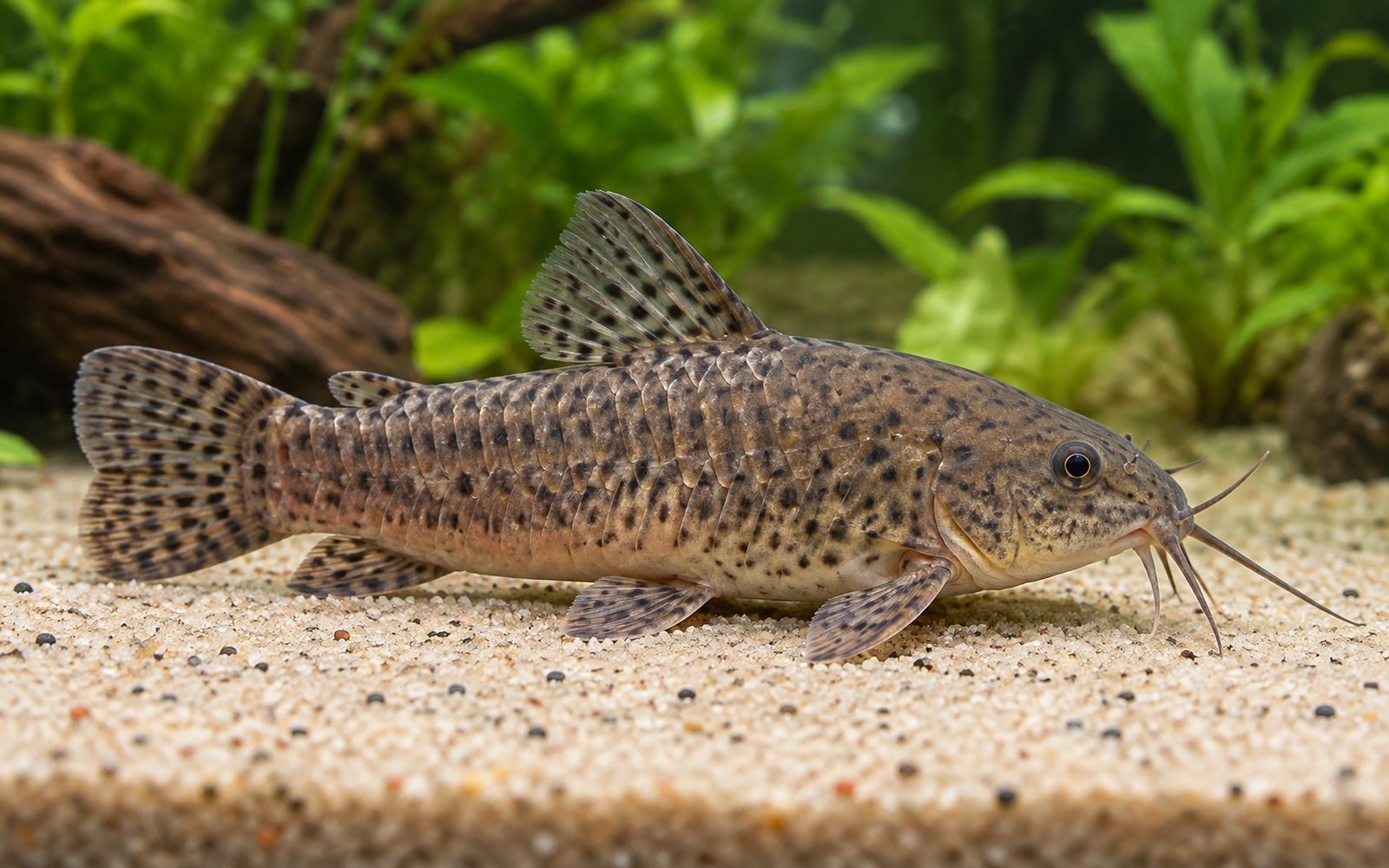
Megalechis thoracata, formerly Hoplosternum thoracatum, is a smaller relative of the hoplo; adults reach 12–13 cm. Its body is armored with two rows of bony plates and carries scattered dark spots on a gray–brown background. The easiest way to tell it from the hoplo (Hoplosternum littorale) is to look at the tail: in the hoplo the tail is slightly forked, in Megalechis it is square-cut or rounded. It is very hardy because it can take oxygen from the air through its gut; during breeding the male builds a bubble nest at the surface and guards the eggs.
Tank Setup
- At least 150 liters for a group of 3–5; a base length of 100 cm or more.
- Sand or fine, rounded gravel; hiding places made of roots and large stones.
- 22–28°C; it adapts to a wide range of pH and hardness; strong filtration is essential.
- It darts to the surface to gulp air; a lidded aquarium and floating plants are recommended.
Diet
Omnivorous with a hearty appetite. It accepts large sinking tablets and granules, frozen bloodworms, mosquito larvae and pieces of shrimp. Since it is mostly active in the evening and at night, feeding once the lights go out gives good results.
Behavior and Compatibility
Generally peaceful; it mostly roams calmly along the bottom. During breeding the male guards his nest determinedly. Because of its size, dwarf shrimp and very small fish are not safe with it.
Good companions: medium to large peaceful fish: large tetras, silver dollars, angelfish, mild-tempered cichlids, plecos, large gouramis.
Avoid: dwarf shrimp, small fish that could fit in its mouth, very aggressive large cichlids that claim the bottom.
A short profile for this species
The Port Hoplo page has the basics, but the sections below have not been written yet. If you keep this species, write a section from your own experience; it will be published under your name after editor approval.
Tank mates
This list is calculated automatically from the species profile and grows as new species are added to the catalog. Try it in the planner for a definite answer.
Usually compatible
 Flame Tetra
 Yellow Regal Peacock
Glass Tetra
Yellow Regal Peacock
Glass Tetra
 Blackfin Corydoras
 Polystictus Corydoras
 Emerald Betta
 Emerald Cory
 Emerald Dwarf Rasbora
 Porthole Catfish
 Keyhole Cichlid
Should not be kept together






Hobbyist notes
Things you won't find in books, learned by trial and error. The most helpful ones are on top.
Change history and contributors
- Page created · October 16, 2026