
Water parameters
Overview
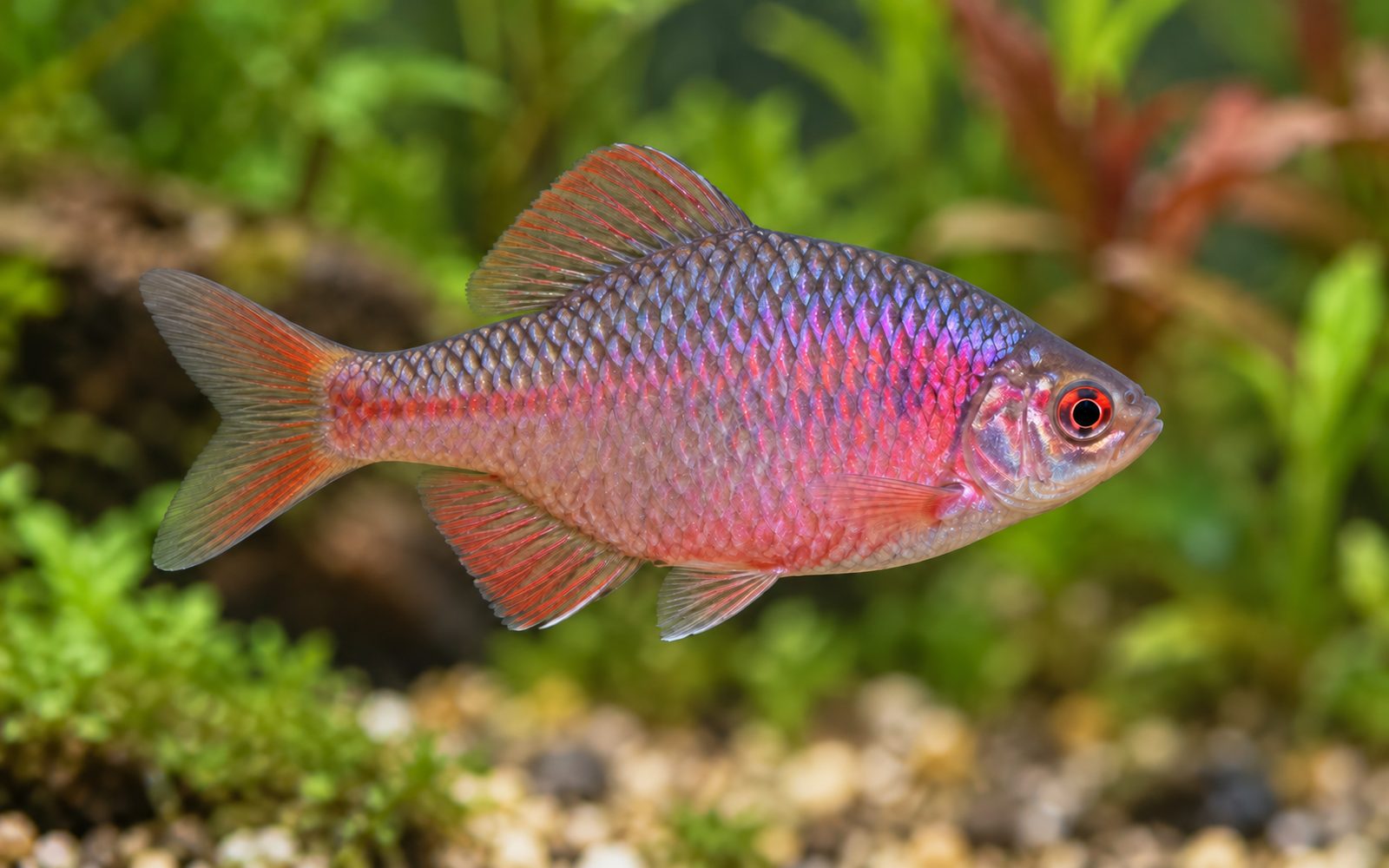
The rosy bitterling is a small bitterling that lives in the slow-flowing waters of East Asia. Like its European relative, it deposits its eggs inside living freshwater mussels; the young complete their development inside the mussel. Breeding males stand out with their pink-red, iridescent colors, while females are plain silver.
In some regions where it has been introduced, it has caused problems by hybridizing with native bitterlings; aquarium fish must never be released into the wild.
Tank Setup
- At least 60 liters and 60 cm in length for a group of 6–8.
- 15–22°C is ideal; a heater is usually not needed, and it lives comfortably at room temperature.
- Sand substrate, dense planting and well-oxygenated water.
- Breeding requires living freshwater mussels; keeping mussels alive in an aquarium is difficult and requires preparation.
Diet
Omnivorous. It feeds on small flakes and granules, spirulina, frozen daphnia, brine shrimp and small bloodworms.
Behavior and Compatibility
Peaceful and social. During the breeding season, males engage in short chases around the mussels; this is harmless.
Good companions: small, peaceful species that like cool water: white cloud mountain minnows, gold barbs, rosy barbs, dwarf shrimp, snails.
Avoid: large and aggressive fish, tropical species that need high temperatures.
A short profile for this species
The Rosy Bitterling page has the basics, but the sections below have not been written yet. If you keep this species, write a section from your own experience; it will be published under your name after editor approval.
Tank mates
This list is calculated automatically from the species profile and grows as new species are added to the catalog. Try it in the planner for a definite answer.
Usually compatible
 Flame Tetra
 Blackfin Corydoras
 Polystictus Corydoras
 Emerald Cory
 Emerald Dwarf Rasbora
 Porthole Catfish
 Keyhole Cichlid
 Cryptocoryne Parva
 European Bitterling
 Adolfo's Cory
Should not be kept together






Hobbyist notes
Things you won't find in books, learned by trial and error. The most helpful ones are on top.
Change history and contributors
- Page created · October 16, 2026