
Water parameters
Overview
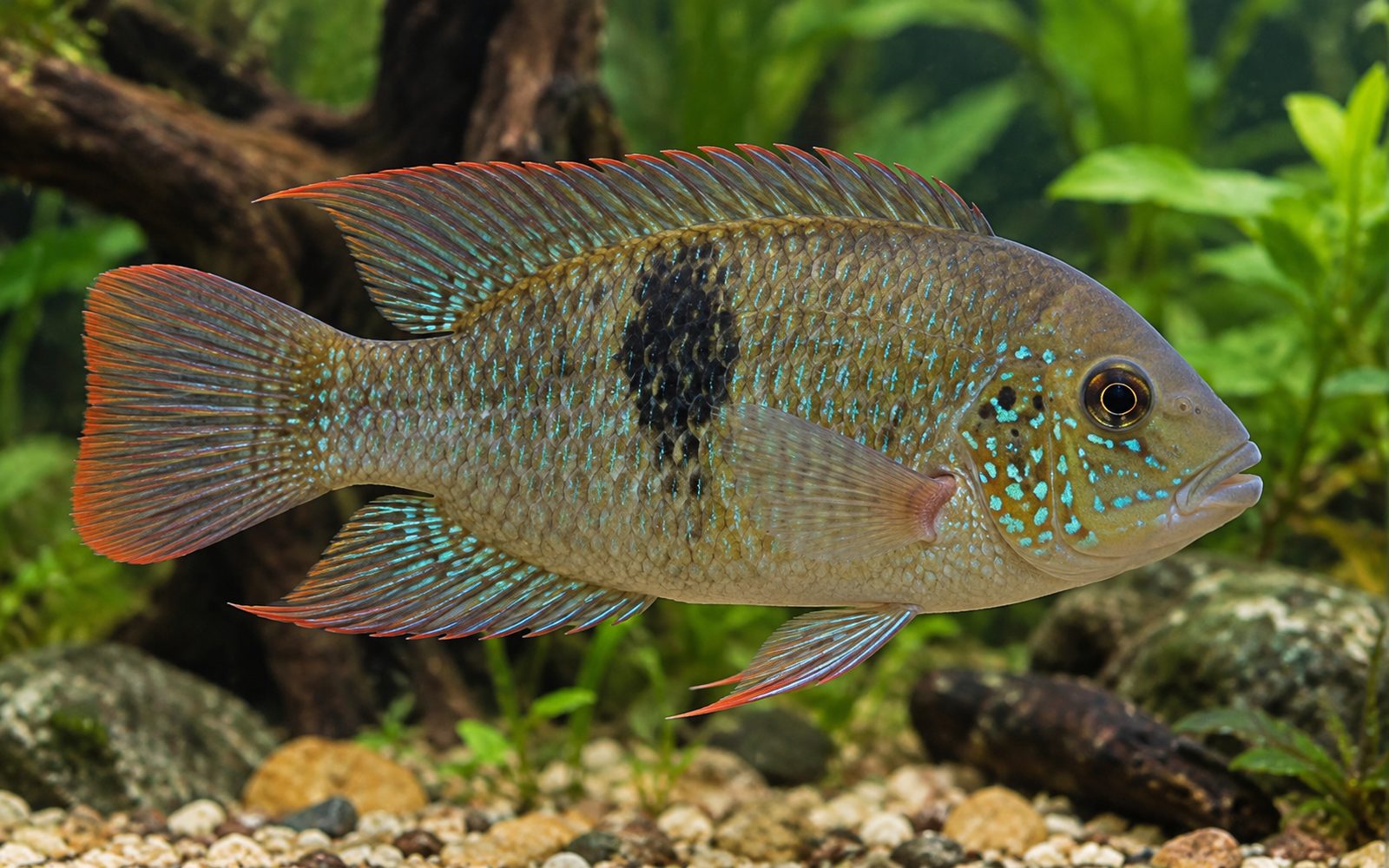
The saddle cichlid is a hardy, adaptable acara that lives across a large part of the Amazon basin. Its olive–brown body is covered with blue–green shimmering spots; in the middle of the body there is a large dark blotch resembling a saddle. Males can reach 20 cm, while females stay slightly smaller. It can be thought of as a larger relative of the blue acara (Andinoacara pulcher).
Tank Setup
- At least 250 liters and 120 cm of length for a pair.
- Roots, flat stones and sand substrate; tough-leaved plants can hold up.
- It adapts to a wide range of values; a 30% water change weekly.
- Dim light and floating plants bring out its colors.
Diet
Omnivorous. Make cichlid granules the staple; vary them with frozen bloodworms, mysis, shrimp and vegetables. One or two meals a day are enough; excess food degrades water quality.
Behavior and Compatibility
It usually gets along well with fish of similar size; during breeding it resolutely defends the area around the eggs and may eat small fish that fit in its mouth.
Good companions: severum, festivum, Geophagus species, large tetras, silver dollars, plecos.
Avoid: small fish such as neons, shrimp, very aggressive Central American cichlids.
A short profile for this species
The Saddle Cichlid page has the basics, but the sections below have not been written yet. If you keep this species, write a section from your own experience; it will be published under your name after editor approval.
Tank mates
This list is calculated automatically from the species profile and grows as new species are added to the catalog. Try it in the planner for a definite answer.
Usually compatible
 Altum Angelfish
 Firemouth Cichlid
 Buffalohead Cichlid
 Chocolate Cichlid
 Festivum
 Geophagus altifrons
 Geophagus surinamensis
 Rainbow Cichlid
 Gymnogeophagus balzanii
Should not be kept together





Hobbyist notes
Things you won't find in books, learned by trial and error. The most helpful ones are on top.
Change history and contributors
- Page created · October 16, 2026