
Water parameters
Overview
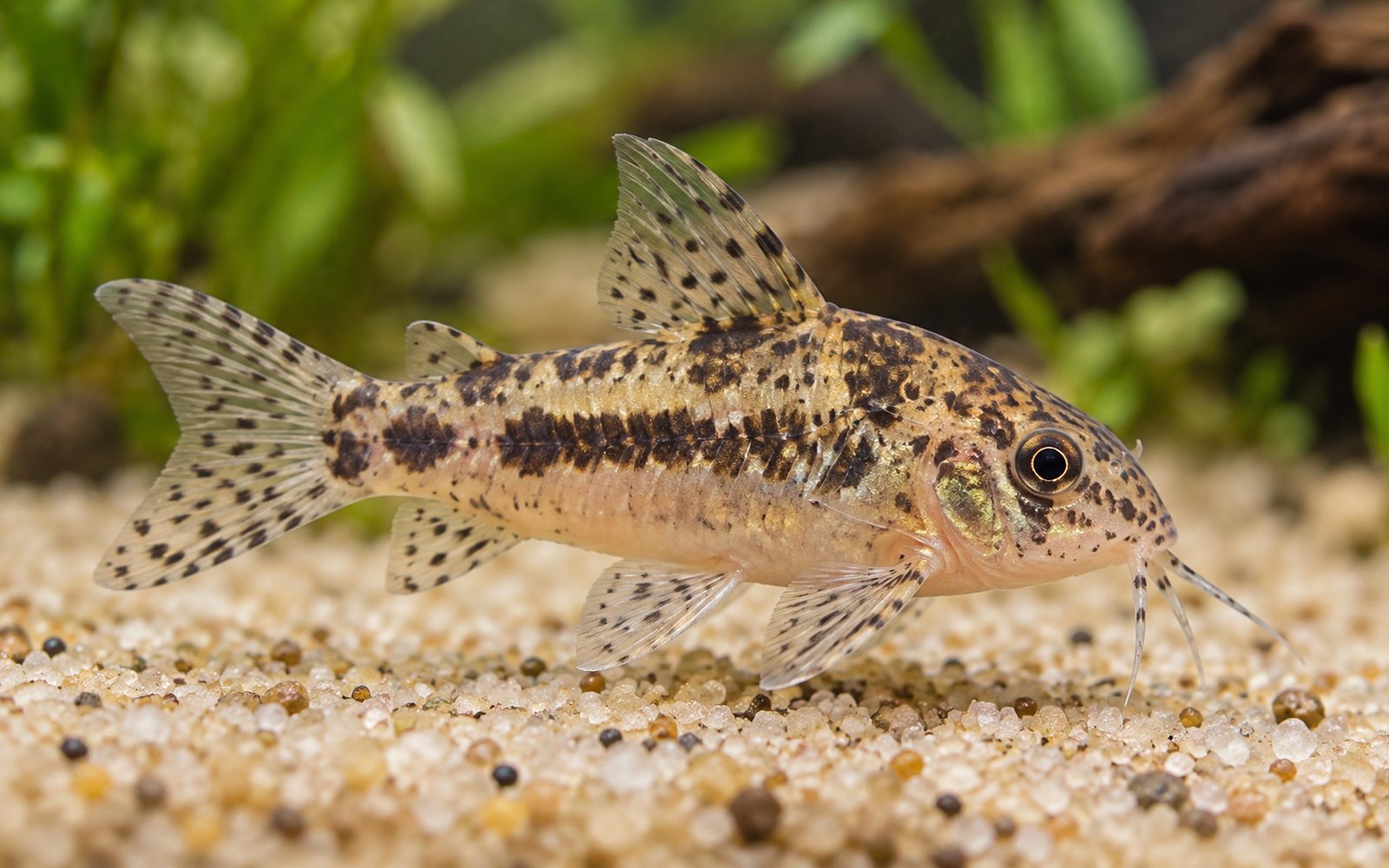
The salt and pepper cory is one of the three dwarf corydoras species and the one that shows the most "classic" corydoras behavior among them: unlike its pygmy and hastatus relatives, it spends almost its entire day on the bottom, probing the sand with its barbels. Its beige to golden-yellow body is covered with irregular brown blotches; these form a broken band along the sides, while rows of spots can be seen on the fins. The English name "salt and pepper" comes from this speckled appearance.
Adults do not exceed 2.5–3 cm. The straight black stripe of the pygmy cory and the tail spot of hastatus are absent in this species; this is the easiest way to tell them apart.
Natural Habitat
It lives in shallow, clear streams with sandy bottoms and along the edges of rivers in the Orinoco basin in Venezuela and Colombia. In these waters it roams in groups over sand and fine gravel.
Tank Setup
- Volume: at least 40 liters for a group of 8–12; footprint matters more than height.
- Substrate: fine, rounded sand is essential. Since it forages on the bottom all day, a sharp substrate quickly damages its barbels.
- Water: 22–26°C, soft to moderately hard, well-oxygenated and clean water.
- Decor: an open sand area at the front, plants at the back, a few roots and leaves; shaded corners where it can rest.
Diet
Give sinking foods suited to its small mouth: fine granules, crumbled tablets, frozen brine shrimp, cyclops and small bloodworms. Make sure the food actually reaches the bottom; if fast midwater fish catch the food on the way down, this dwarf species goes hungry.
Behavior and Compatibility
Peaceful; in a large group it searches for food in the open all day. It does not harm shrimp or their young, which makes it a good choice for shrimp aquariums as well.
Good companions: Boraras and small rasboras, tiny tetras, Endler's livebearers, otocinclus, dwarf shrimp, pygmy and hastatus corydoras.
Avoid: large fish that can fit it in their mouths, cichlids and crayfish that claim territory on the bottom, large and greedy fish that snap up food quickly.
Group and Colony Structure
At least 8, ideally 12 or more individuals are recommended. As the group grows, the fish become bolder and roam the bottom together. It can be kept together with other dwarf corydoras, but a group of its own species gives a more natural look.
Breeding
It is known to breed in the aquarium. A cool water change and a diet enriched with live food encourage spawning. The eggs are stuck one by one to plants, the glass and decor, and hatch in 3–4 days. The fry are very small; they need infusoria and microworms as a first food and freshly hatched brine shrimp after a few days.
Health and Common Problems
- Barbel erosion: a sign of dirty or sharp substrate; fix the substrate and water quality.
- Its small body is quickly affected by rises in nitrite and ammonia; it should only be put into an aquarium that has finished cycling.
- It is sensitive to salt and copper-based medications.
Sexing
Females are noticeably larger and plumper than males; the difference is especially easy to see from above. Males are small and slim.
Tank mates
This list is calculated automatically from the species profile and grows as new species are added to the catalog. Try it in the planner for a definite answer.
Usually compatible
 Flame Tetra
 Blackfin Corydoras
 Polystictus Corydoras
 Emerald Cory
 Emerald Dwarf Rasbora
 Porthole Catfish
 Keyhole Cichlid
 Geophagus surinamensis
 Cryptocoryne Parva
 Gold Spot Pleco (L001)
Should not be kept together






Hobbyist notes
Things you won't find in books, learned by trial and error. The most helpful ones are on top.
Change history and contributors
- Page created · October 16, 2026