
Water parameters
Overview
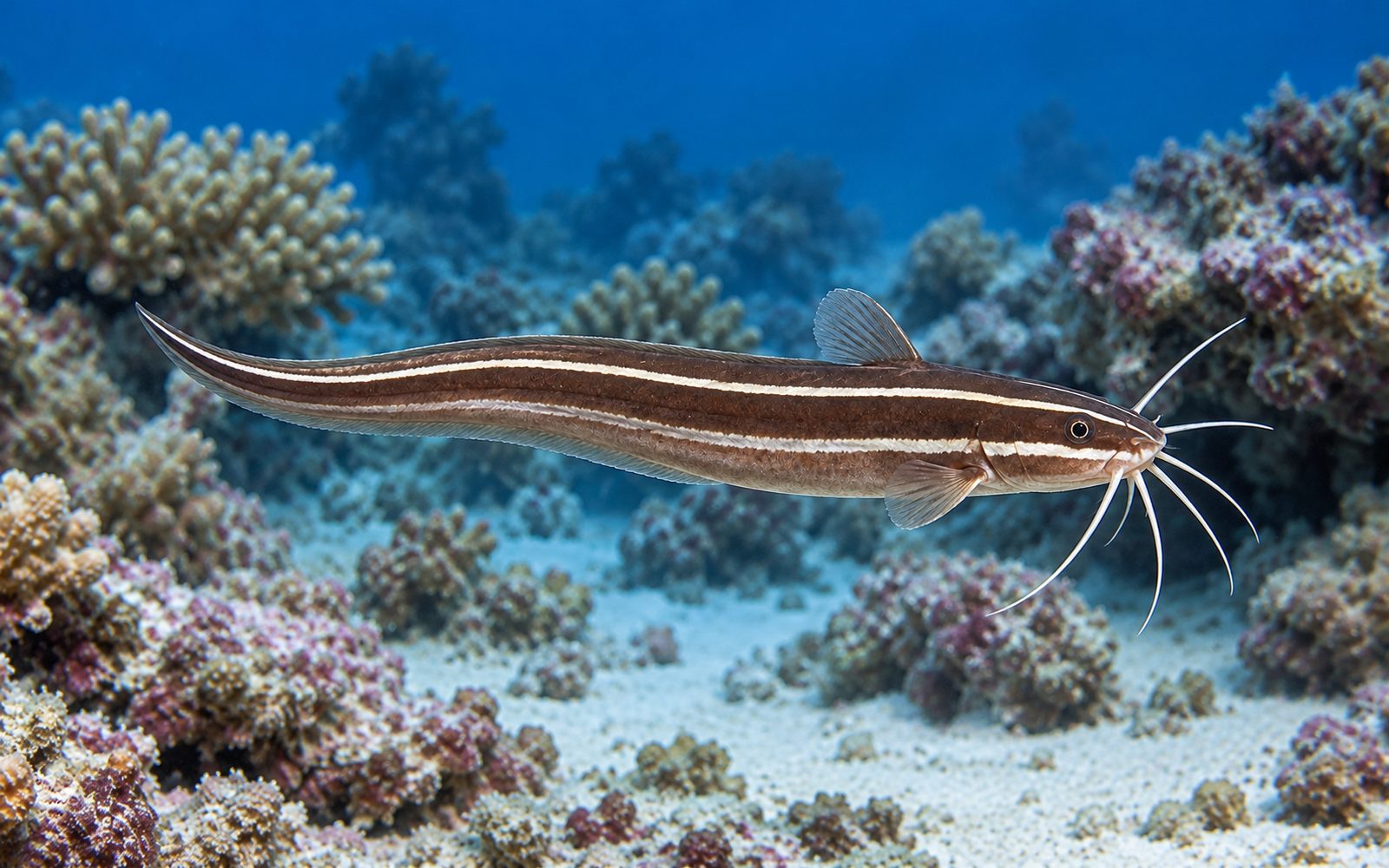
The striped eel catfish is one of the few catfish that live in the sea. Its dark brown body carries two distinct white horizontal stripes, and there are four pairs of barbels around its mouth; the dorsal and anal fins merge with the tail to form an eel-like tip. Juveniles form dense, ball-shaped schools of hundreds of individuals; adults live more scattered. Venomous spine warning: The spines in the dorsal and pectoral fins carry a venom that can cause very painful and serious injuries; work with gloves and seek medical attention if stung. It is spreading as an invasive species in the Eastern Mediterranean; never release it into the wild.
Tank Setup
- At least 800 liters for a small group; a fine sand substrate and caves to shelter in.
- Salinity specific gravity 1.020–1.025, pH 8.1–8.4, temperature 24–27°C; a strong filter and a protein skimmer.
- Not reef-safe: it eats shrimp, crabs, snails and small fish, and constantly digs in the sand.
- Not recommended for hobbyists unused to its care because of the venom risk.
Diet
Carnivorous. Frozen mysis, krill, chopped shrimp, mussels and squid, sinking marine fish pellets. Juveniles are fed twice a day, adults once a day.
Behavior and Compatibility
Juveniles are very active in a school and become stressed when left alone. As they grow they become more independent and greedy; they eat fish that fit in their mouths.
Good companions: In a large aquarium, big and calm fish: tangs, large angelfish, foxface, large wrasses.
Avoid: Small fish, shrimp and crabs, reefs with corals, open-top aquariums within children's reach.
A short profile for this species
The Striped Eel Catfish page has the basics, but the sections below have not been written yet. If you keep this species, write a section from your own experience; it will be published under your name after editor approval.
Tank mates
This list is calculated automatically from the species profile and grows as new species are added to the catalog. Try it in the planner for a definite answer.
Should not be kept together


Hobbyist notes
Things you won't find in books, learned by trial and error. The most helpful ones are on top.
Change history and contributors
- Page created · October 16, 2026