
Water parameters
Overview
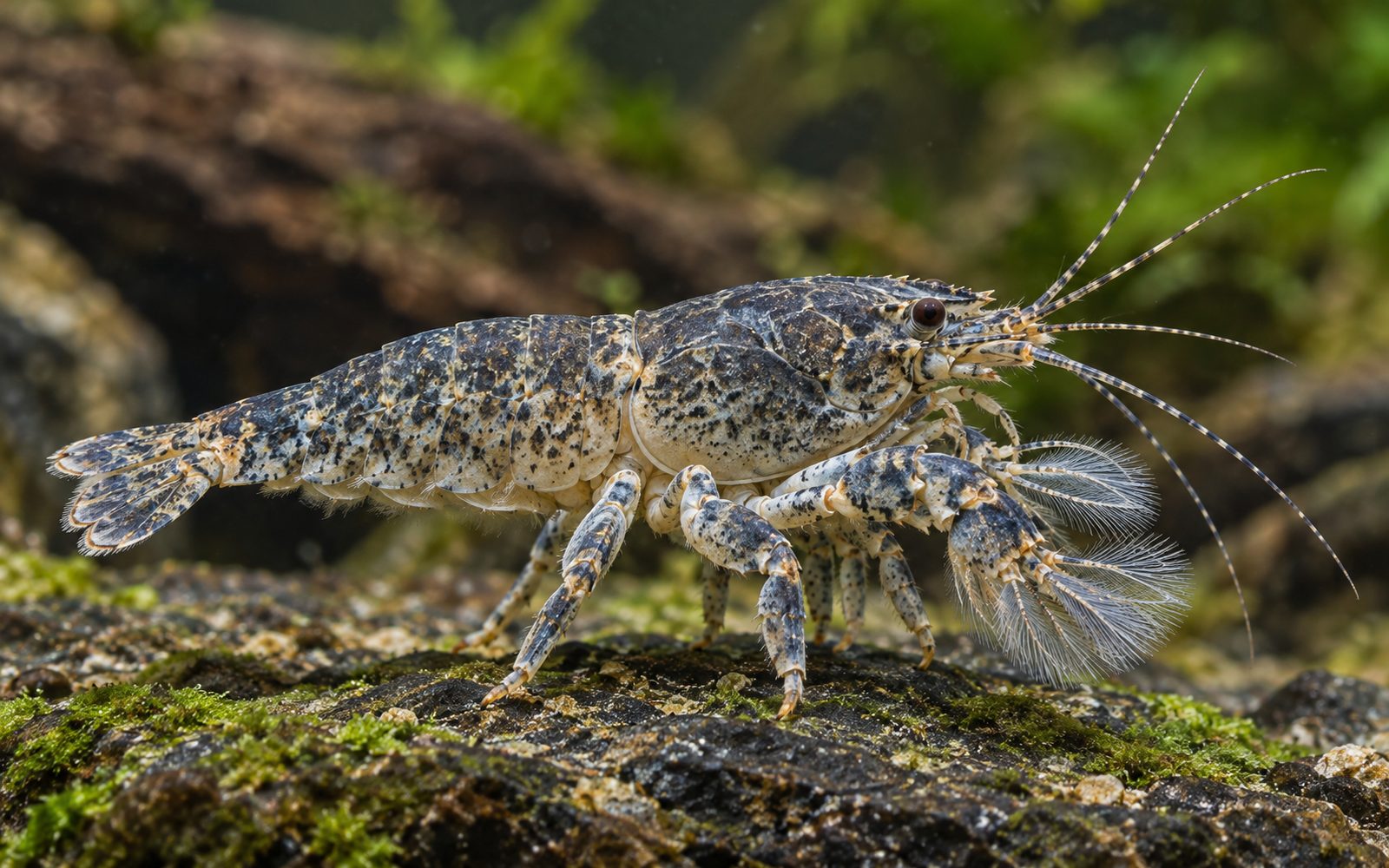
The vampire shrimp is the largest filter-feeding shrimp kept in aquariums. It is a relative of the bamboo shrimp and, like it, feeds with fan-shaped tufts of bristles instead of claws; but it is much more heavily built, with powerful legs, and larger. Depending on the individual and its molt, its color can be cream, gray, brown or a distinct blue.
Despite its scary name and appearance it is completely harmless. During the day it usually sits under a root or rock; when the lights dim it comes out to spots with current.
Natural Habitat
It lives in fast-flowing rivers that drain into the Atlantic Ocean, from the coasts of West and Central Africa to northeastern South America. It prefers stony and rocky stretches where the water flows fast. Its larvae drift to the sea to develop.
Tank Setup
- Volume: 100 liters or more; a large floor area for its big body and nighttime activity.
- Current: A distinct spot with current is essential; place a rock or root in front of the filter outlet.
- Hiding places: A large cave, rock pile or space under a root to shelter in during the day.
- Water: 24–27°C, near neutral and moderately hard. Products containing copper are deadly.
- Lid: It may climb out if water quality deteriorates.
- Water changes: 20–25% a week; new water should be the same temperature, and sudden changes in parameters should be avoided.
Diet
It is a filter feeder: it catches fine organic particles and microorganisms from the water. If it cannot find enough particles, it sweeps the substrate with its fans; this is a sign of hunger. Shrimp powder, finely ground food, crushed spirulina and powdered tablets are sprinkled into the water near the current. A mature, well-stocked community aquarium naturally provides more food.
Behavior and Compatibility
Peaceful; it leaves fish, shrimp, snails and plants alone. It is shy and more active at night. It may hide for days before molting.
Good companions: Medium-sized peaceful fish, corydoras, bamboo shrimp, nerite snails.
Avoid: Large cichlids, crayfish, large Macrobrachium shrimp and invertebrate-eating fish.
Group and Colony Structure
It has no social needs; it lives alone. In large aquariums, two or more individuals can be kept together without problems when there are separate spots with current and hiding places. The number is determined by the amount of food available in the water.
Breeding
It does not breed in the aquarium. Because its larvae develop in the sea, breeding at home is almost impossible; individuals for sale are collected from the wild.
Health and Common Problems
- Starvation: If it sweeps the substrate for long periods, food is insufficient; increase the powdered food.
- Molting: Do not disturb it while it is hiding; leave the shed exoskeleton in for a while as a source of calcium.
- Poisoning: Copper and many antiparasitic medications are deadly.
Sexing
Males usually grow larger, and their walking legs (especially the third pair) are noticeably thicker. Females have a wider abdomen.
Tank mates
This list is calculated automatically from the species profile and grows as new species are added to the catalog. Try it in the planner for a definite answer.
Usually compatible
 Flame Tetra
 Blackfin Corydoras
 Polystictus Corydoras
 Emerald Betta
 Emerald Cory
 Porthole Catfish
 Cryptocoryne Parva
 Gold Spot Pleco (L001)
 Adolfo's Cory
 African Glass Catfish
Should not be kept together






Hobbyist notes
Things you won't find in books, learned by trial and error. The most helpful ones are on top.
Change history and contributors
- Page created · October 16, 2026