
Water parameters
Overview
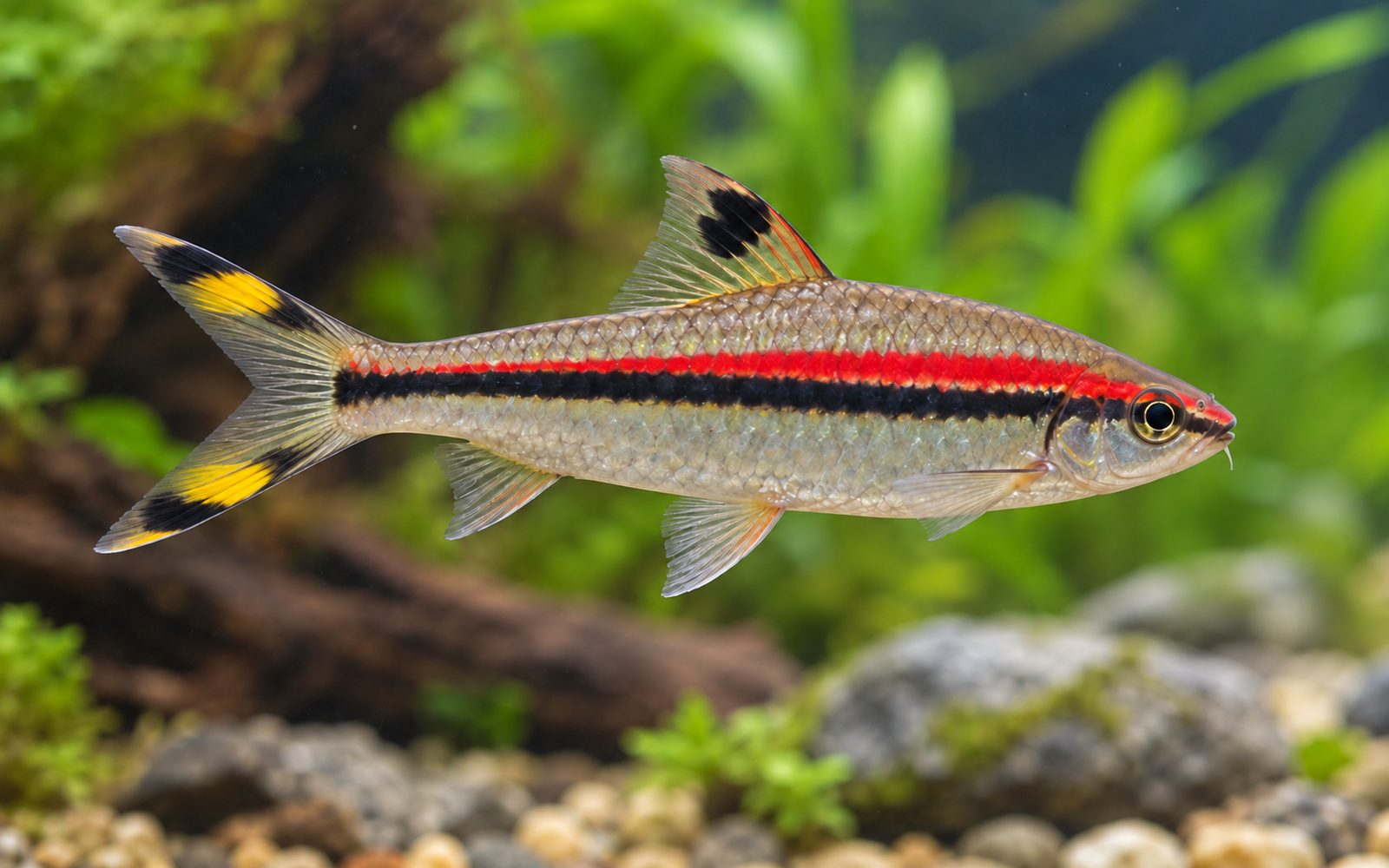
The Chalakudy barb is a species endemic to the Chalakudy River and its surroundings in Kerala, belonging to the same genus as the Denison barb. At first glance it looks very much like the Denison barb: a silver torpedo-shaped body, a black stripe from snout to tail and a red stripe above it. Its easiest distinguishing feature is the distinct black blotch on the dorsal fin. Its range is very narrow, and wild populations are threatened by collection and habitat loss; it is rarely found in the trade, and captive-bred fish should be preferred whenever possible.
Tank Setup
- At least 300 liters and 150 cm in length for a group of 6.
- 20–24°C is ideal; it becomes stressed above 25°C. High oxygen levels and powerful filtration are essential.
- Moderate to strong flow, sand-gravel substrate, rounded stones and roots; plenty of swimming space in the middle.
- It jumps; a tight lid is needed. A 30–40% weekly water change.
Diet
Omnivorous. Quality granules and flakes, spirulina and vegetables; frozen brine shrimp, bloodworms and mysis shrimp. It may eat dwarf shrimp.
Behavior and Compatibility
A peaceful, active schooling fish. There are short chases within the group; when kept alone or in small numbers, it becomes skittish.
Good companions: peaceful species of similar size that like cool, flowing water: Denison barbs, large danios and devarios, rainbowfish, flow-loving loaches.
Avoid: dwarf shrimp, very small fish, aggressive cichlids and slow species that need warm water.
A short profile for this species
The Chalakudy Barb page has the basics, but the sections below have not been written yet. If you keep this species, write a section from your own experience; it will be published under your name after editor approval.
Tank mates
This list is calculated automatically from the species profile and grows as new species are added to the catalog. Try it in the planner for a definite answer.
Usually compatible
 Flame Tetra
Glass Tetra
Flame Tetra
Glass Tetra
 Blackfin Corydoras
 Polystictus Corydoras
 Emerald Cory
 Emerald Dwarf Rasbora
 Porthole Catfish
 Keyhole Cichlid
 Rainbow Cichlid
 Cryptocoryne Parva
Should not be kept together






Hobbyist notes
Things you won't find in books, learned by trial and error. The most helpful ones are on top.
Change history and contributors
- Page created · October 16, 2026