
Water parameters
Overview
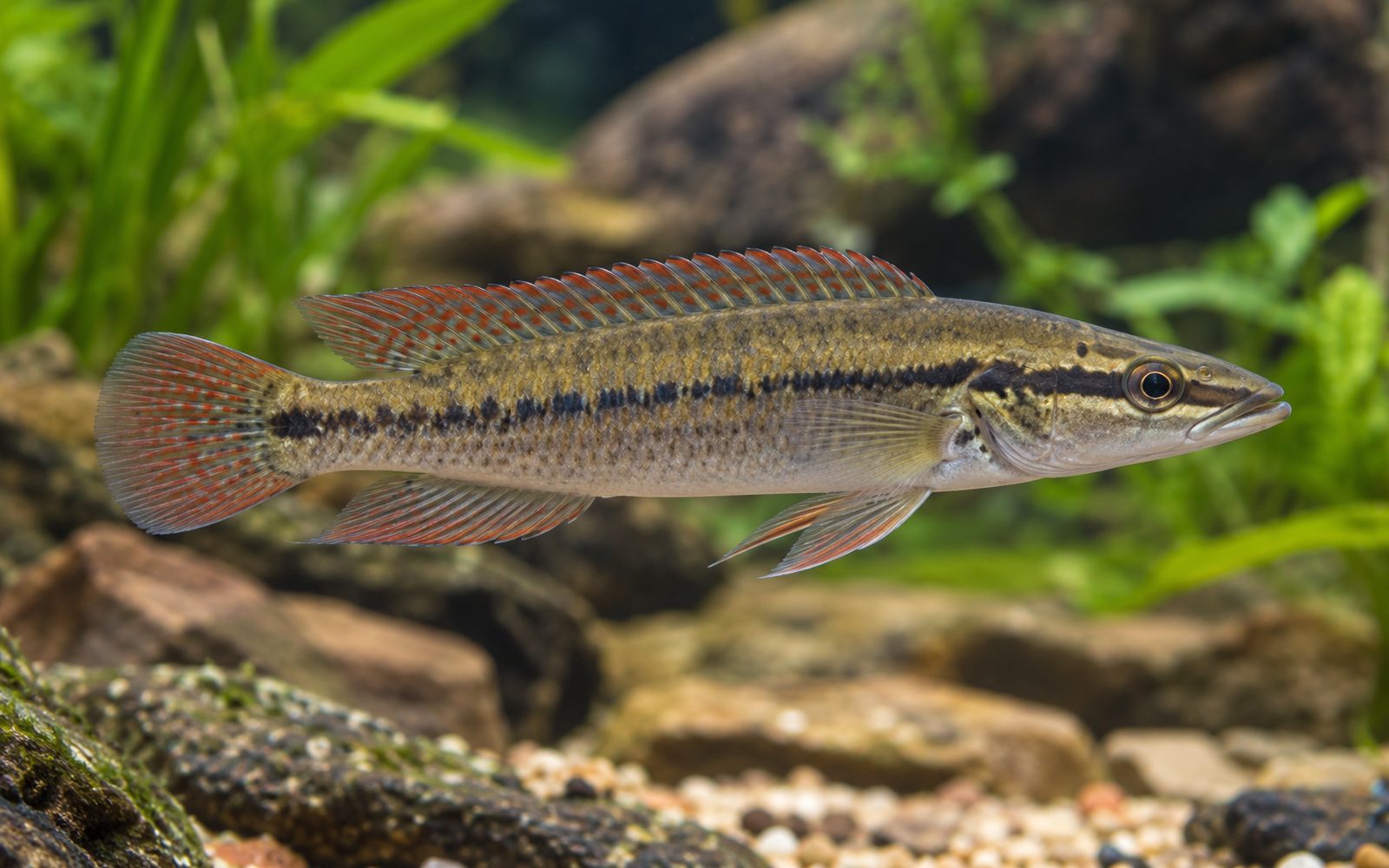
Crenicichla compressiceps is one of the smallest of the long-bodied predators known as "pike cichlids". It comes from the rocky, fast-flowing stretches of the Tocantins River in Brazil. Despite its small size it is a true hunter: it lies in ambush among rocks and catches any fish that fits in its mouth. It is popular among enthusiasts who want to enjoy the majesty of the large pike cichlids in a small aquarium.
Tank Setup
- At least 120 liters and 80–100 cm of length for a pair.
- Rock piles, crevices and caves; a separate hiding place for each individual.
- Well-oxygenated, clean water with moderate current; change 30% weekly.
- A tight lid; it may jump when startled.
Diet
Carnivorous. Offer frozen bloodworms, mysis, brine shrimp and small pieces of shrimp; some individuals accept carnivore granules over time. Live feeder fish carry a risk of disease.
Behavior and Compatibility
Territorial toward its own kind and similar bottom-dwelling fish. It usually leaves alone fast midwater fish that do not fit in its mouth.
Good companions: fast tetras and barbs too large to fit in its mouth, Ancistrus, medium-sized corydoras (in a large aquarium).
Avoid: small fish such as neons, rasboras and guppies, shrimp, large aggressive cichlids.
A short profile for this species
The Crenicichla compressiceps page has the basics, but the sections below have not been written yet. If you keep this species, write a section from your own experience; it will be published under your name after editor approval.
Tank mates
This list is calculated automatically from the species profile and grows as new species are added to the catalog. Try it in the planner for a definite answer.
Usually compatible
 Emerald Betta
 Porthole Catfish
 Altum Angelfish
 Keyhole Cichlid
 Firemouth Cichlid
 Cupid Cichlid
 Buffalohead Cichlid
 Discus
 Festivum
Should not be kept together





Hobbyist notes
Things you won't find in books, learned by trial and error. The most helpful ones are on top.
Change history and contributors
- Page created · October 16, 2026