
Water parameters
Overview
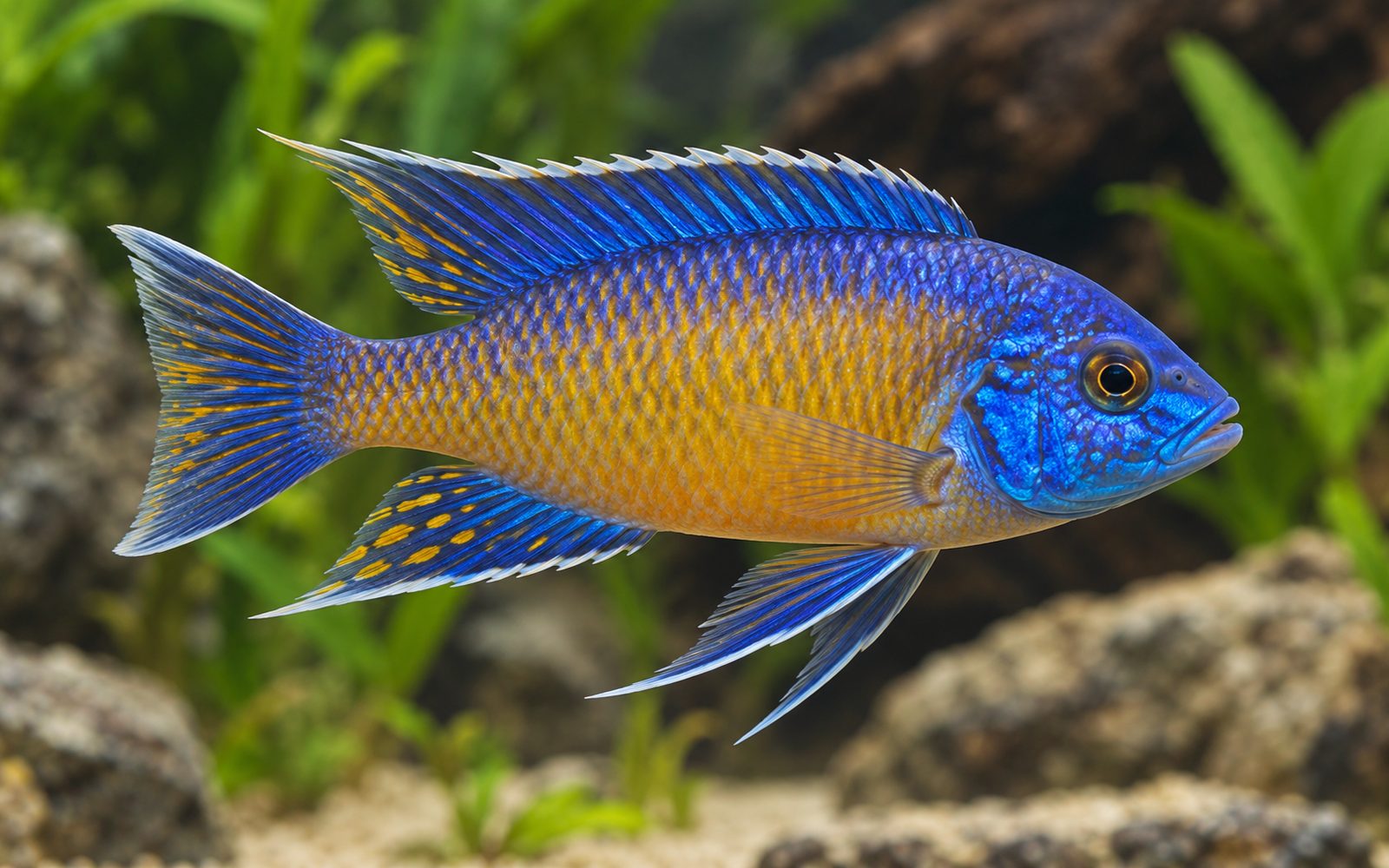
Enantiopus melanogenys is a slender, delicate sand-dwelling cichlid that was long placed in the genus Xenotilapia. In the lake it roams in large groups over wide sand flats, taking sand into its mouth and sifting it to pick up small invertebrates. Females and non-breeding males are a plain silvery color; males in breeding season, however, take on iridescent yellow and turquoise tones, dig wide pit nests in the sand and display to the females. Because it is a shy species, it should be kept in a calm aquarium and in a large group.
Tank Setup
- At least 300 liters and a length of 150 cm for a group of 8–12; a large open sandy area is essential.
- Very fine, soft sand substrate; rocks only at the edges.
- pH 8–9, hard and stable water; a 25–30% water change every week.
- A calm environment and a lid; it flees quickly when startled.
Diet
It feeds by sifting small organisms from the sand. Fine-grained sinking granules, frozen cyclops, brine shrimp and mysis are suitable; food should be given so that it reaches the bottom.
Behavior and Compatibility
Peaceful but very shy; among active, aggressive fish it cannot get its food and becomes stressed. The female is a mouthbrooder.
Good companions: Cyprichromis, Paracyprichromis, Xenotilapia species, calm shell-dwelling cichlids (in a separate corner).
Avoid: Tropheus, mbuna, large fish-eating cichlids, aggressive species that set up territories on the bottom, and shrimp.
A short profile for this species
The Enantiopus melanogenys page has the basics, but the sections below have not been written yet. If you keep this species, write a section from your own experience; it will be published under your name after editor approval.
Tank mates
This list is calculated automatically from the species profile and grows as new species are added to the catalog. Try it in the planner for a definite answer.
Usually compatible
 Yellow Regal Peacock
 Egyptian Mouthbrooder
 Yellow Tail Acei
Amazon Molly
Yellow Tail Acei
Amazon Molly
 Butterfly Goodeid
Anatolian Killifish
Eastern Happy
Red Shoulder Peacock
Butterfly Goodeid
Anatolian Killifish
Eastern Happy
Red Shoulder Peacock
 Fairy Cichlid
Blue Orchid Peacock
Fairy Cichlid
Blue Orchid Peacock
Should not be kept together






Hobbyist notes
Things you won't find in books, learned by trial and error. The most helpful ones are on top.
Change history and contributors
- Page created · October 16, 2026