
Water parameters
Overview
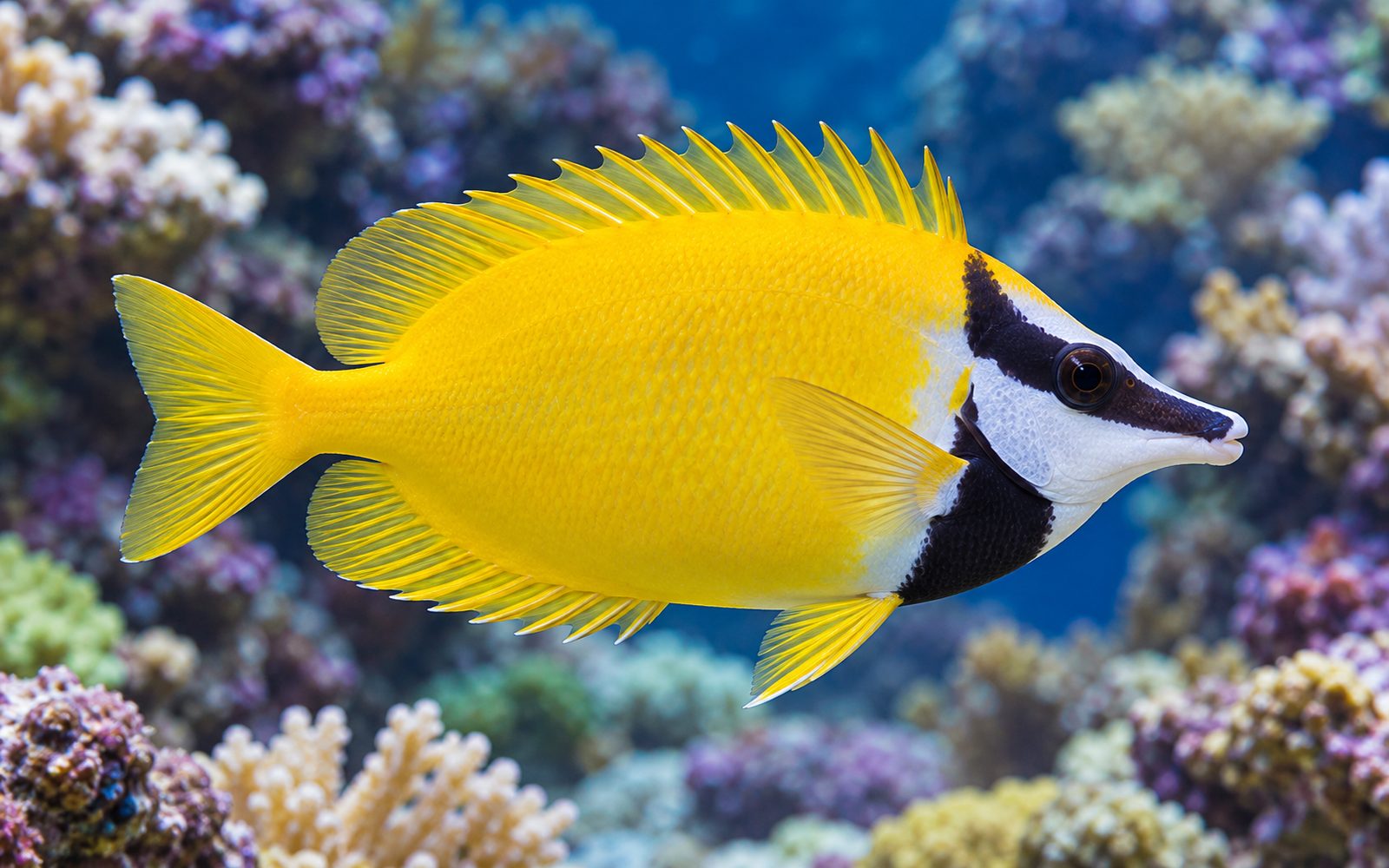
The foxface belongs to the rabbitfish family (Siganidae); it is related to the rabbitfish (Siganus rivulatus, S. luridus) that have passed through the Suez Canal into the Mediterranean and settled along the coasts of Türkiye. Its bright yellow body and the black mask on its white face give it a fox-like look. At night and when frightened its color fades into a brown-blotched camouflage and it raises its spines; this is normal.
Venomous spine warning: the spines on the dorsal, pelvic and anal fins are venomous. A sting is very painful but usually not dangerous. Work with gloves; if stung, soaking the wound in water as hot as can be tolerated (around 45°C) eases the pain; seek medical care if needed.
It is a hardy species that takes food quickly; individuals are wild-collected.
Natural Habitat
It lives in coral-rich lagoons and on reef slopes of the Western Pacific. Juveniles roam in schools, adults in pairs, grazing on algae on the rocks.
Tank Setup
- Volume: at least 400 liters and 150 cm of length.
- Water: salinity 1.023–1.026 specific gravity, pH 8.1–8.4, temperature 24–27°C.
- Decor: rock structures to hide in at night and open swimming space.
- Maintenance: a 10% water change weekly or 20% every two weeks. Catching the fish with a container, without bringing a net or hand near its spines, is safer for both keeper and fish.
- Reef compatibility: reef safe with caution. Many individuals do not touch corals; others pick at LPS corals and zoanthids. Some individuals also eat unwanted algae such as Bryopsis and bubble algae, but this should not be relied on.
Diet
Herbivorous. Offer dried seaweed (nori) and foods containing spirulina and seaweed every day; add frozen mysis several times a week. 2–3 times a day. It is a greedy fish; at feeding time make sure shy tankmates are getting food too.
Behavior and Compatibility
Peaceful; it usually leaves other species alone. It may be cranky toward its own kind and other rabbitfish. When threatened it raises its spines and turns its side toward the attacker.
Good companions: tangs, dwarf and large angelfish, wrasses, anthias, clownfish, Heniochus, cardinalfish.
Avoid: a second foxface or another rabbitfish (except in a very large aquarium), lionfish (for small individuals).
Group and Colony Structure
Usually kept as a single individual in the aquarium. In the wild it lives in pairs; in a very large aquarium a compatible pair can be kept together.
Breeding
Rabbitfish lay sticky eggs on the bottom, with no parental care. It does not breed in home aquariums.
Health and Common Problems
- Hardiness: a robust species, relatively resistant to marine ich, but quarantine is still recommended.
- HLLE: associated with insufficient green food.
- Stress coloration: staying blotched for long periods during the day is a sign of stress or disease.
Sexing
The sexes cannot be told apart externally.
Tank mates
This list is calculated automatically from the species profile and grows as new species are added to the catalog. Try it in the planner for a definite answer.
Should not be kept together


Hobbyist notes
Things you won't find in books, learned by trial and error. The most helpful ones are on top.
Change history and contributors
- Page created · October 16, 2026