
Water parameters
Overview
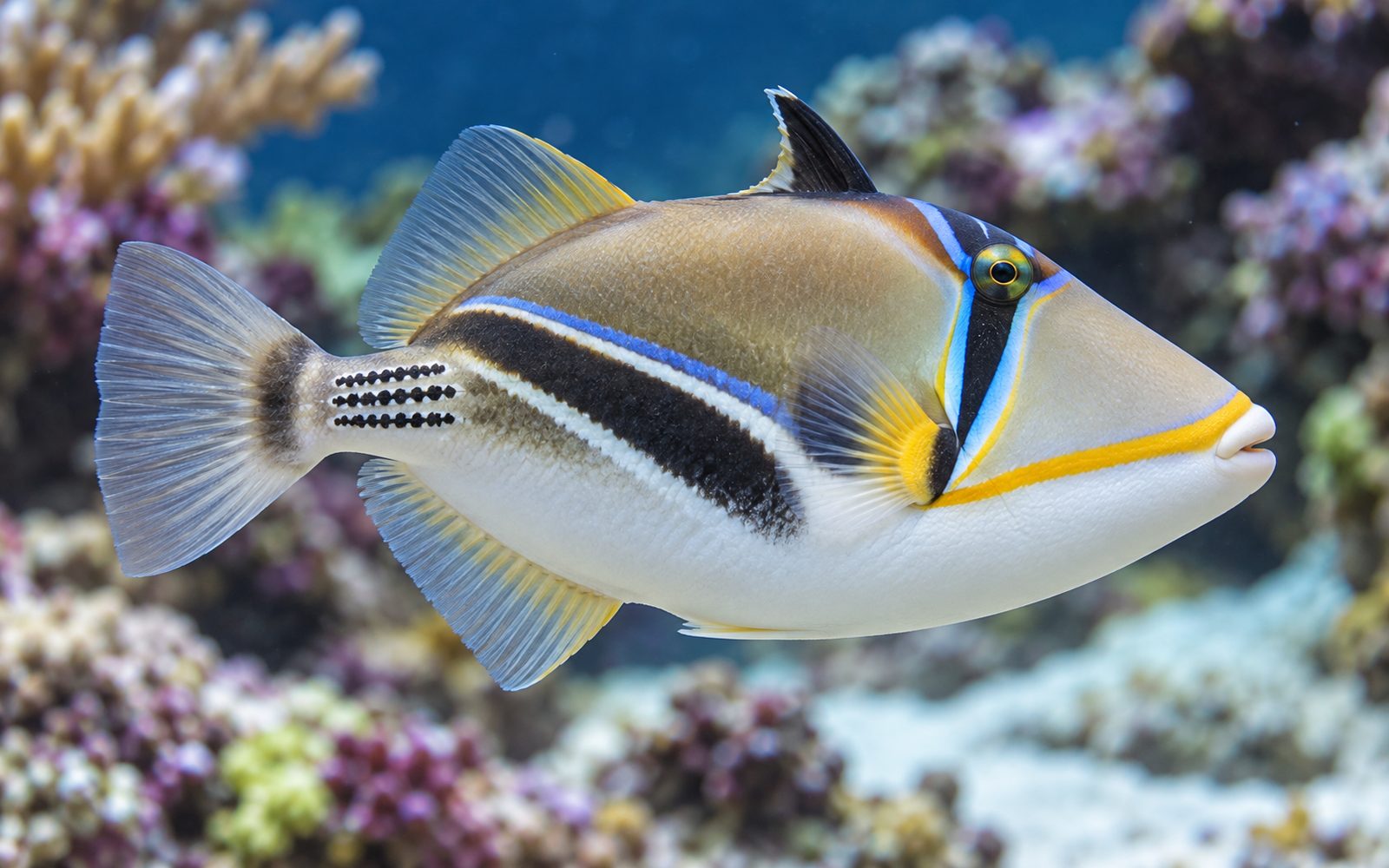
The Picasso triggerfish takes its name from a painter because of the blue and black lines on its face, the yellow stripe running from its mouth to the pectoral fin and the diagonal pattern on its body. It also has the mechanism that gives triggerfish their name: the first spine of the dorsal fin locks in the upright position and is released only when the second spine behind it (the "trigger") is lowered. This lets the fish lock itself into a rock crevice.
It is a hardy species that takes food quickly and resists disease; but because of its strong teeth, cantankerous character and appetite, it is suitable only for fish-dominated aquariums. All specimens are wild-collected.
Natural Habitat
It lives in shallow lagoons, reef flats and sandy–rubble areas of the Indo-Pacific. It defends its own territory and locks itself into a rock hole at night and when in danger.
Tank Setup
- Volume: At least 500 liters and 150 cm in length.
- Water: Salinity specific gravity 1.023–1.026, pH 8.1–8.4, temperature 24–27°C. Since it is a messy eater, a strong filter and a protein skimmer are needed.
- Decor: Sturdy, secured rockwork; it digs in the sand and moves small stones. Place heaters, hoses and cables in a protected way, since it may bite them.
- Reef compatibility: Not reef-safe. It eats shrimp, crabs, snails, sea urchins, tube worms and small fish; it can also knock over and damage corals.
- Maintenance: A 15–20% water change weekly; keep nitrate below 20 mg/l. A sand bottom supports its digging behavior.
Diet
Carnivorous. Shell-on shrimp, mussels, squid, krill, chopped fish meat and marine fish pellets. Shelled foods wear down its constantly growing teeth. Juveniles are fed twice a day, adults once a day.
Behavior and Compatibility
A curious, intelligent fish that recognizes its keeper; but it grows more cantankerous with age. It attacks its own kind, other triggerfish and fish added later; it may try to bite your hand during maintenance. When it feels threatened it can make sounds resembling a grunt.
Good companions: In a large aquarium, robust species of its own size: tangs, large angelfish, large wrasses, lionfish (paying attention to the fish's size), moray eels.
Avoid: Small fish, shrimp, crabs and snails, seahorses, slow and long-finned species, reef aquariums with corals.
Group and Colony Structure
Kept as a single specimen in the aquarium; making it the last fish added to the tank reduces fighting.
Breeding
The pair digs a pit in the sand bottom and lays its eggs there; the female guards the eggs and fiercely attacks anything that approaches the nest. It does not breed in the aquarium.
Health and Common Problems
- Hardiness: A robust species; it is more resistant to marine white spot than other fish.
- Tooth overgrowth: Teeth can grow excessively in specimens fed only soft foods.
- Injury: From equipment it has bitten itself or from getting trapped under rocks.
Sexing
Cannot be reliably distinguished externally.
Tank mates
This list is calculated automatically from the species profile and grows as new species are added to the catalog. Try it in the planner for a definite answer.
Should not be kept together


Hobbyist notes
Things you won't find in books, learned by trial and error. The most helpful ones are on top.
Change history and contributors
- Page created · October 16, 2026