
Water parameters
Overview
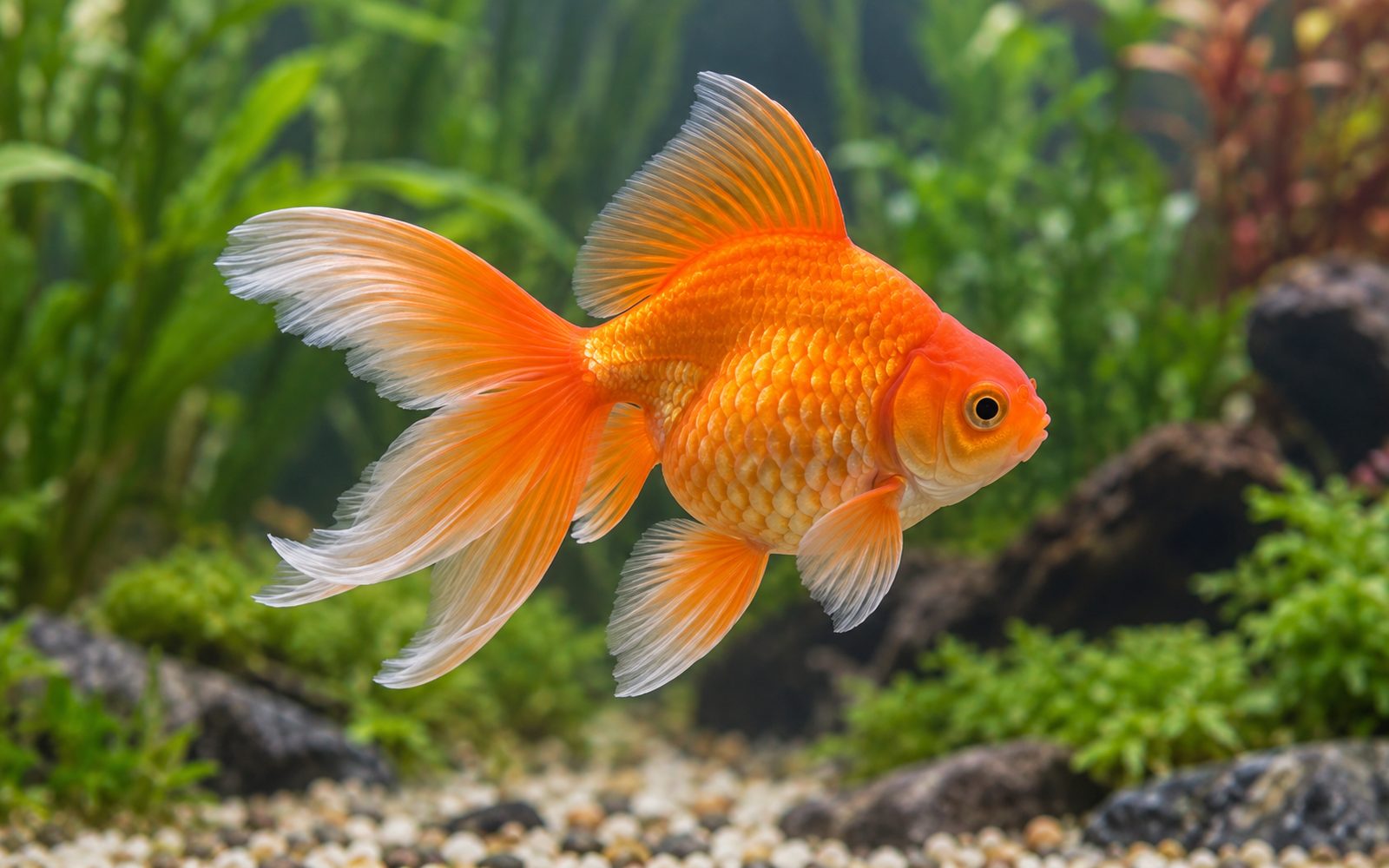
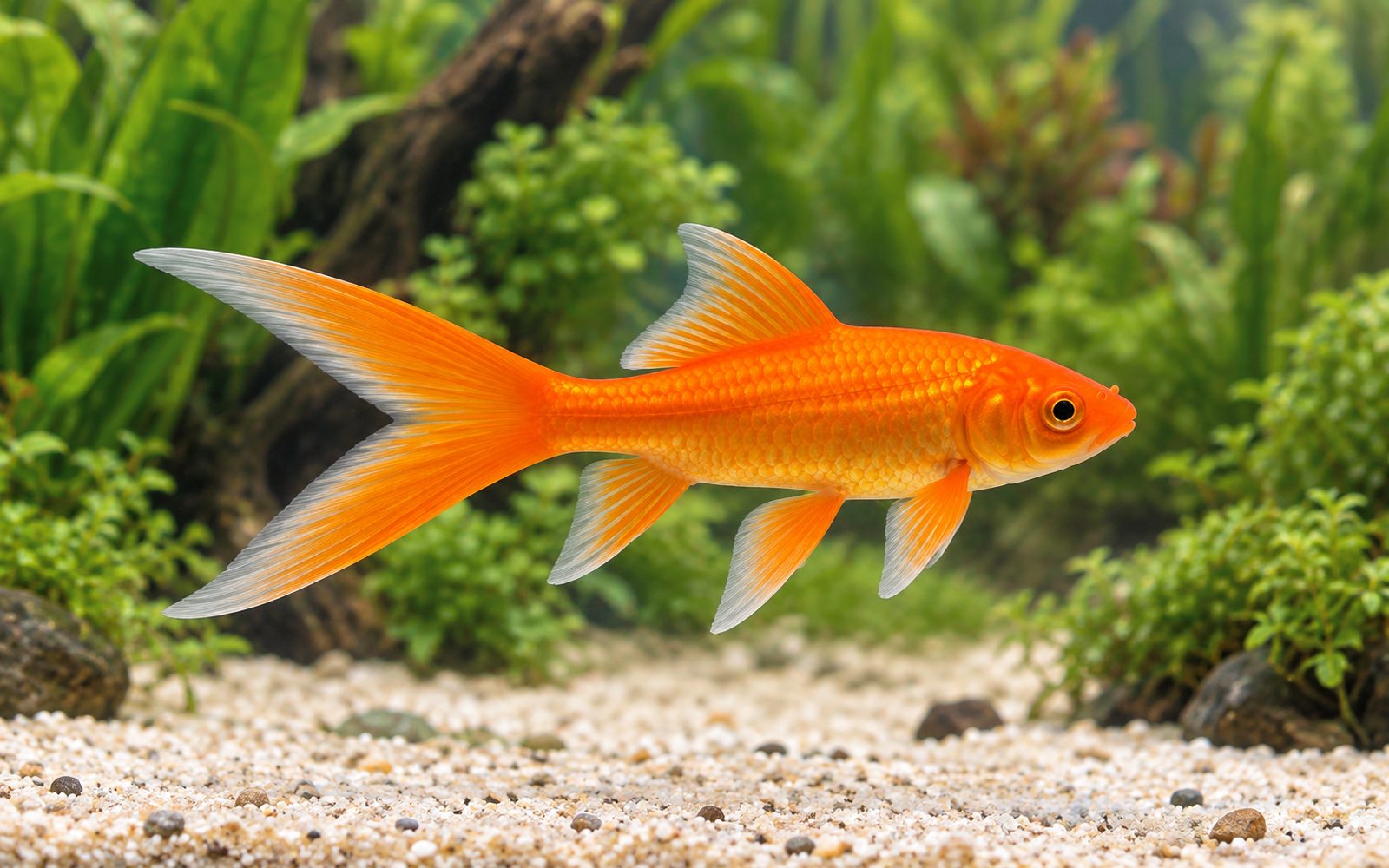
The goldfish is one of the first domesticated fish, bred in China for more than a thousand years. "Fancy" varieties such as the oranda, ranchu, telescope eye and ryukin have short, round bodies and double tails; "single-tailed" types (comet, shubunkin) have long bodies, are very fast and are better suited to ponds.
Contrary to popular belief, a bowl is not suitable for a goldfish. It produces a lot of waste, grows up to 15–20 cm and lives for more than 15 years under the right conditions. In a small container its growth does not stop; its health deteriorates.
Color and Fin Varieties
The varieties have not been described yet. Be the first to write it.
Natural Habitat
Its wild ancestor (the Prussian carp and its relatives) lives in the slow-flowing rivers, lakes and marshes of East Asia and is used to seasonal temperature changes.
Tank Setup
- Volume: at least 100 liters for two fancy goldfish, plus 40–50 liters for each additional fish. A pond or 300 liters or more for single-tailed types.
- Filter: a powerful filter that turns over at least 5–6 times the tank volume per hour. A goldfish's waste load is much higher than that of tropical fish.
- Temperature: no heater needed; 18–22°C is ideal. Do not let it exceed 26°C in summer.
- Decor: the eyes of telescope-eye and bubble-eye types are delicate; do not use sharp decor. Plants get eaten; Anubias and Java fern hold up.
- Substrate: coarse gravel can get stuck in the mouth; use either a bare bottom or fine sand.
Diet
Omnivorous and constantly searching for food. Choose sinking granules: swim bladder problems are common in fancy types that gulp air at the surface. Vegetables such as peas (boiled and shelled) and spinach, and frozen daphnia, aid digestion. Feed small amounts twice a day.
Behavior and Compatibility
Peaceful and social; it should not be kept alone. However, it eats anything that fits in its mouth: neons, guppy fry and shrimp become food.
Good companions: only other goldfish. Fancy types swim slowly, so they are not kept in the same tank as single-tailed types.
Avoid: tropical fish (the temperature does not match), large plecos sold as "glass cleaners" (they may suck the goldfish's slime coat), small fish and shrimp.
Group and Colony Structure
The goldfish is social and should not be kept alone; at least 2, or ideally 3–4 if the volume allows. But since each individual is a large fish that produces a lot of waste, the tank volume determines the group size: 75–100 liters for the first fish and 40–50 liters for each additional fish.
Keep fish of the same type together. Round-bodied fancy types (oranda, ranchu) cannot compete with fast single-tailed types and do not get enough food. The sex ratio does not matter; it is natural for males to chase females in spring, but if a female becomes exhausted, separate her for a short while.
Breeding
When the water warms in spring, males begin chasing the females. The female scatters her sticky eggs over plants; the adults eat the eggs. The eggs hatch in a few days. The fry are brown to bronze at first and take on their golden color over several months.
Health and Common Problems
- Swim bladder disorder: swimming upside down or on the side. Constipation and overfeeding are common causes; fasting for 2–3 days and then feeding peas often helps.
- White spot: with temperature fluctuations.
- Ammonia burns: redness and black spots on the fins; a sign of an inadequate filter and too few water changes.
Sexing
During the breeding season, white bumps ("breeding tubercles") appear on the gill covers and the front rays of the pectoral fins of males. Seen from above, females look plumper and asymmetrical. Outside the season they are hard to tell apart.
Tank mates
This list is calculated automatically from the species profile and grows as new species are added to the catalog. Try it in the planner for a definite answer.
Usually compatible
 Porthole Catfish
 Keyhole Cichlid
 Rainbow Cichlid
 Gymnogeophagus balzanii
 Pearl Cichlid
 Red Hump Eartheater
 Cryptocoryne Parva
 Weeping Moss
 Flame Moss
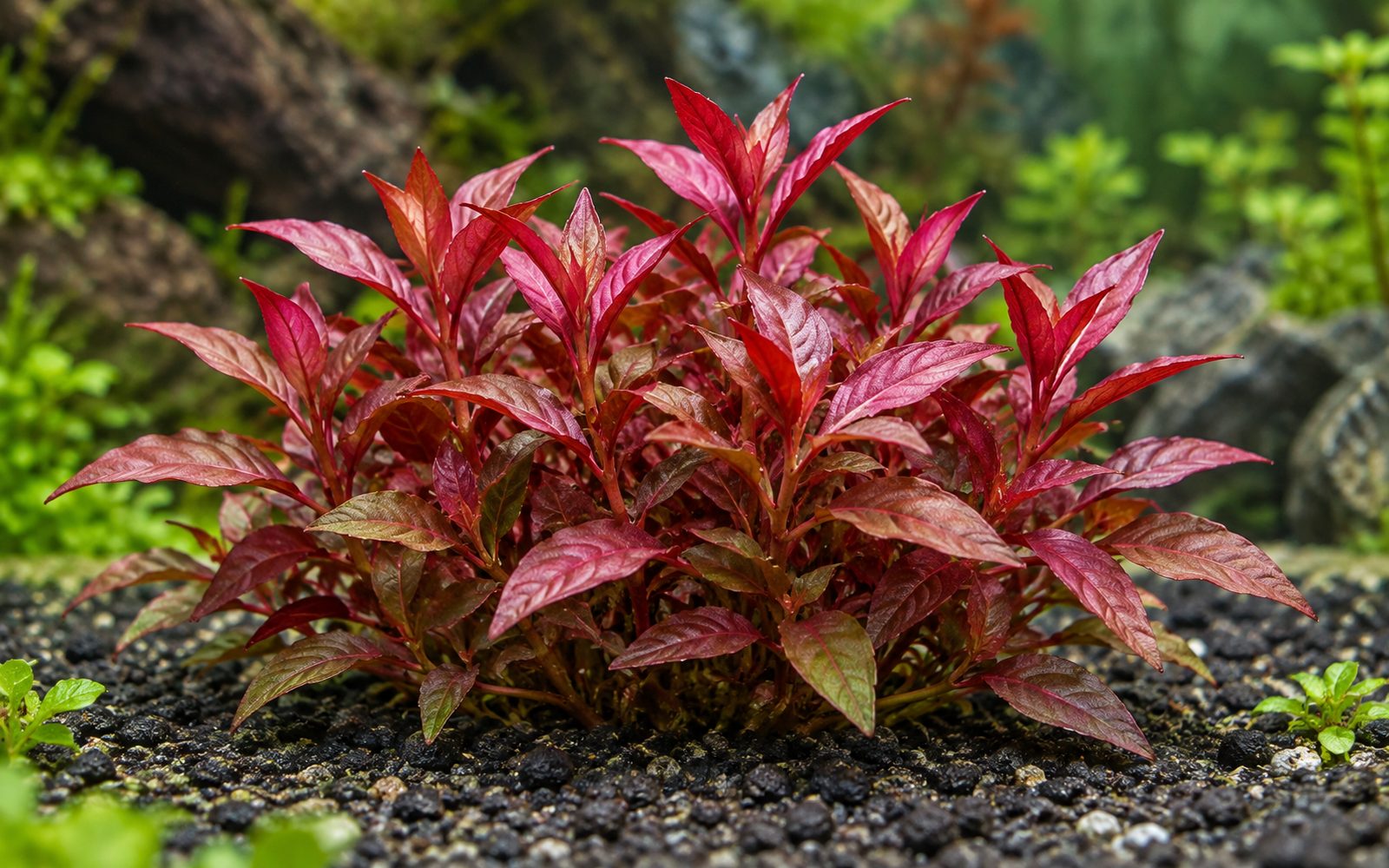 Alternanthera Reineckii 'Mini'
Should not be kept together




Hobbyist notes
Things you won't find in books, learned by trial and error. The most helpful ones are on top.
Change history and contributors
- Page created · October 16, 2026