
Water parameters
Overview
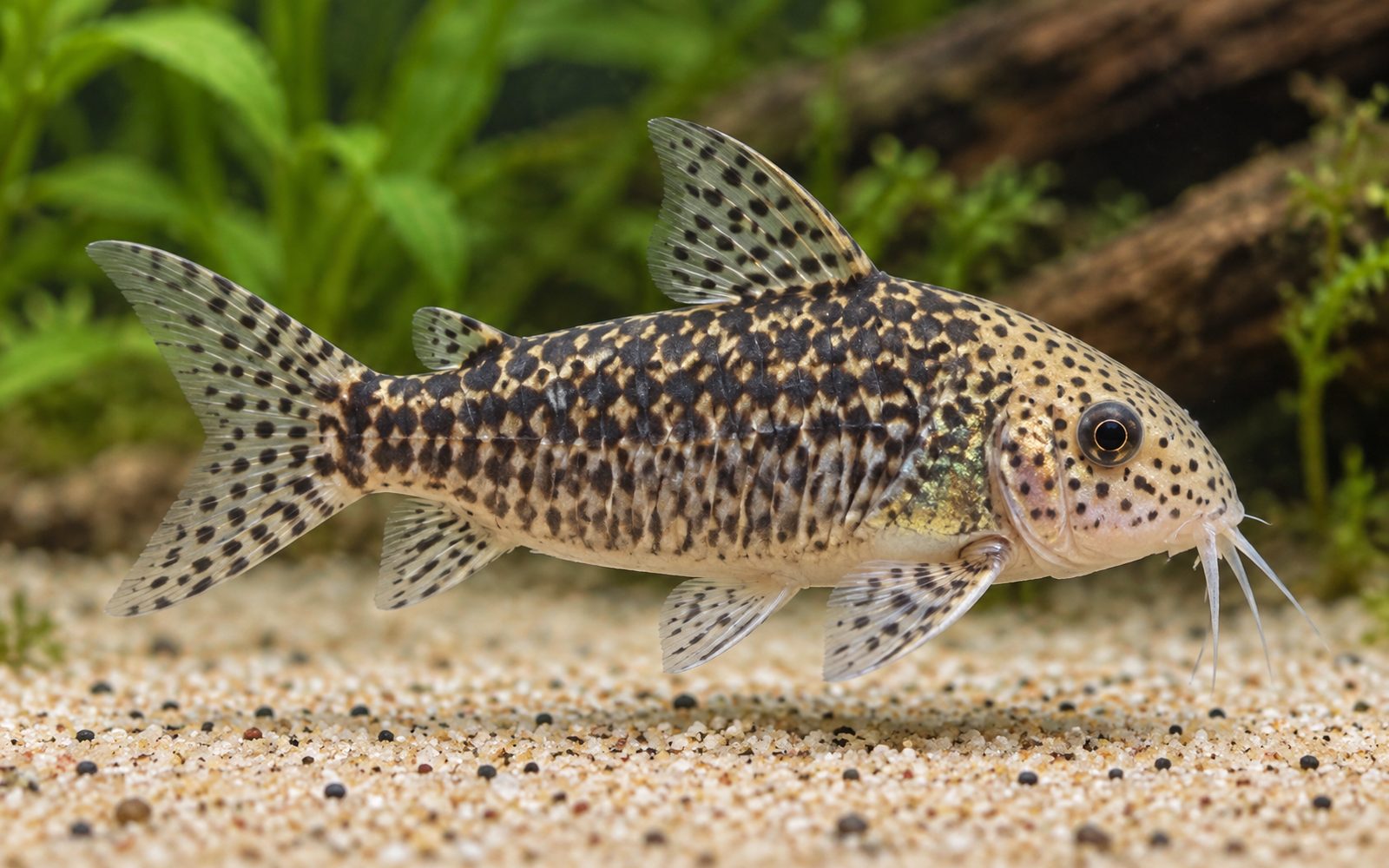
Harald Schultz's cory is named after the Brazilian photographer and ethnographer Harald Schultz. It comes from the same region as the sterbai cory and at first glance looks very much like it; but the pattern seems reversed:
- C. sterbai: dark gray-black head with white spots.
- C. haraldschultzi: pale cream head with dark spots; the body is covered with dense dark spots and reticulated patterns.
It is slightly larger and longer-bodied than sterbai; adults reach 6–7 cm. Like sterbai it tolerates warm water well, so it can be kept as a bottom fish in discus, ram and cardinal tetra aquariums.
Natural Habitat
It lives in warm, clear streams and river branches with sandy bottoms in the basin of the Guaporé River, which forms the border between Brazil and Bolivia. It shares the same region with the sterbai cory.
Tank Setup
- Volume: at least 80 liters for a group of 6–10; a large footprint.
- Substrate: fine, rounded sand.
- Water: 24–28°C; soft to moderately hard, clean, oxygen-rich water. Since warm water holds less oxygen, provide good surface movement.
- Decor: roots, shaded areas and open sand at the front.
Diet
Sinking tablets and granules; frozen bloodworms, brine shrimp, daphnia. In discus aquariums it also makes use of leftover food, but it should still be given its own share of food on the bottom.
Behavior and Compatibility
A peaceful, calm bottom dweller. In a group the fish forage together on the bottom; it does not harm fish or shrimp.
Good companions: discus, ram, angelfish, cardinal tetra, rummy-nose tetra, apistogrammas, sterbai cory.
Avoid: aggressive cichlids that claim the bottom, large predatory fish, species that need cool water (panda and peppered cory).
Group and Colony Structure
At least 6, ideally 10 or more individuals. They can form a mixed group with sterbai; but if breeding is planned, keep them separate to keep the species pure and prevent hybridization.
Breeding
Breeding in the aquarium has been reported; the method is the same as for other corydoras. A somewhat cooler, large water change can trigger spawning. The female sticks the eggs to the glass and leaves; the eggs hatch in 3–5 days. Since adults may eat the eggs, they can be rolled off the glass with a finger and moved to a separate container; the fry are raised on microworms and freshly hatched brine shrimp.
Health and Common Problems
- Barbel erosion: sharp or dirty substrate.
- Watch out for oxygen shortage in warm water; frequent trips to the surface are a warning sign.
- It is sensitive to salt and copper-based medications.
- Quarantine: observing newly arrived fish in a separate aquarium for 2–3 weeks prevents diseases from being carried into the main aquarium.
Sexing
Females are larger and, viewed from above, noticeably broader. Males are slimmer.
Tank mates
This list is calculated automatically from the species profile and grows as new species are added to the catalog. Try it in the planner for a definite answer.
Usually compatible
 Flame Tetra
 Blackfin Corydoras
 Polystictus Corydoras
 Emerald Betta
 Emerald Cory
 Porthole Catfish
 Keyhole Cichlid
 Cupid Cichlid
 Geophagus altifrons
 Geophagus surinamensis
Should not be kept together






Hobbyist notes
Things you won't find in books, learned by trial and error. The most helpful ones are on top.
Change history and contributors
- Page created · October 16, 2026